
A moonshot for solving the climate crisis
Do we want to solve the climate crisis or not?

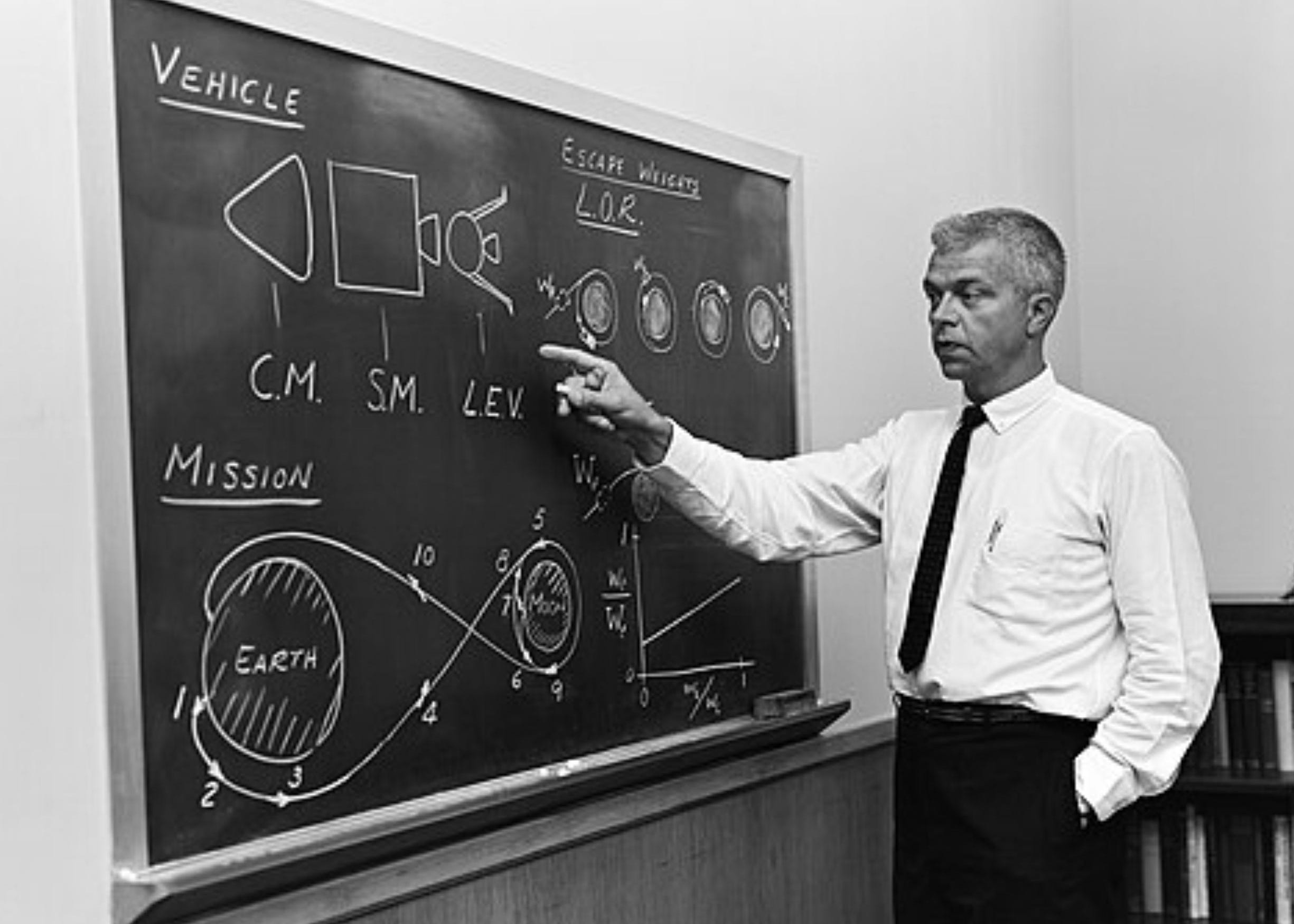
Do we want to go to the moon or not? – John Houbolt, proponent of Lunar Orbit Rendezvous
P.S. This newsletter will not fit in an email. Please read it in your browser or in the Substack app, and don’t forget to tap the heart icon at the bottom: it helps my writing find more readers.
How to invent a moonshot
When John F. Kennedy declared in 1961 that:
… this nation should commit itself to achieving the goal, before this decade is out, of landing a man on the moon and returning him safely to Earth …
… he was setting an impossible goal because, in the words of NASA Flight Director Chris Kraft:
When Kennedy asked us to do that in 1961, it was impossible.
In 1961, landing a man on the moon was an impossible goal because the aerospace technology for “landing a man on the moon and returning him safely to Earth” did not exist.
The aerospace technology did not exist because it had not yet been invented.
Today, solving the climate crisis seems like an impossible goal because the information technology for achieving that goal does not exist.
The information technology for solving the climate crisis does not exist because it has not yet been invented.
To land a man on the moon and return him safely to Earth, the people of 1961 had to invent a three-step process for achieving that impossible goal.
First, they had to invent a general process – called Lunar Orbit Rendezvous -- for landing a man on the moon and returning him safely to Earth.
Second, they had to invent a specific process – called the Mercury missions, the Gemini missions and the Apollo missions -- for inventing, testing & deploying the specific aerospace technologies required for the general process of landing a man on the moon.
Third, they had to invent the specific aerospace technologies required for executing all the maneuvers and excursions required for landing a man on the moon and returning him safely to Earth.
Just as the people of 1961 had to invent a three-step process for landing a man on the moon, so must we invent a three-step process for solving the climate crisis.
First, we have to invent a general process for solving the climate crisis.
Second, we have to invent a specific process through which people everywhere make specific decisions and take specific actions required for the general process of solving the climate crisis.
Third, we have to invent the specific information technology usable by people everywhere for making specific decisions and taking specific actions required for the general process of solving the climate crisis.
Inventing a general process for solving the climate crisis
To land a man on the moon and return him safely to Earth, the people of 1961 first had to invent a general process for doing that.
The general process they invented was something called Lunar Orbit Rendezvous:[1],[2]
Lunar orbit rendezvous (LOR) is a process for landing humans on the Moon and returning them to Earth. … In a LOR mission, a main spacecraft and a lunar lander travel to lunar orbit. The lunar lander then independently descends to the surface of the Moon, while the main spacecraft remains in lunar orbit. After completion of the mission there, the lander returns to lunar orbit to rendezvous and re-dock with the main spacecraft, then is discarded after transfer of crew and payload. Only the main spacecraft returns to Earth.[3]
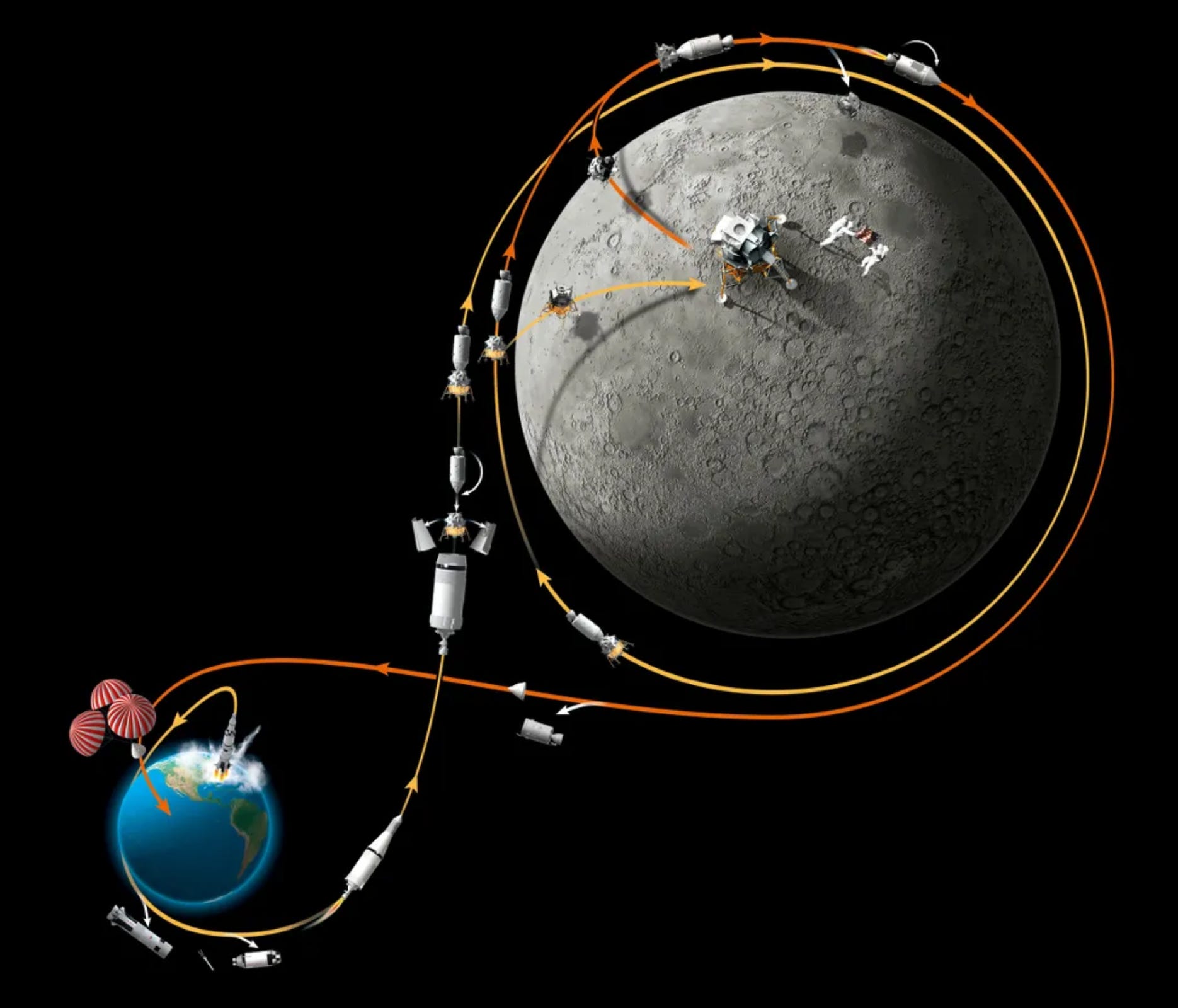
The people of 1961 first had to invent a general process of Lunar Orbit Rendezvous before they could invent a specific process – called the Mercury missions, the Gemini missions and the Apollo missions -- for inventing, testing and deploying the specific aerospace technologies required for landing a man on the moon.
Just as the people of 1961 had to first invent a general process of Lunar Orbit Rendezvous for landing a man on the moon, so must we first invent a general process for solving the climate crisis.
To solve the climate crisis, we first need a simple understanding of the system that’s creating the climate crisis, before we can invent a general process – in the form of a simple system change -- that solves the climate crisis.
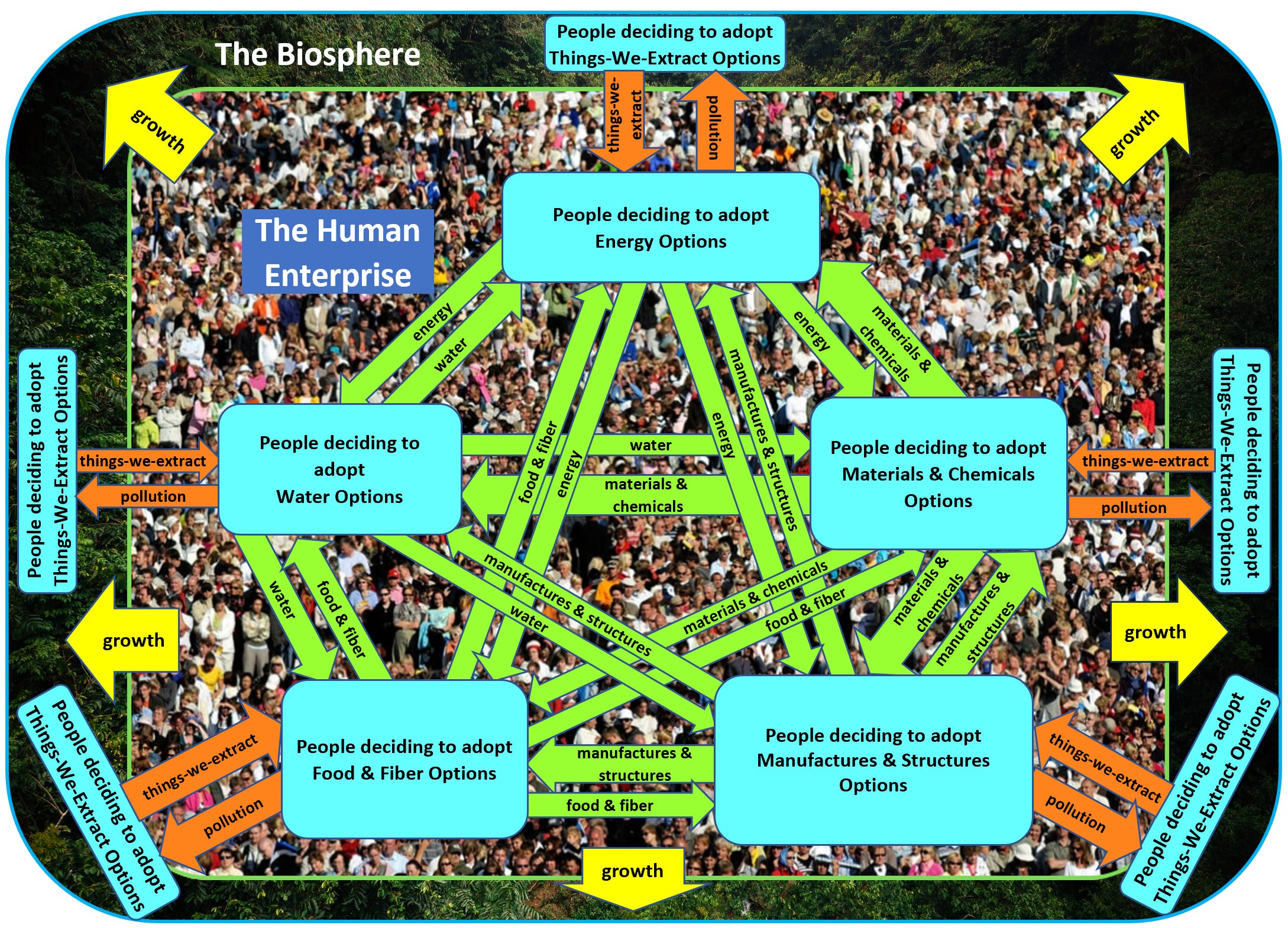
The system -- which may be called “the Human Enterprise” -- that’s creating the planet’s ecological crises (including the climate crisis) may be modeled as …
… the sum of people everywhere deciding to extract physical things (in turquoise) from the biosphere (in deep green) -- things like forests, fresh water, wildlife, soils and minerals -- that may be called the “things-we-extract” for meeting human physical needs …
… plus all the physical flows of all those things-we-extract (in orange) – things like forests, fresh water, wildlife, soils and minerals – out of the biosphere (in deep green) and into the Human Enterprise …
… plus people everywhere deciding to use all those things-we-extract (in turquoise) -- in the forms of energy, water, materials & chemicals, food & fiber and manufactures & structures -- that may be called the “things-we-use” for meeting human physical needs …
… plus all the physical flows of all those things-we-use (in chartreuse) – things like energy, water, materials & chemicals, food & fiber and manufactures & structures -- within the Human Enterprise for meeting human physical needs …
... plus all the physical flows of pollution from all those things-we-use (in orange) out of the Human Enterprise and back into the biosphere (in deep green) …
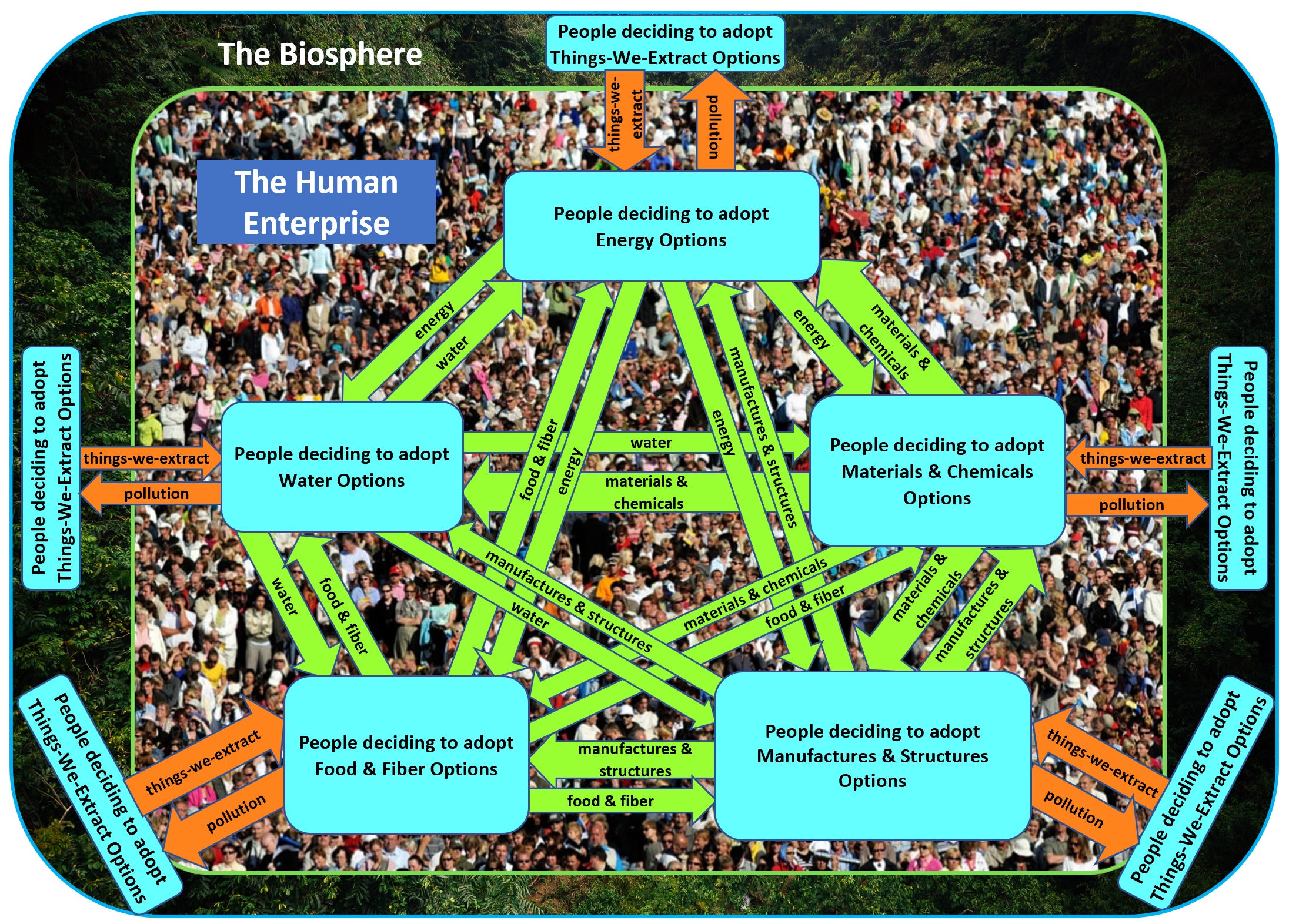
The exponentially growing things-we-extract flows (extraction flows) & pollution flows (in orange) of the Human Enterprise …
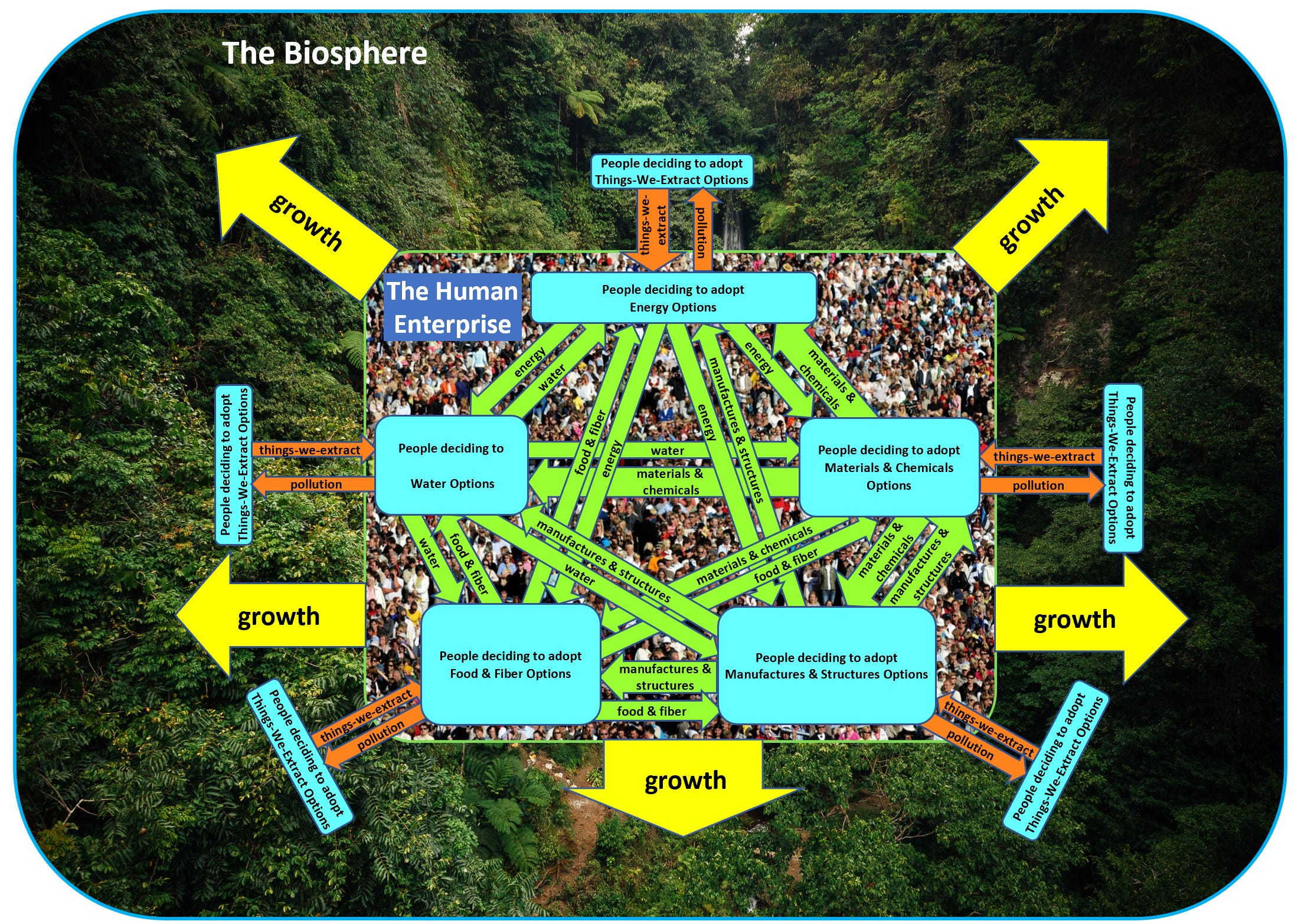
… are damaging the biosphere (in deep green) faster than the than the biosphere can regenerate itself …
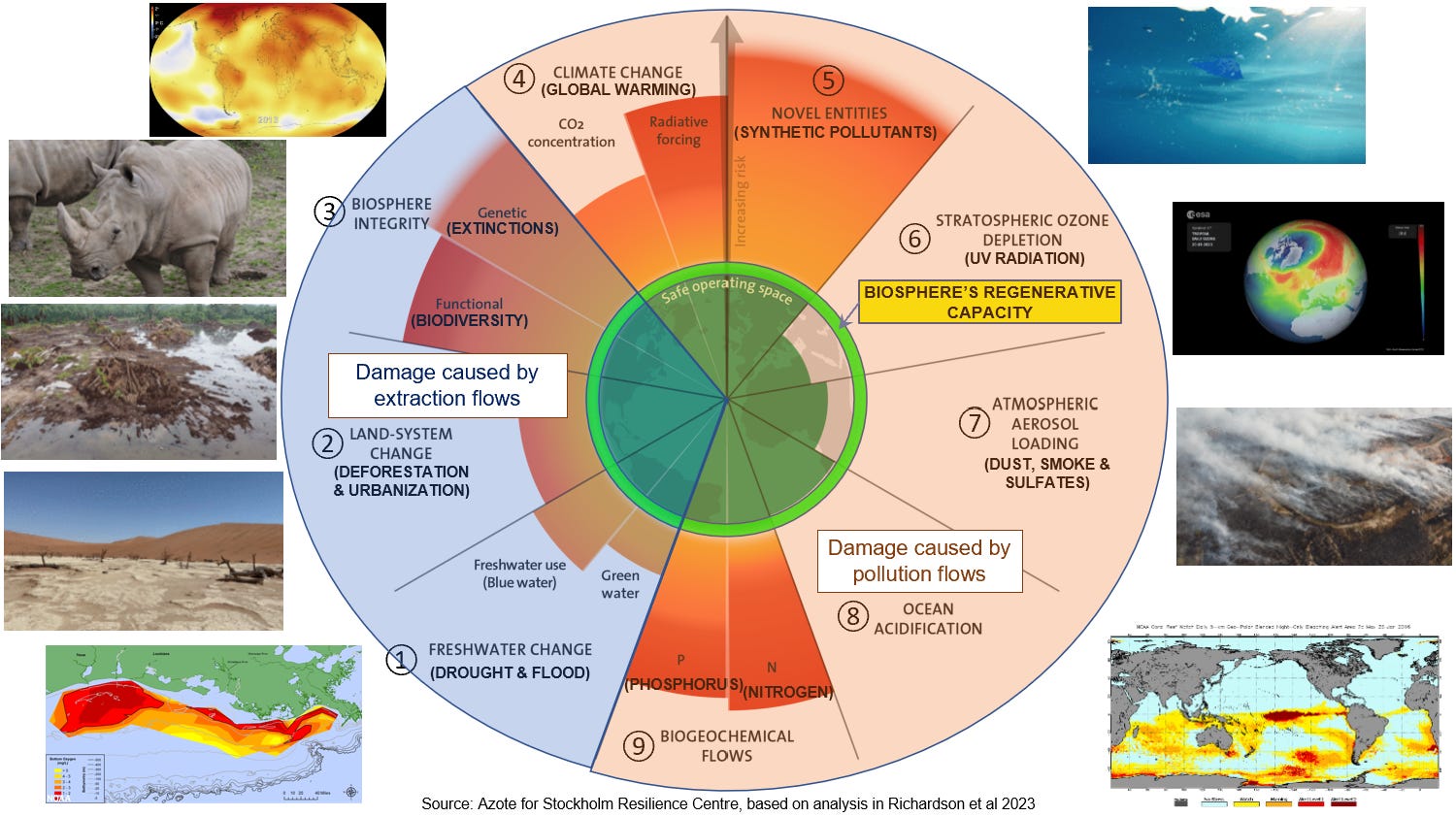
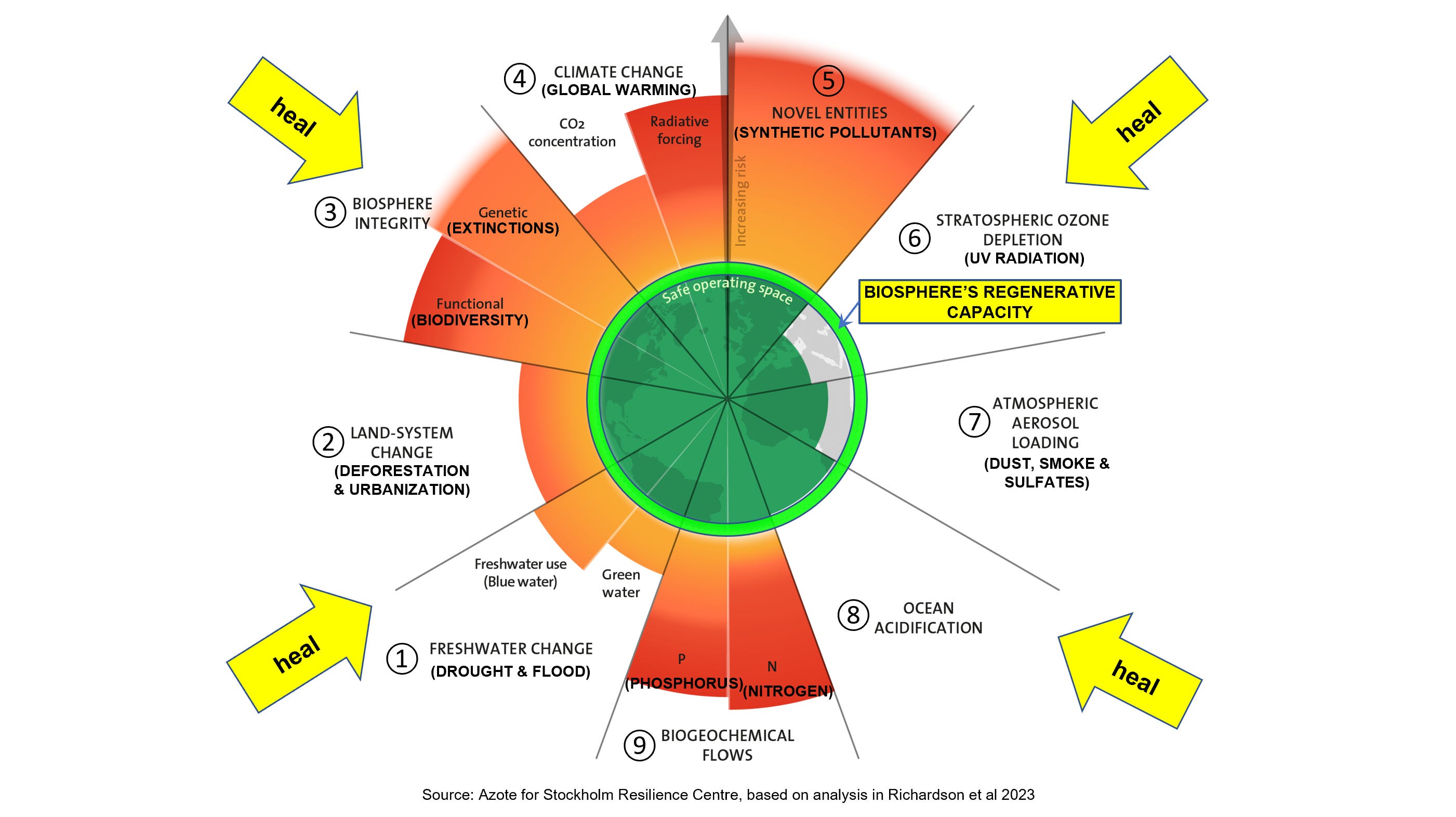
The exponentially-growing damage to the biosphere from the extraction flows & pollution flows of the Human Enterprise is showing up as at least seven planet-scale ecological crises, including the climate crisis …
When one understands that the exponentially-growing extraction flows & pollution flows of the Human Enterprise system are creating the climate crisis …
… solving the climate requires a general process through which people everywhere want, decide & act to adopt options for meeting their human physical needs (in turquoise) that scale back the extraction flows out of the biosphere and the pollution flows into the biosphere (in orange) …
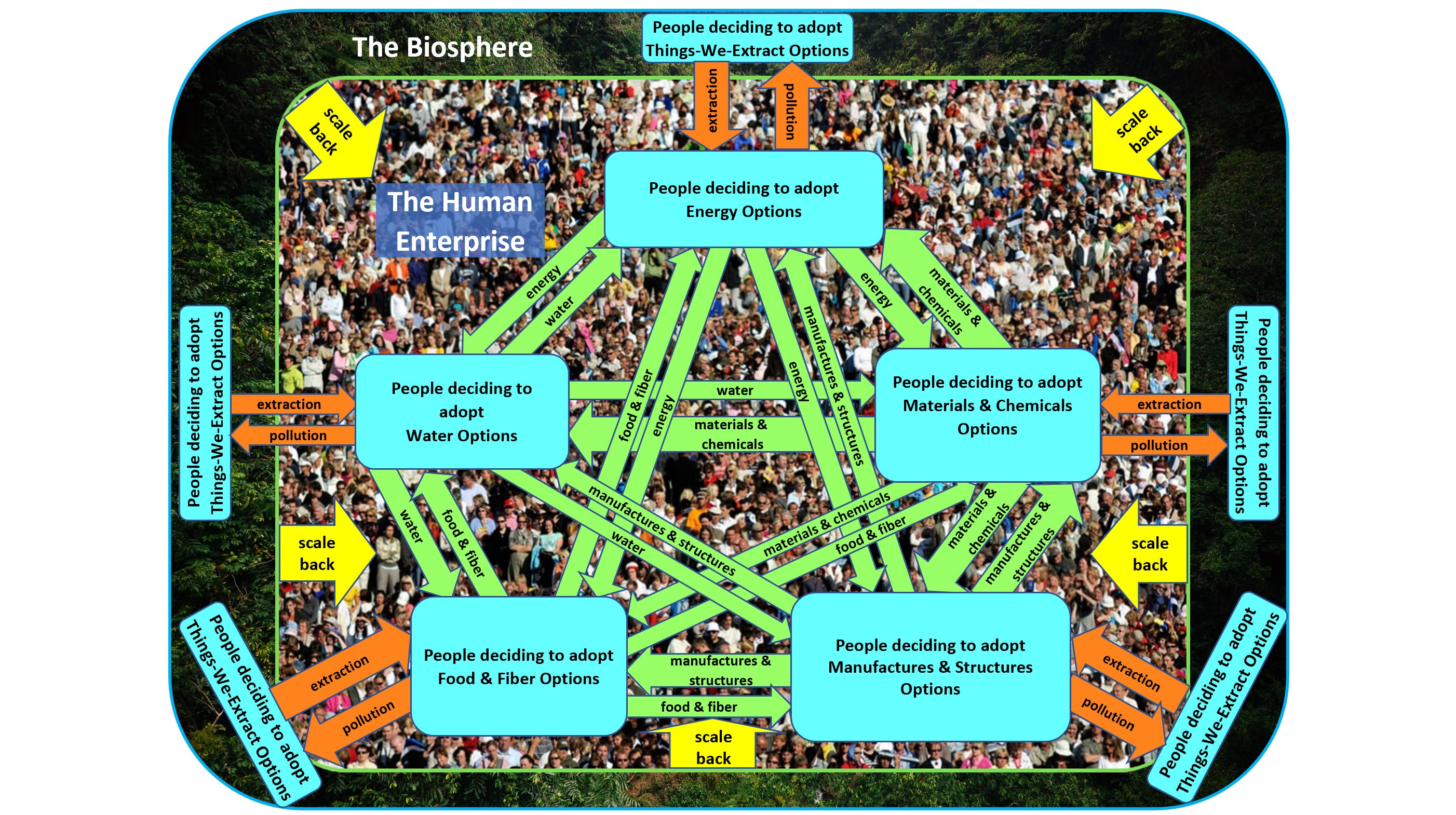
… which allows the biosphere (in deep green) to regenerate itself …
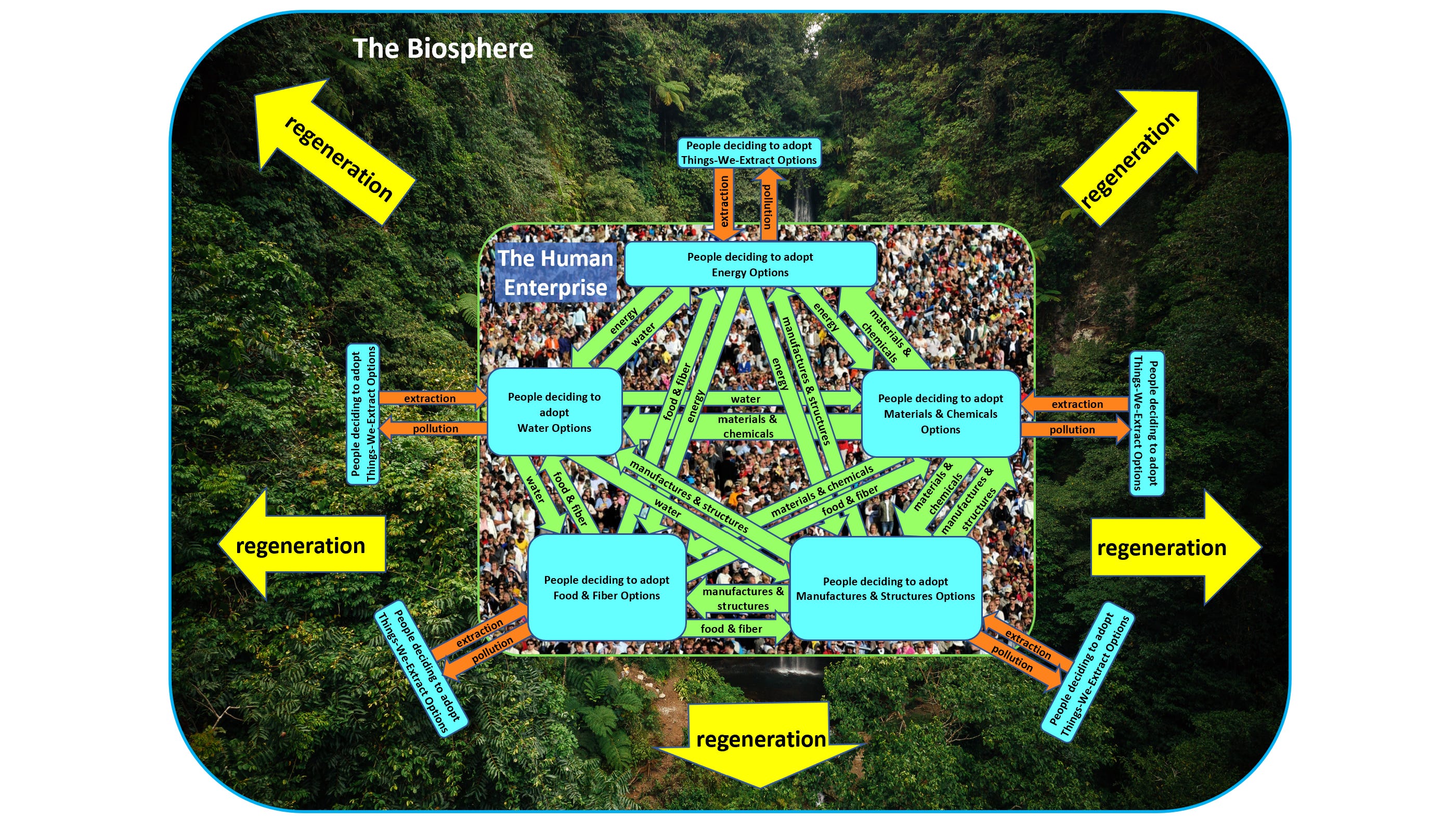
… and allows the creativity, intelligence and regenerative capacity of the biosphere to heal the ecological crises as a whole, including the climate crisis …
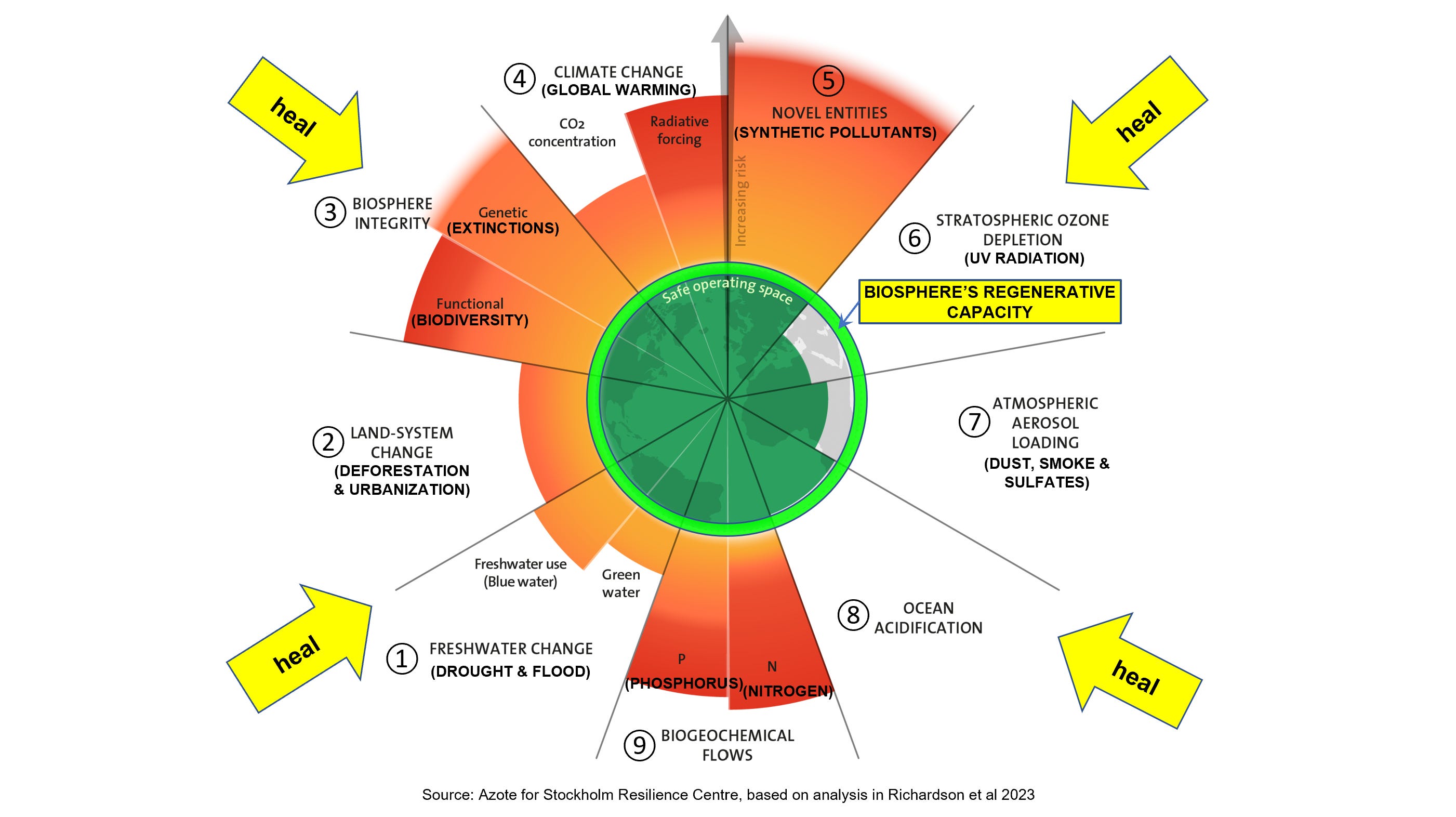
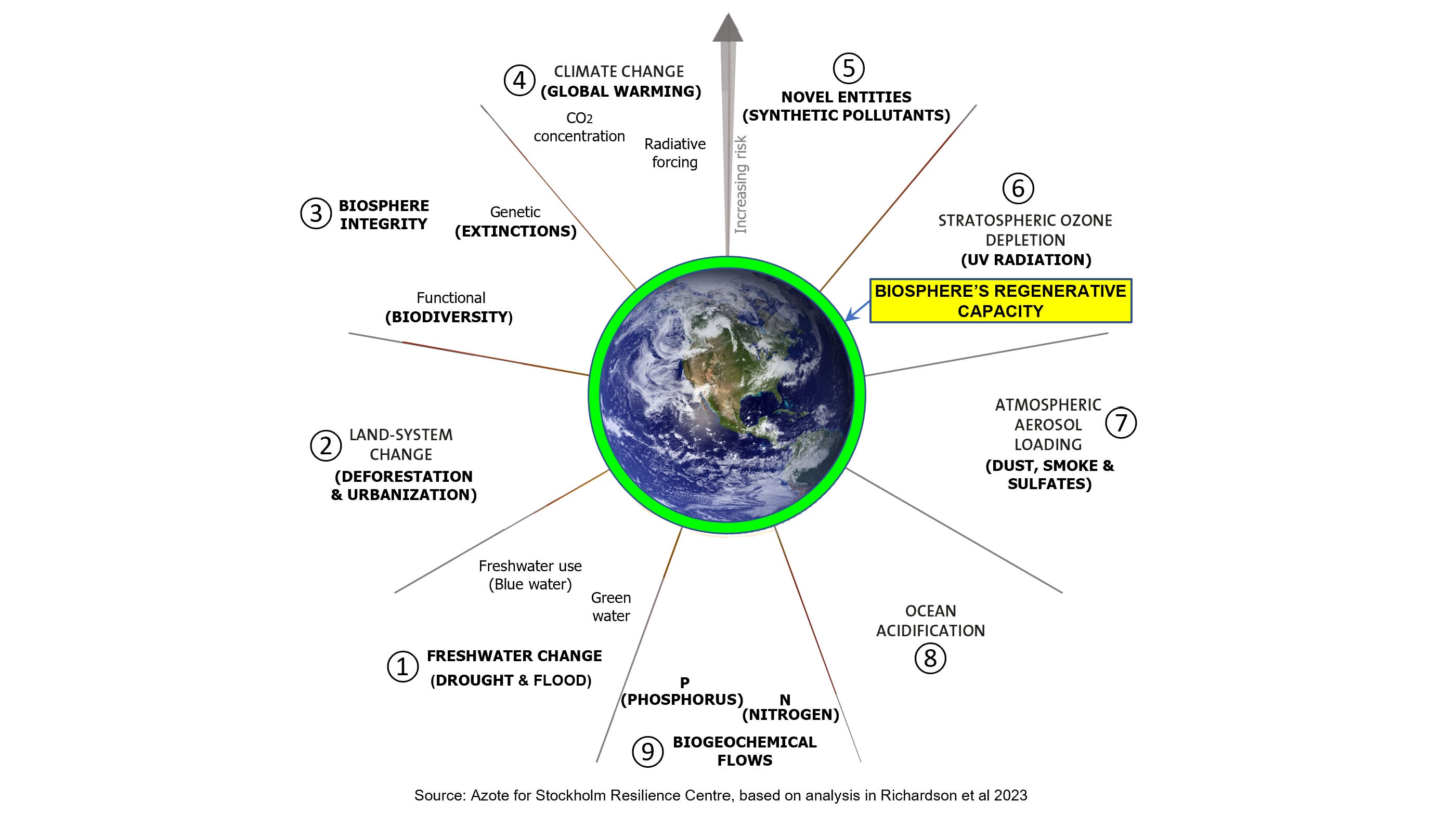
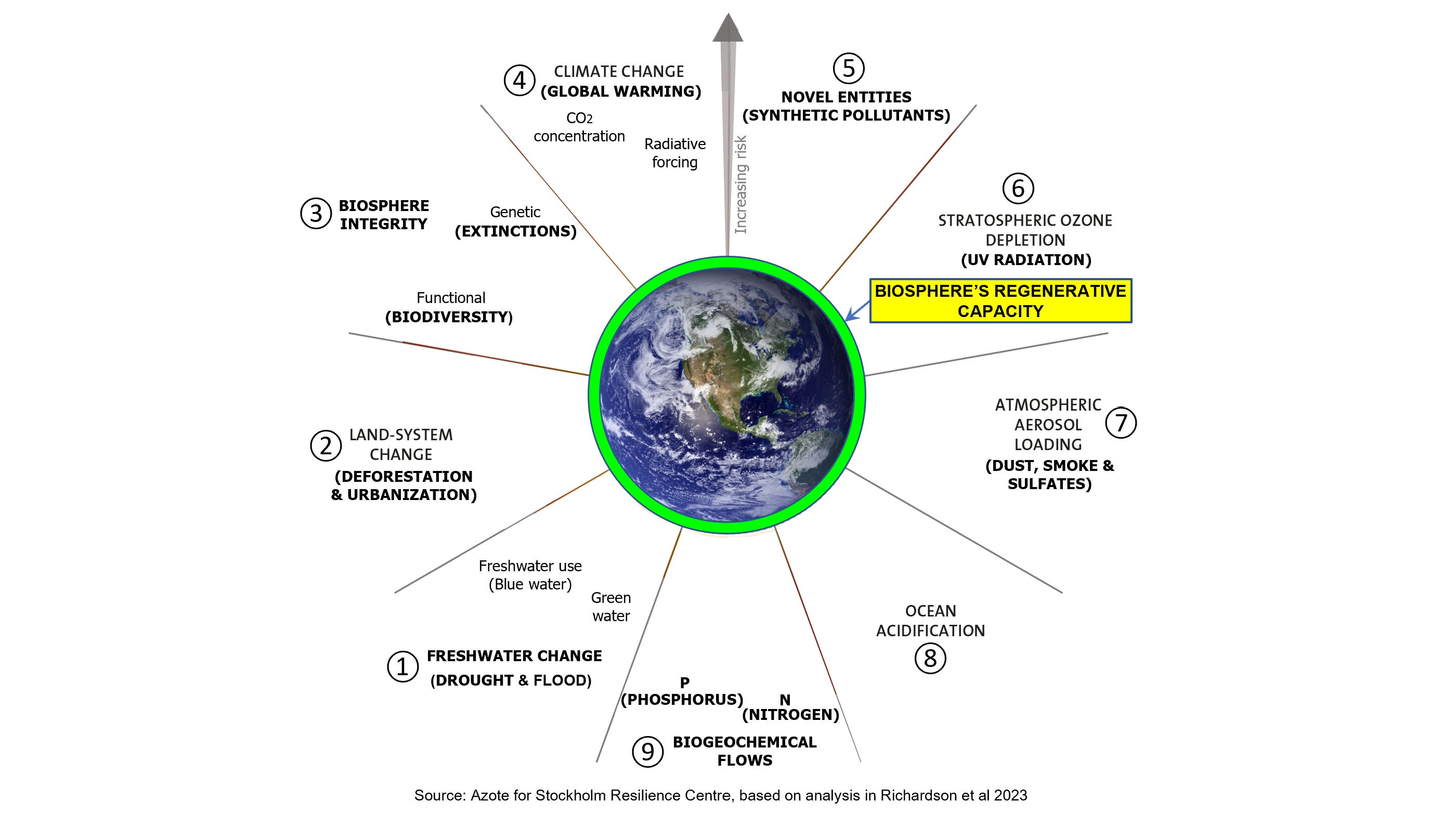
… and allows the biosphere’s regenerative capacity to meet the physical needs of all living beings, including human beings …
Inventing a specific process for solving the climate crisis
Once the people of 1961 invented a general process – called Lunar Orbit Rendezvous – for landing a man on the moon, they next had to invent a specific process through which they invented, tested & deployed the specific aerospace technologies required for the general process of landing a man on the moon.

The specific process they invented – through which they invented, tested & deployed the specific aerospace technologies required for landing a man on the moon -- was called the Mercury missions, the Gemini missions and the Apollo missions …
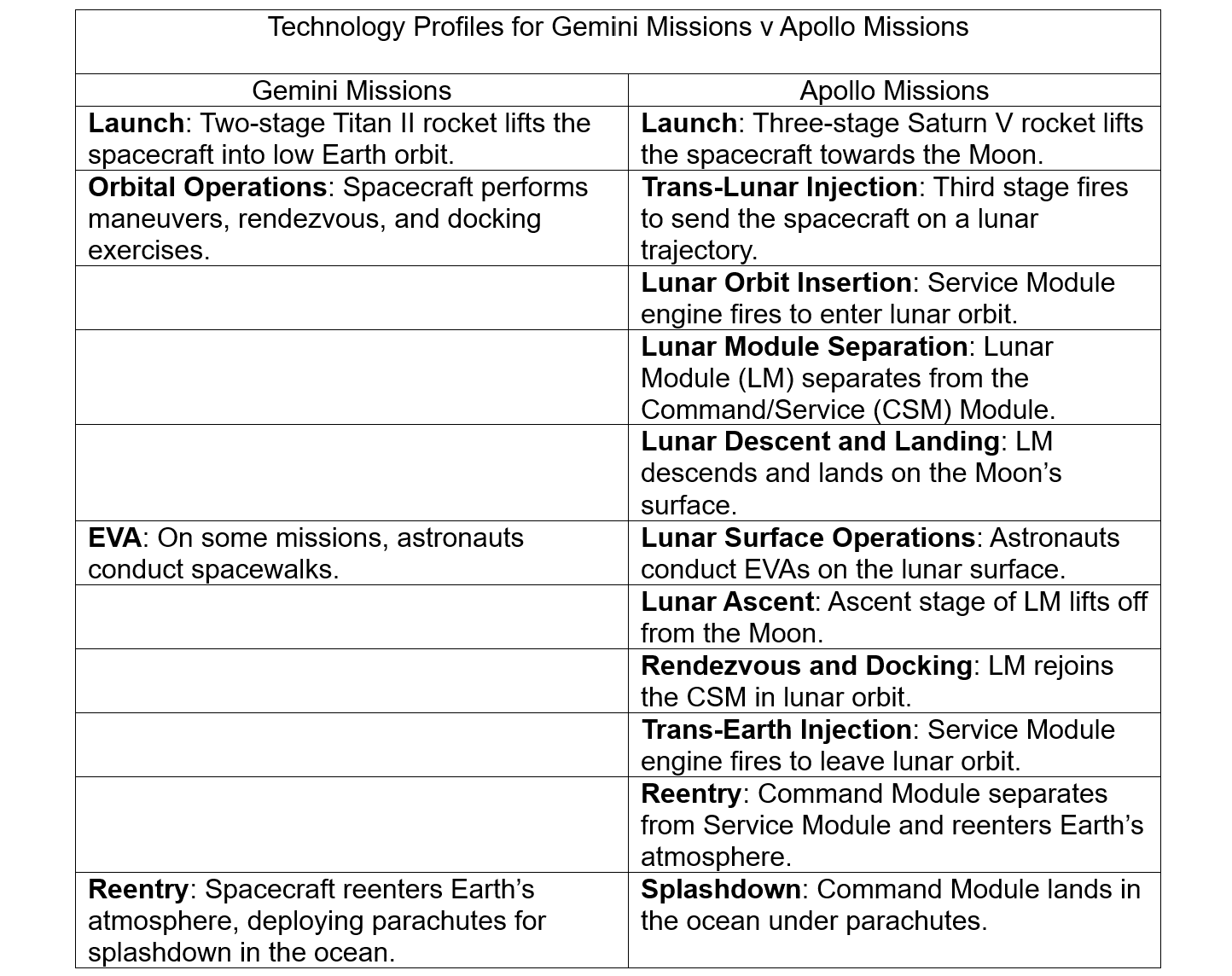
Just as the people of 1961 had to invent a specific process through which they invented, tested & deployed the specific aerospace technologies required for landing a man on the moon, so must we invent a specific process through which people everywhere adopt options for meeting human physical needs that scale back the extraction flows & pollution flows and solve the climate crisis.
To invent such a specific process, we first need a simple understanding of the paradigm through which the system is operating to create the climate crisis, before we can invent a simple paradigm shift – in the form of a specific process -- through which people everywhere adopt options for meeting human physical needs that scale back the extraction flows & pollution flows and solve the climate crisis.
What is the paradigm through which the Human Enterprise is operating to create the climate crisis?
In other words, what is the paradigm through which people everywhere are making decisions for meeting human physical needs that are creating the exponentially-growing extraction flows & pollution flows that are creating the climate crisis?
The paradigm through which people everywhere are making those decisions is a simple 3-step process that may be called “economic decision-making”:
First, people everywhere perceive a present physical need …
Second, people everywhere shop for an option that meets that present need, and …
Third, people everywhere adopt an option that meets that present need at lowest economic cost (in money) …
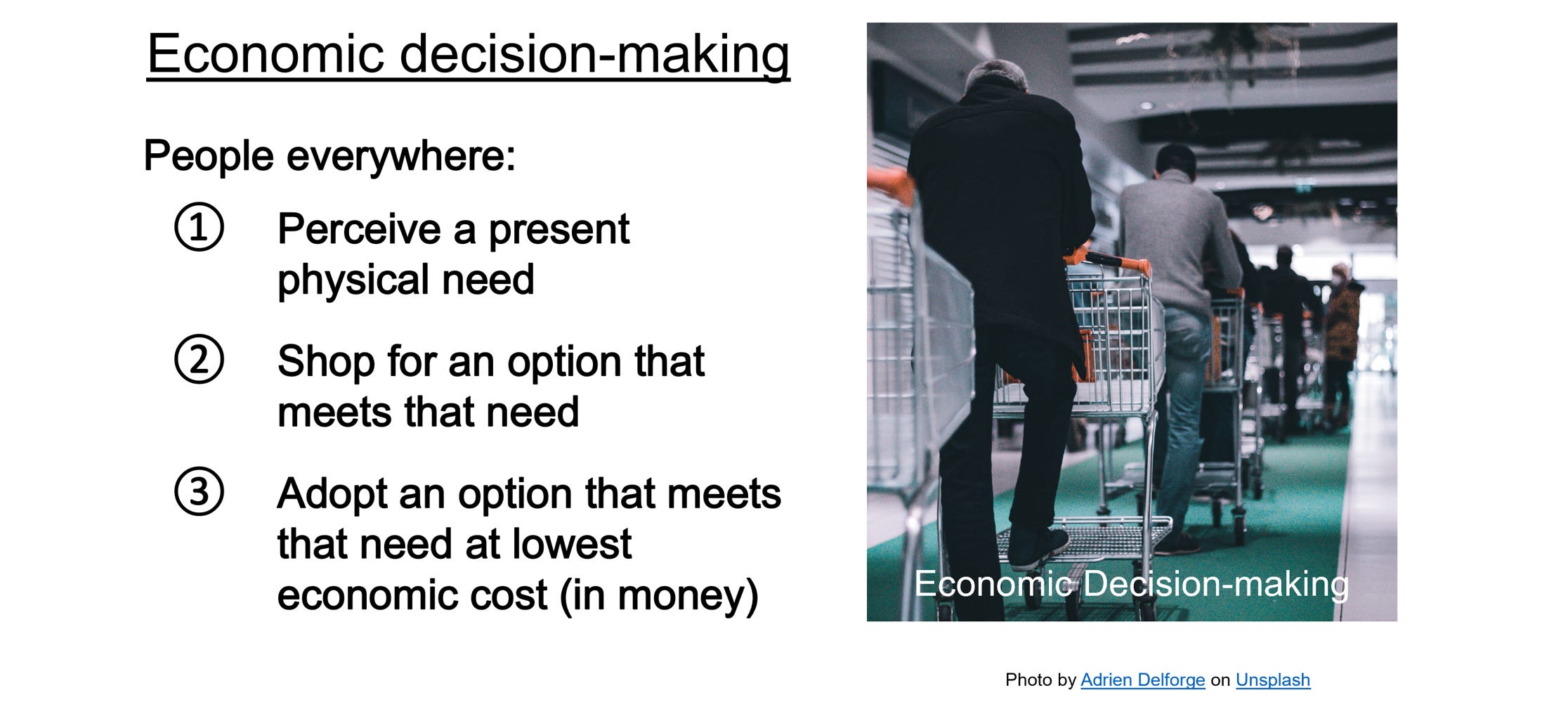
Economic decision-making is creating the planet’s climate crisis because economic decision-making excludes – as “externalities” not measurable in units of money –
the damage (or degeneration) of the biosphere from the extraction flows and/or pollution flows attributable to any option for meeting human physical needs, or
the healing (or regeneration) of the biosphere from the scaling back of extraction flows and/or pollution flows attributable to any option for meeting human physical needs.
Today, people everywhere are not making decisions -- to adopt options for meeting human physical needs -- that scale back the extraction flows & pollution flows --because they have no quantitative information about the damage or healing of the biosphere attributable to their decisions.
To solve the climate crisis, I invented a simple paradigm shift – called “regenerative decision-making” for meeting human physical needs -- through which people everywhere use “regenerative information services” for …
… identifying options for meeting human physical needs …
… evaluating the measurable performance benefits, the measurable cost savings benefits and the measurable biosphere-regenerating benefits of those options …
… comparing those benefits …
… persuading themselves what options they want to adopt …
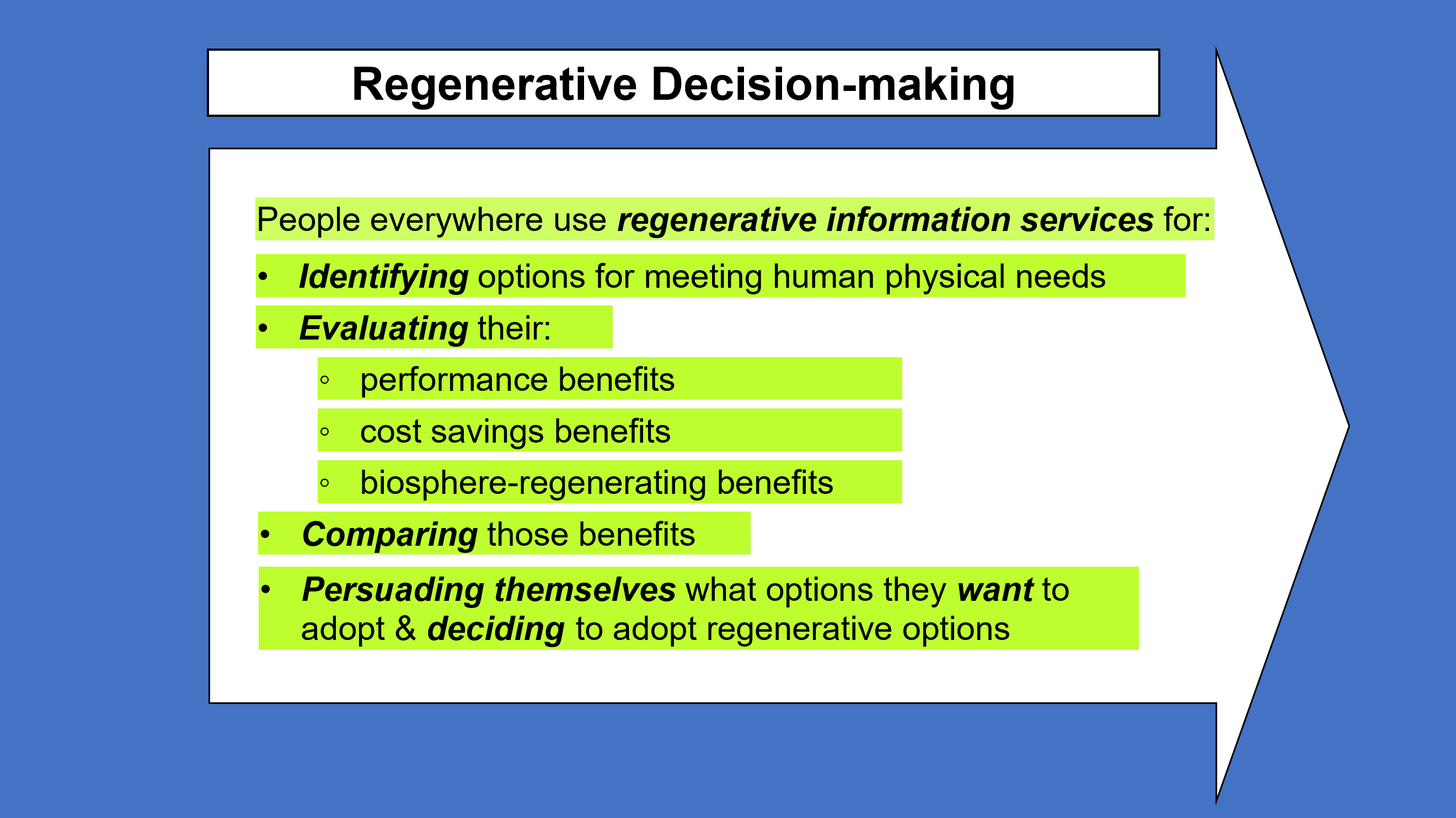
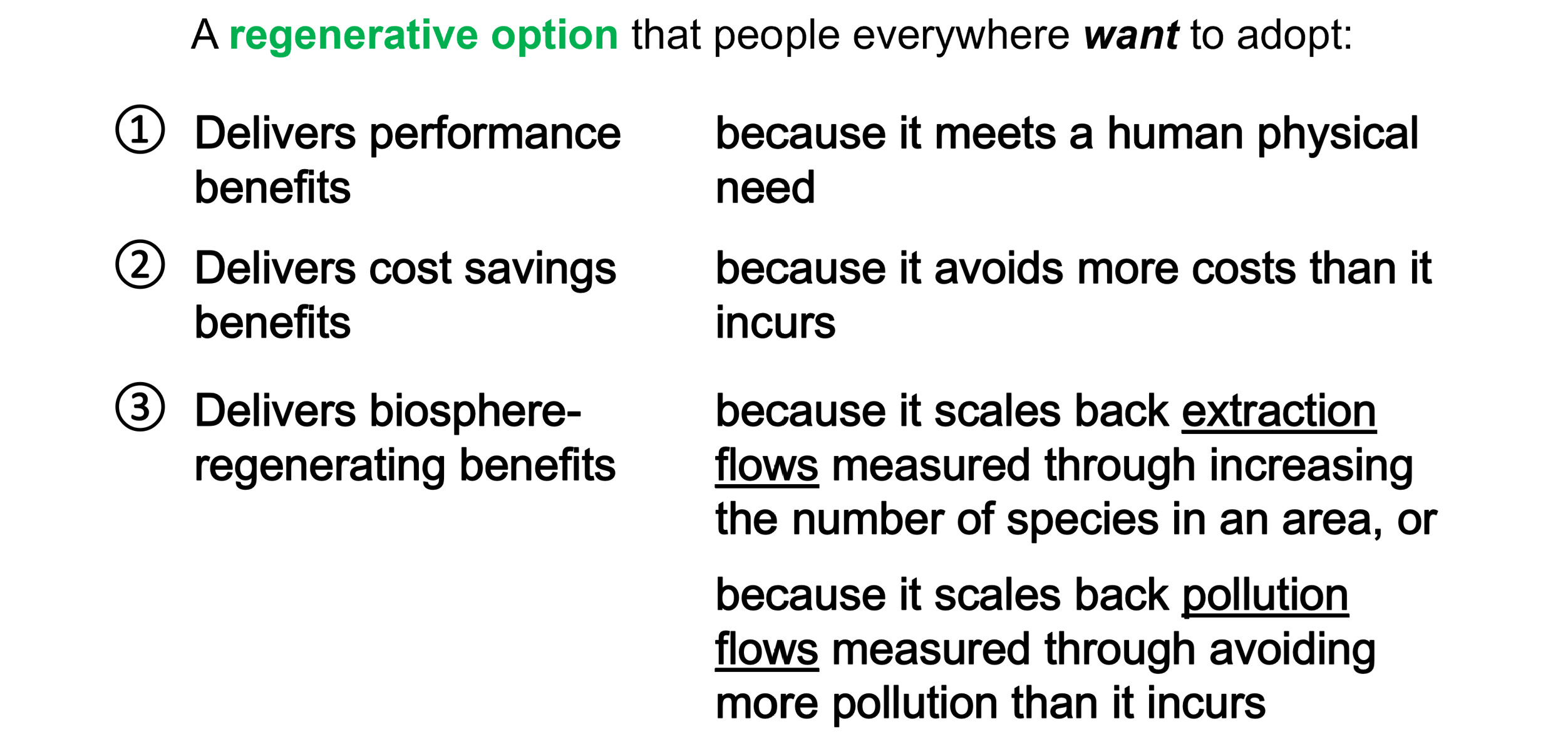
… and deciding to adopt “regenerative options,” including climate solutions, that deliver:
measurable “performance benefits” because they meet human physical needs,
measurable “cost savings benefits” because they avoid more costs than they incur, and
measurable “biosphere-regenerating benefits” (including climate-crisis-healing benefits) because:
they scale back extraction flows out of the biosphere measured through increasing the number of species in an area, or
they scale back pollution flows into the biosphere measured through avoiding more pollution than they incur …
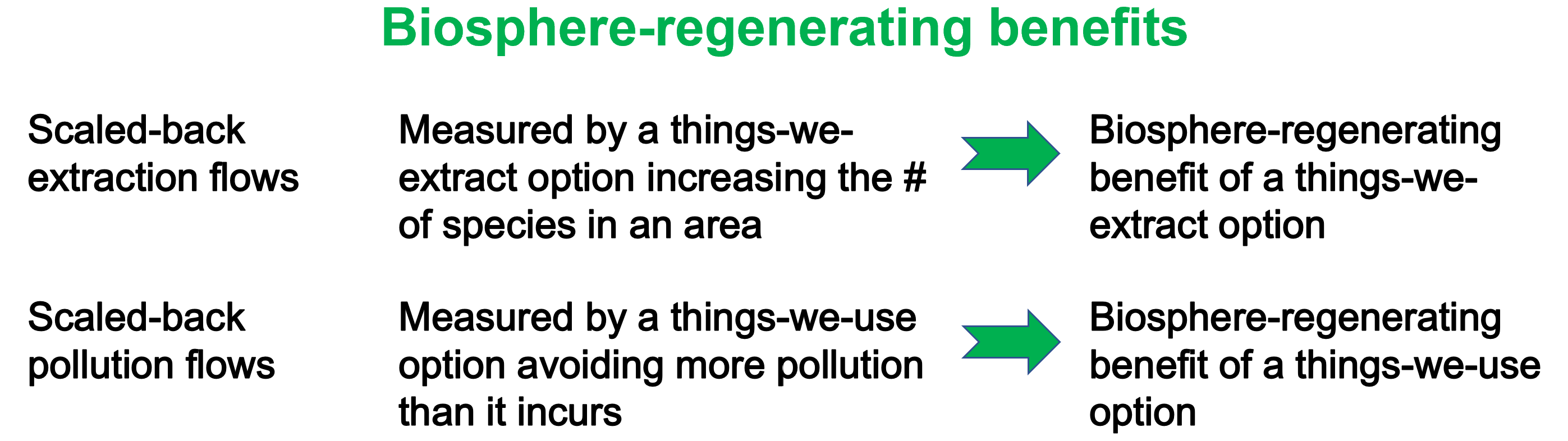
Biosphere-regenerating benefits solve the problem of “externalities”:
by measuring the increasing number of species in an area to determine the regeneration (or healing) of the biosphere attributable to the scaled-back extraction flows of a things-we-extract option, and
by measuring avoided pollution flows more than incurred pollution flows to determine the regeneration (or healing) of the biosphere attributable to the scaled-back pollution flows of a things-we-use option …
Inventing a specific information technology for solving the climate crisis
Once the people of 1961 (and later) invented a specific process through which they invented, tested & deployed the specific aerospace technologies required for landing a man on the moon, they used those processes to invent the specific aerospace technologies …
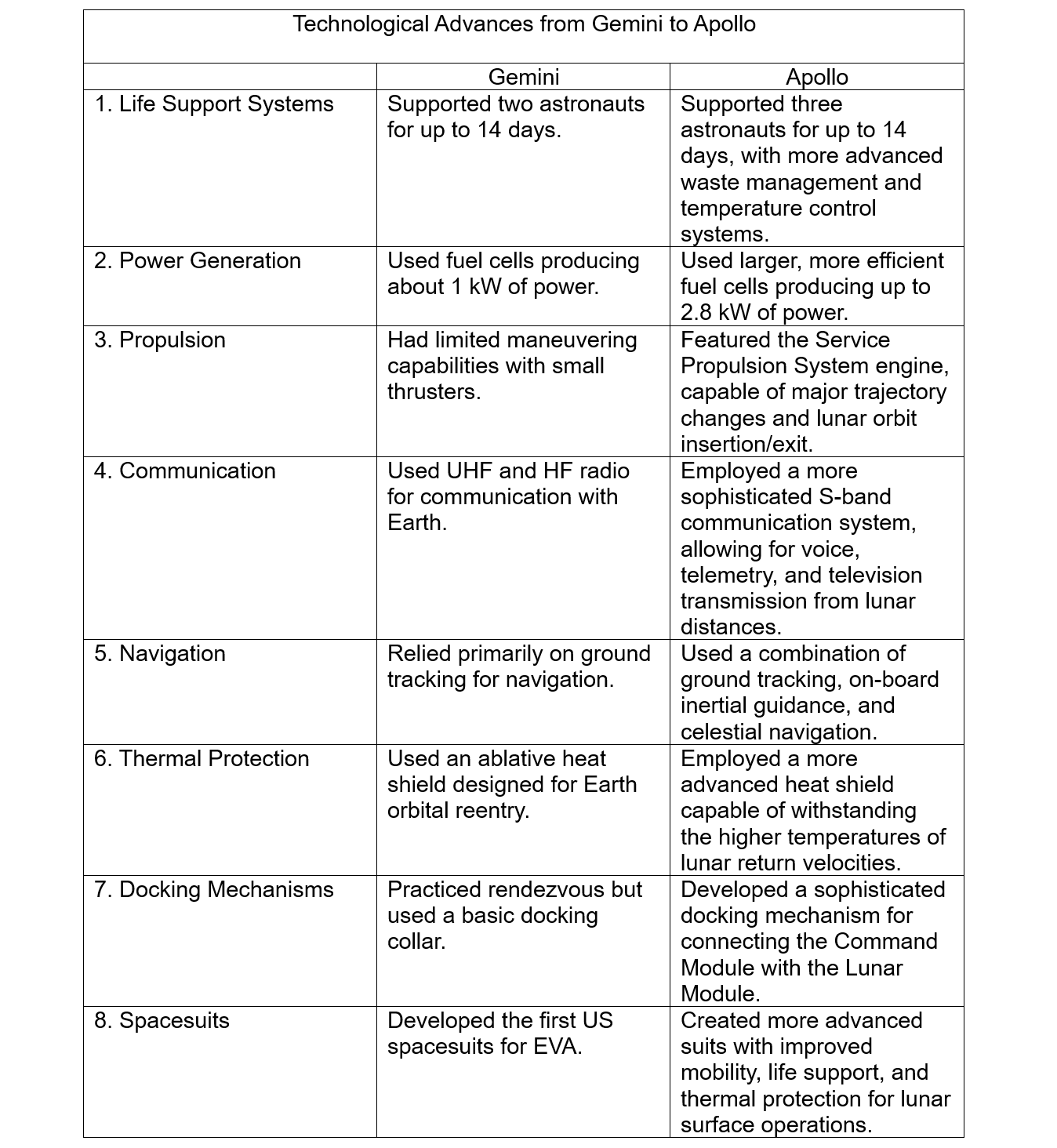
… required for executing all the specific maneuvers and excursions required for landing a man on the moon and returning him safely to Earth …
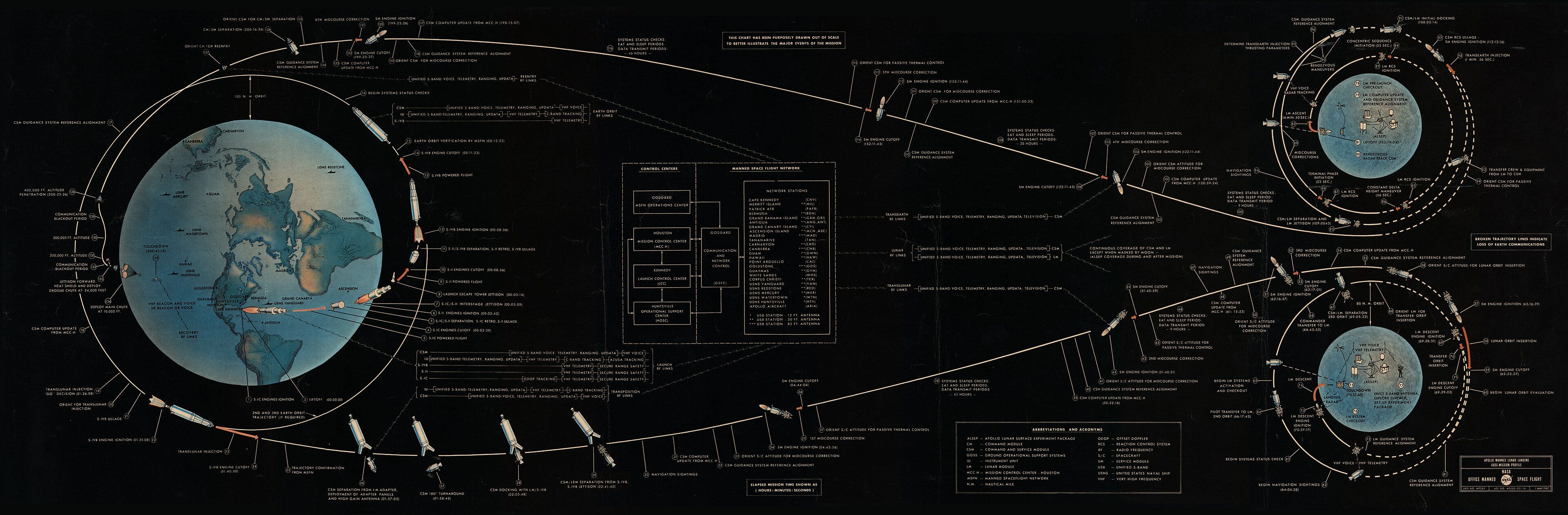
Just as the people of 1961 (and later) had to invent the specific aerospace technologies required for landing a man on the moon, so have I invented a specific information technology required for solving the climate crisis.
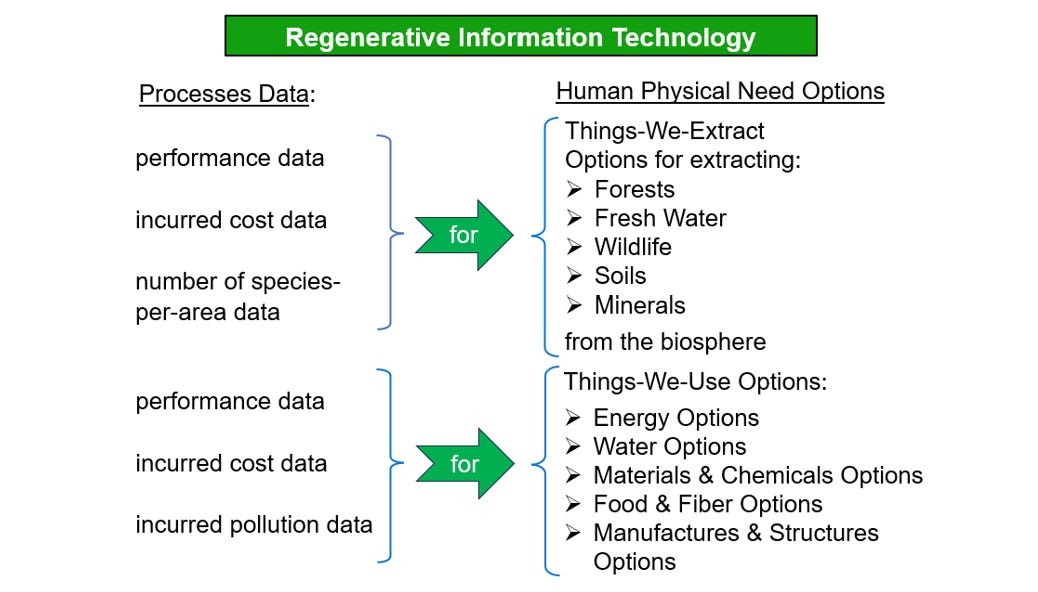
To solve the problem of externalities, and to solve the climate crisis, I invented a simple and easy-to-use technology – called “regenerative information technology” (or “regenerative info tech”) – that processes data for options for meeting human physical needs …
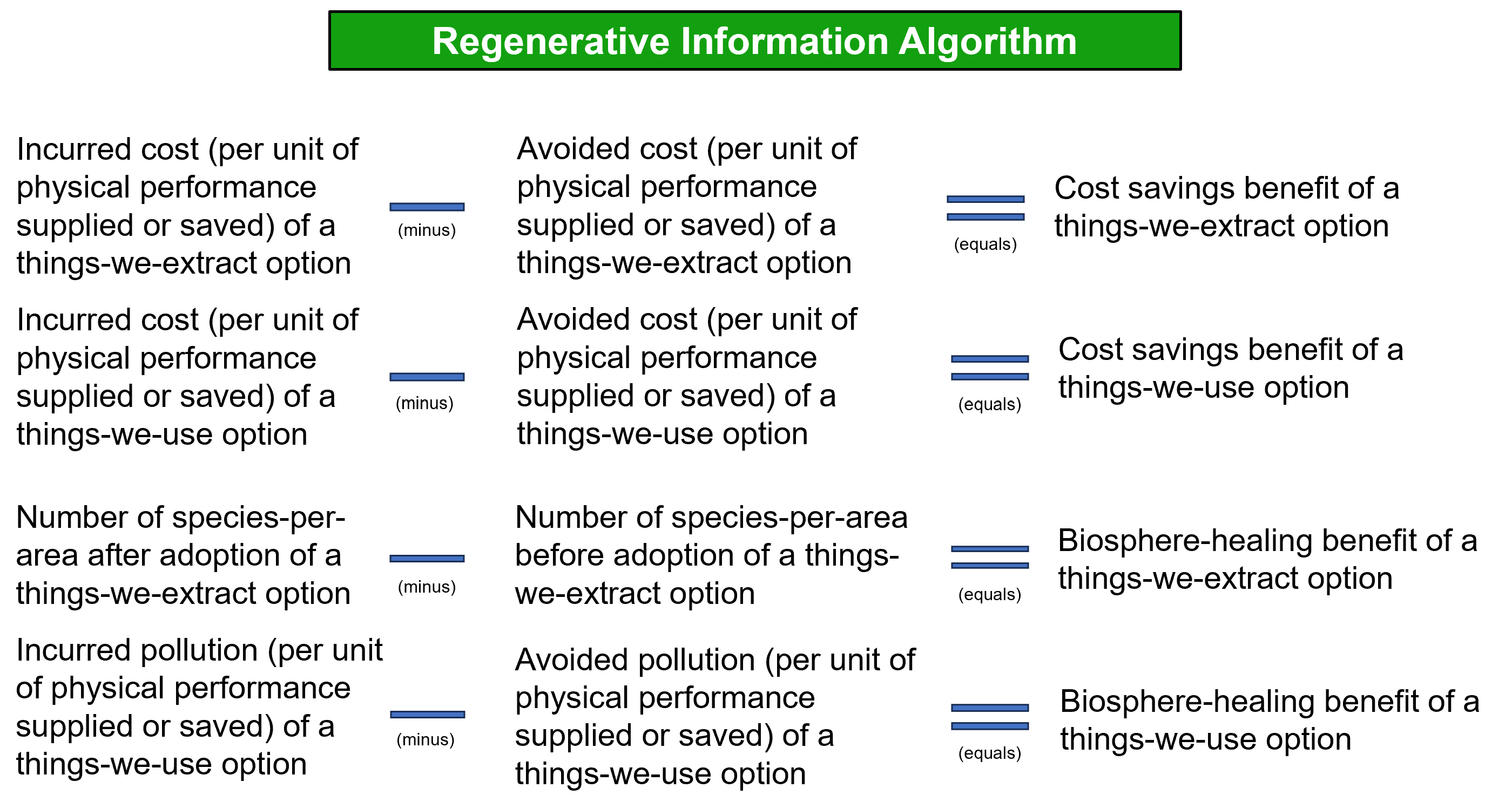
… through a “regenerative information algorithm” …
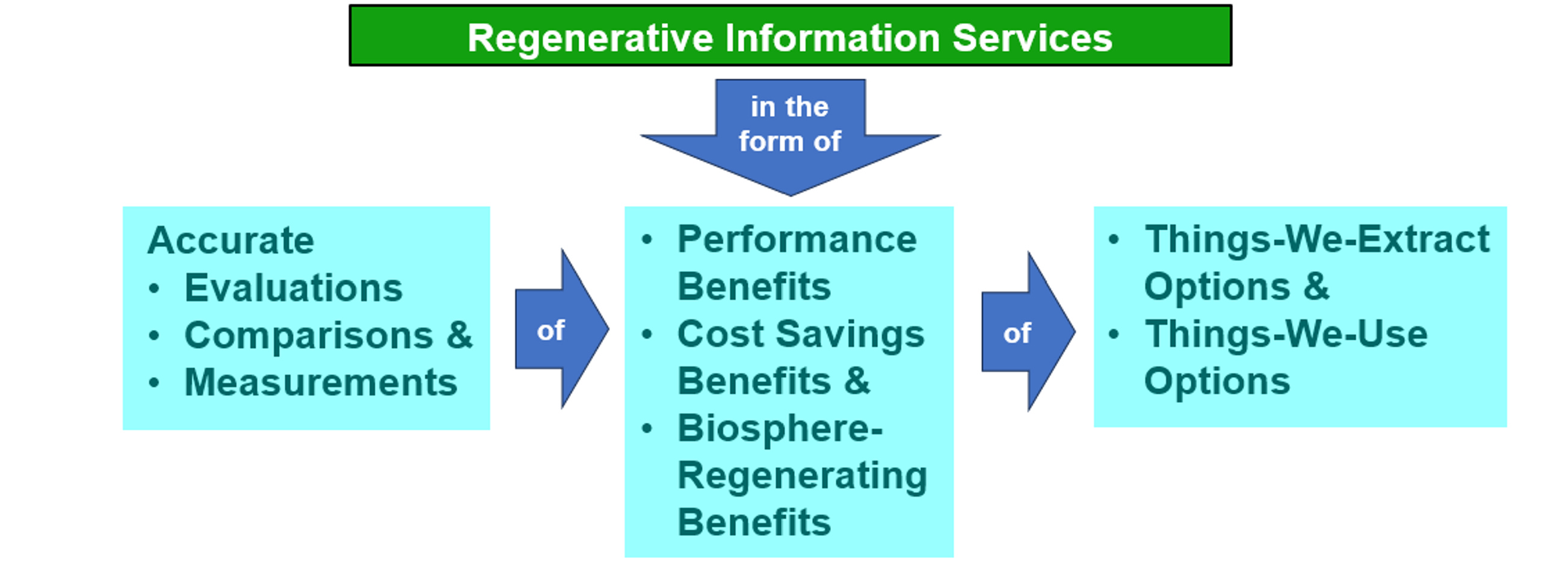
… for supplying people everywhere with simple “regenerative information services” (or “regenerative info services”) in the form of:
accurate evaluations, comparisons & measurements
of the performance benefits, cost savings benefits and biosphere-regenerating benefits
of things-we-extract options and things-we-use options for meeting human physical needs, including climate solutions …
People everywhere use “regenerative information services” for …
… identifying options for meeting human physical needs, including climate solutions …
… evaluating the measurable performance benefits, the measurable cost savings benefits and the measurable biosphere-regenerating benefits of those options …
… comparing those benefits …
… persuading themselves what options they want to adopt …
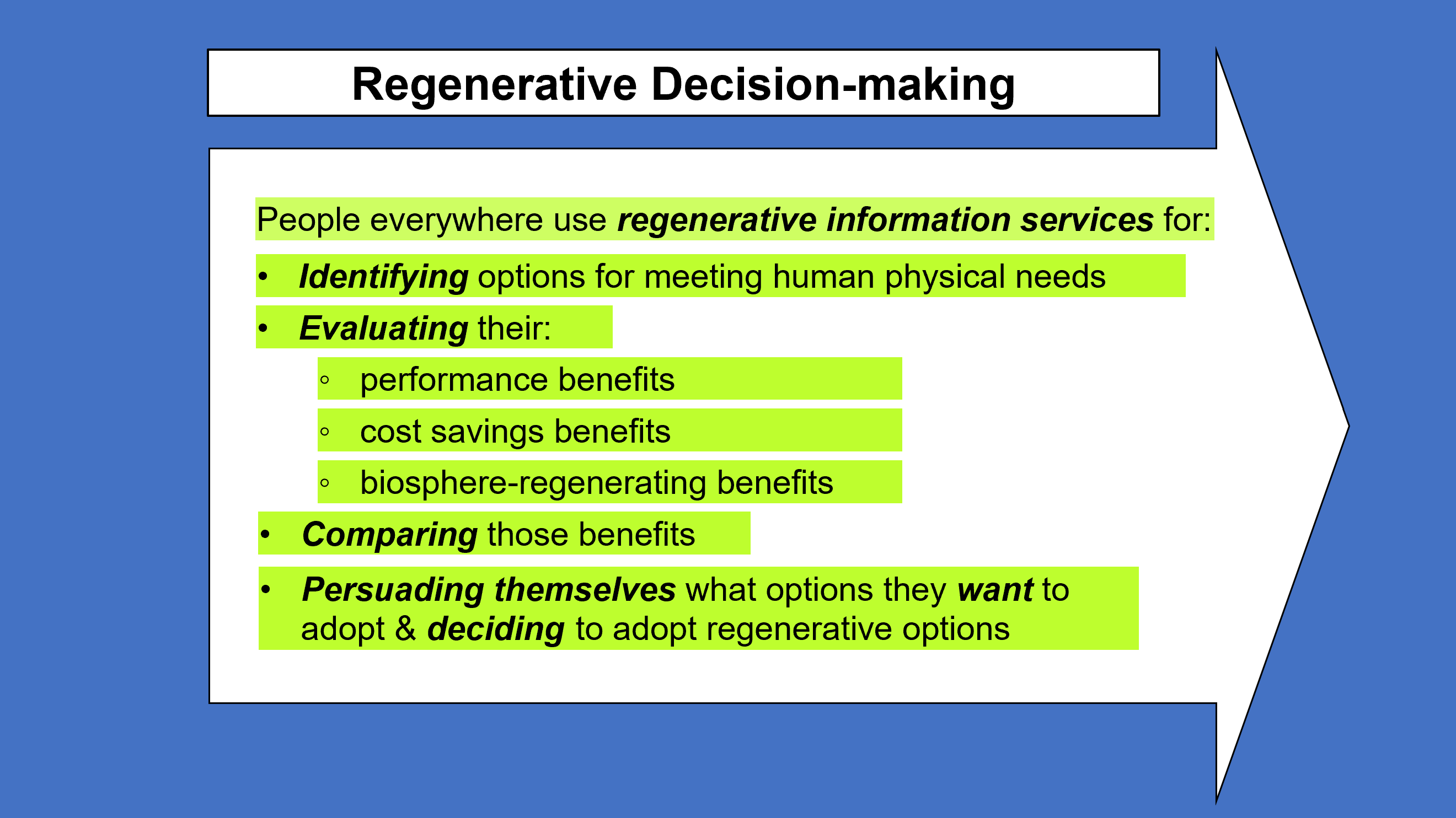
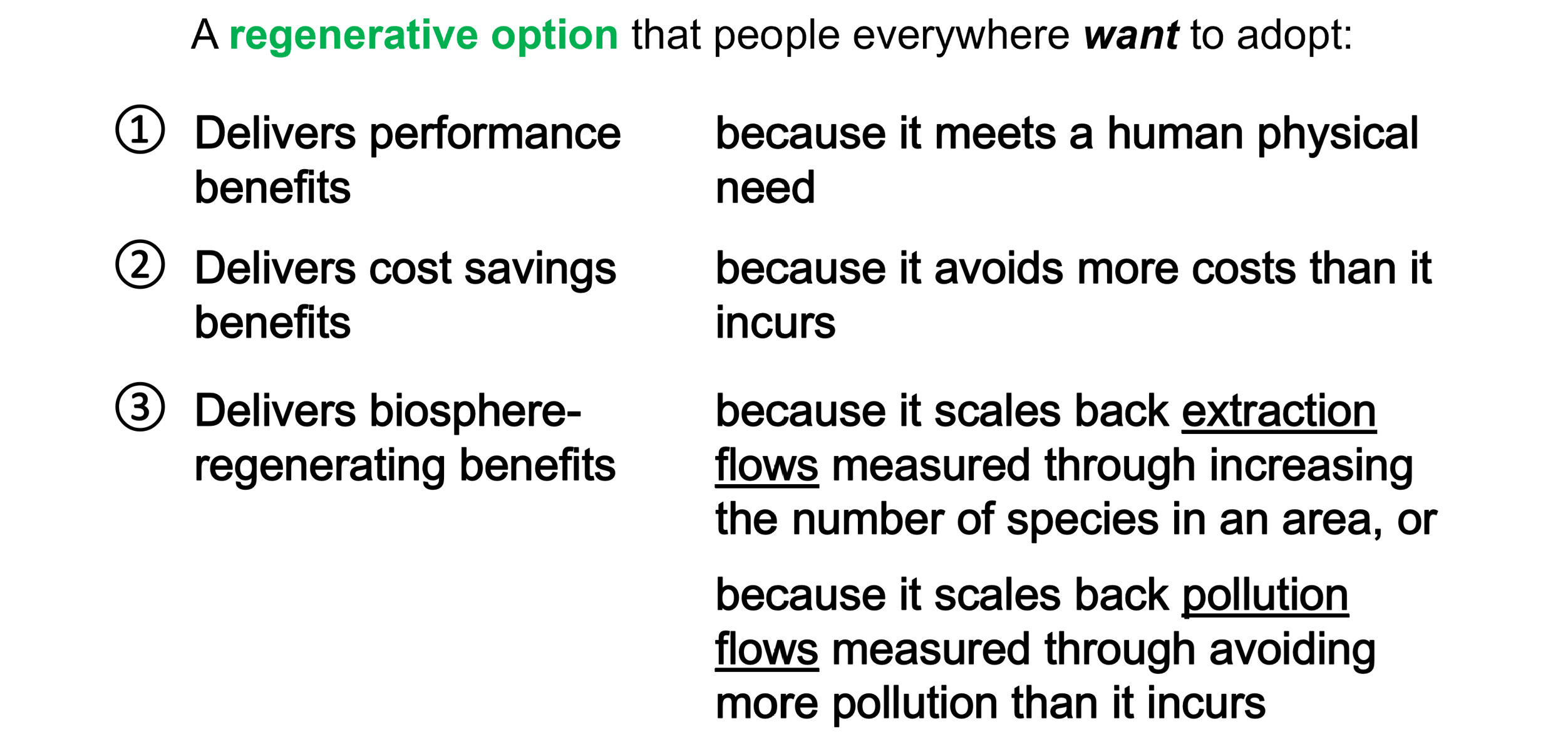
… and deciding to adopt “regenerative options,” including climate solutions, that deliver:
measurable “performance benefits” because they meet human physical needs,
measurable “cost savings benefits” because they avoid more costs than they incur, and
measurable “biosphere-regenerating benefits” because:
they scale back extraction flows out of the biosphere measured through increasing the number of species in an area, or
they scale back pollution flows into the biosphere measured through avoiding more pollution than they incur …
People everywhere wanting, deciding & acting to adopt regenerative options (including climate solutions) -- that deliver biosphere-regenerating benefits – scales back the extraction flows out of the biosphere and the pollution flows into the biosphere (in orange) as a whole, …
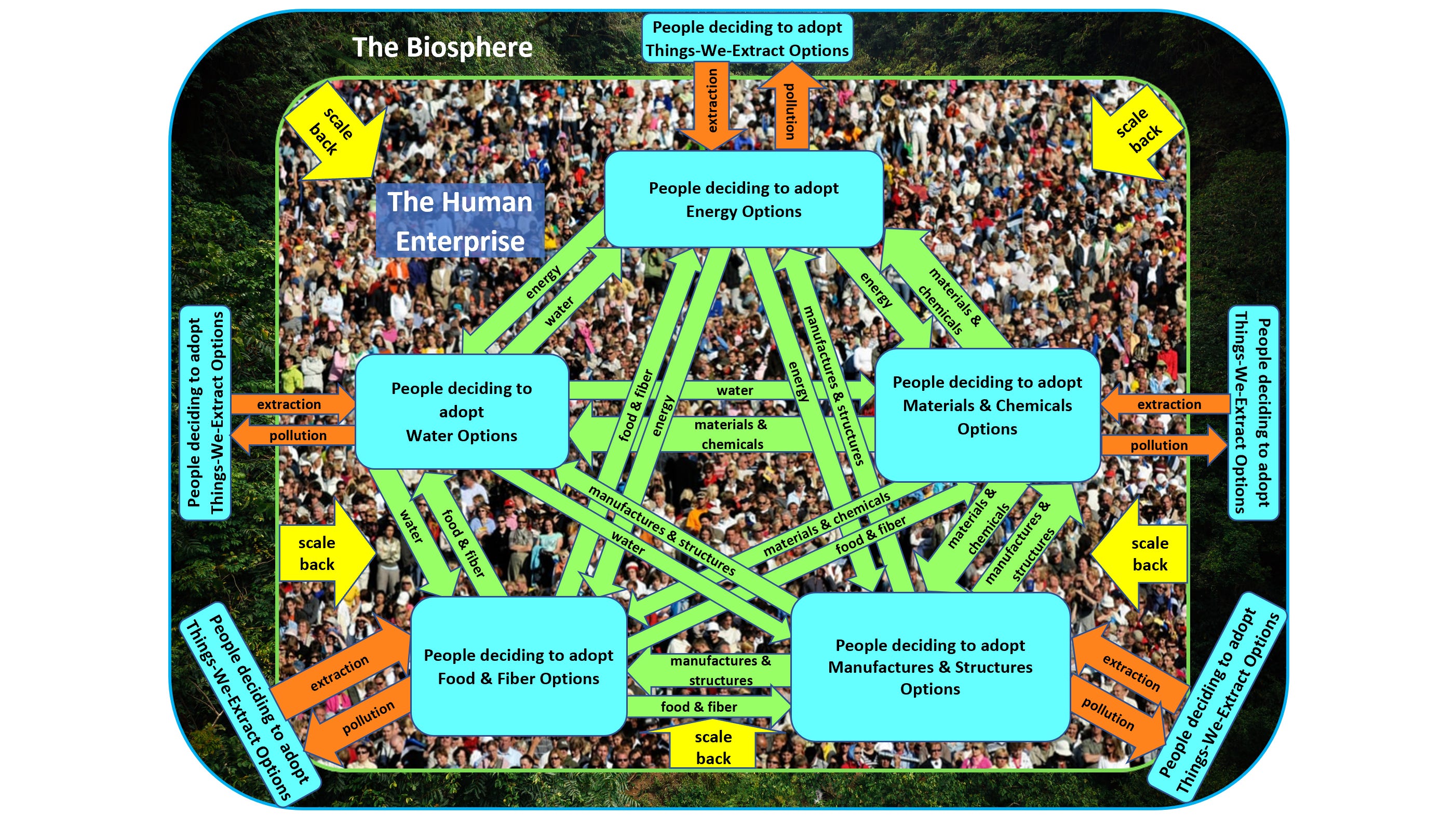
… and, at the same time, keeps intact the flows of things-we-use (in chartreuse) for meeting the physical needs of every human being, …
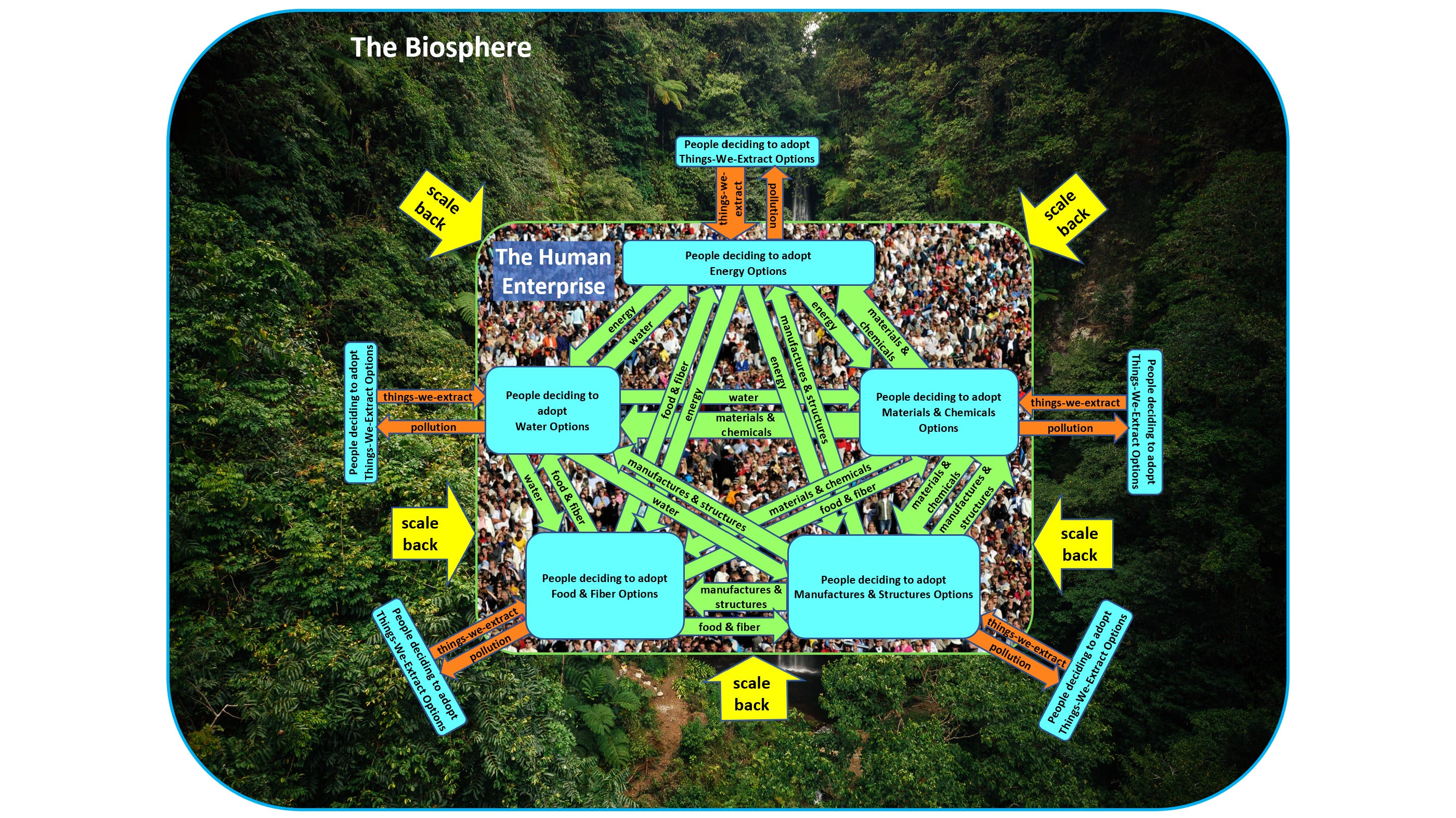
… which allows the biosphere (in deep green) to regenerate itself, …
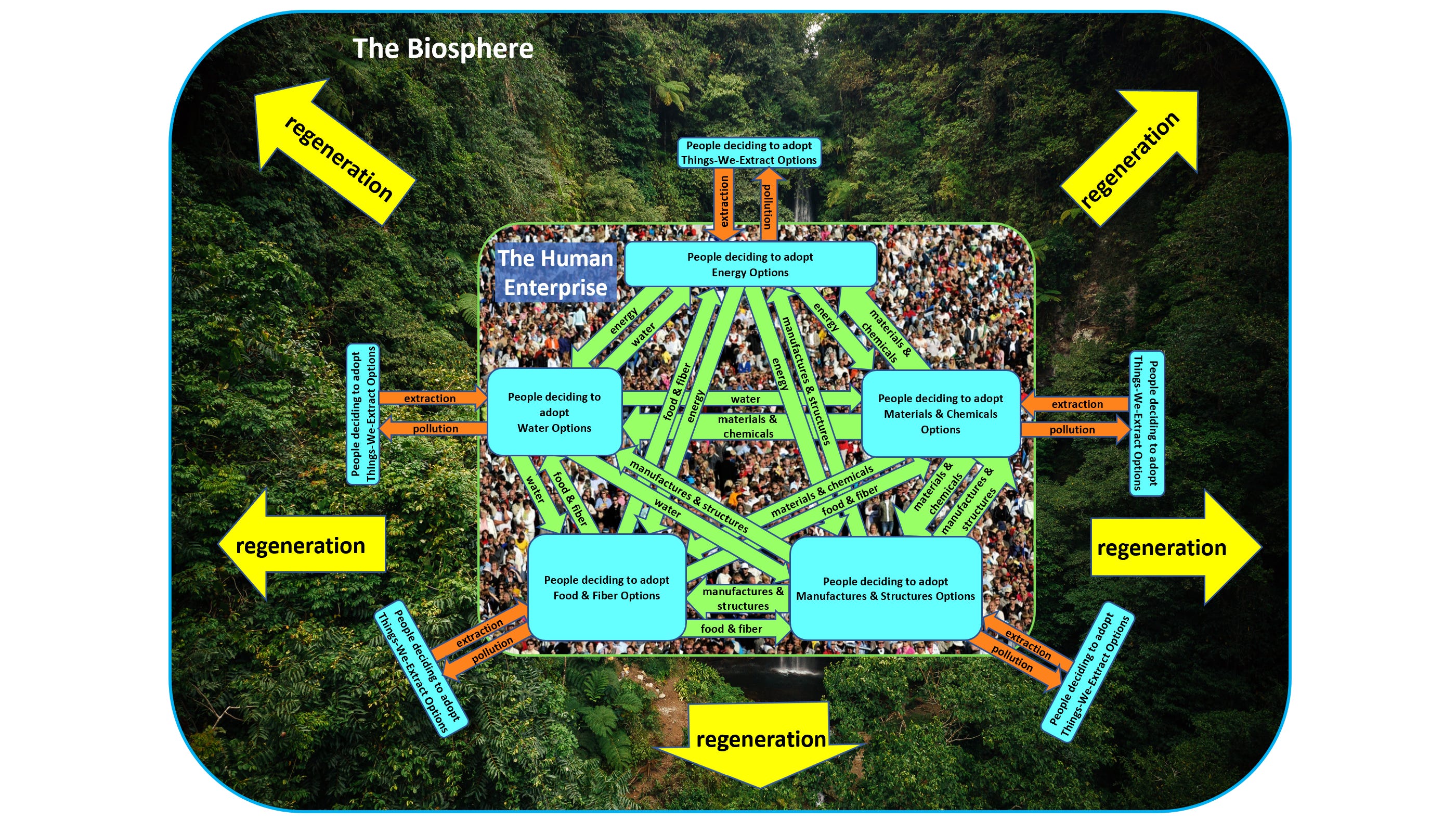
…and allows the creativity, intelligence and regenerative capacity of the biosphere to heal the ecological crises as a whole, including the climate crisis …
… and allows the biosphere to meet the physical needs of all living beings, including human beings …
Do we want to solve the climate crisis or not?
In the words of John Houbolt:
Do we want to go to the moon or not?
Just as the people of 1961 invented a general process, a specific process and the specific aerospace technologies for landing a man on the man, so can we invent a general process, a specific process and the regenerative info tech for solving the climate crisis.
The question is:
Do we want to solve the climate crisis or not?
Thank you for reading The Regenerative Transition.
Peace and Aloha!
Erik
P.S. I cross-posted this article on Medium for greater reach.
[1] Lunar Orbit Rendezvous was chosen from among three general processes for getting to the moon:
Direct Ascent – blast straight off the ground on a direct path to the lunar surface and return the same way;
Earth-Orbit Rendezvous (EOR) – launch two rockets into Earth orbit, refuel and assemble the spacecraft, and then take the entire craft to the moon;
Lunar-Orbit Rendezvous (LOR) – launch one rocket towards lunar orbit and land a small lander on the lunar surface while the remaining spacecraft stayed in orbit.
[2] The story of how Lunar Orbit Rendezvous was invented for landing a man on the moon is told in this NASA article, “60 years ago: NASA Decides on Lunar Orbit Rendezvous for Moon Landing.”
This is excellent and mirrors very much what my team is working on too. On the whole Human Enterprise, we need a Visible Hand, a method of seeing the whole of human decision making and there is way to coordinate our human choice-making via proper distribution of currency, which is a choice-making technology, a kind of economic democracy. We just updated our work, see: Common-Planet.org
Thank you Erik. I really appreciated this piece. The moonshot framing is compelling, especially the reminder that societies can organize around seemingly impossible goals when there is shared vision, coordination, and long term commitment.
What resonates most for me is the deeper systems lens running through this: the recognition that the climate crisis is not simply a technological failure, but the outcome of an economic and civilizational paradigm rooted in extraction, externalization, and disconnection from the living world.
I also appreciate the emphasis on regeneration and on creating systems that actively contribute to the health and flourishing of both human communities and the biosphere.
At the same time, I find myself thinking that alongside new information systems and regenerative technologies, there is also a profound cultural, relational, and consciousness dimension to this transition. How humans understand value, community, interdependence, and our relationship with life itself may ultimately shape whether any technological transition becomes truly regenerative.
A lot to sit with here.