
Solving the problem of externalities solves the climate crisis
Biosphere-regenerating benefits solve the problem of externalities

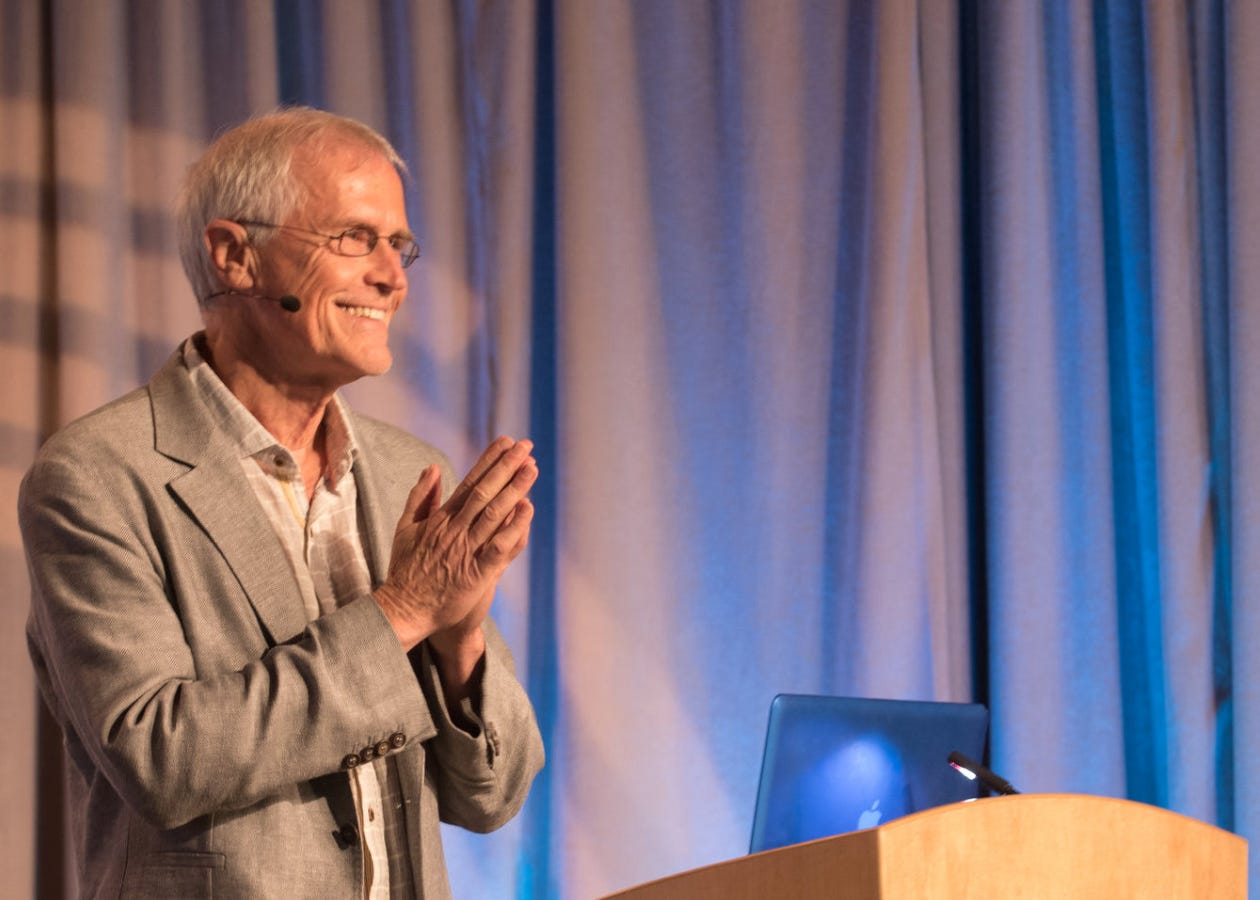
We need to address what is down here, not up there: the massive rates of resource extraction … and the absurd “tragic science” of economics, which excludes the environment. – Paul Hawken
P.S. This newsletter will not fit in an email. Please read it in your browser or in the Substack app, and don’t forget to tap the heart icon at the bottom: it helps my writing find more readers.
What’s the system that’s creating the climate crisis?
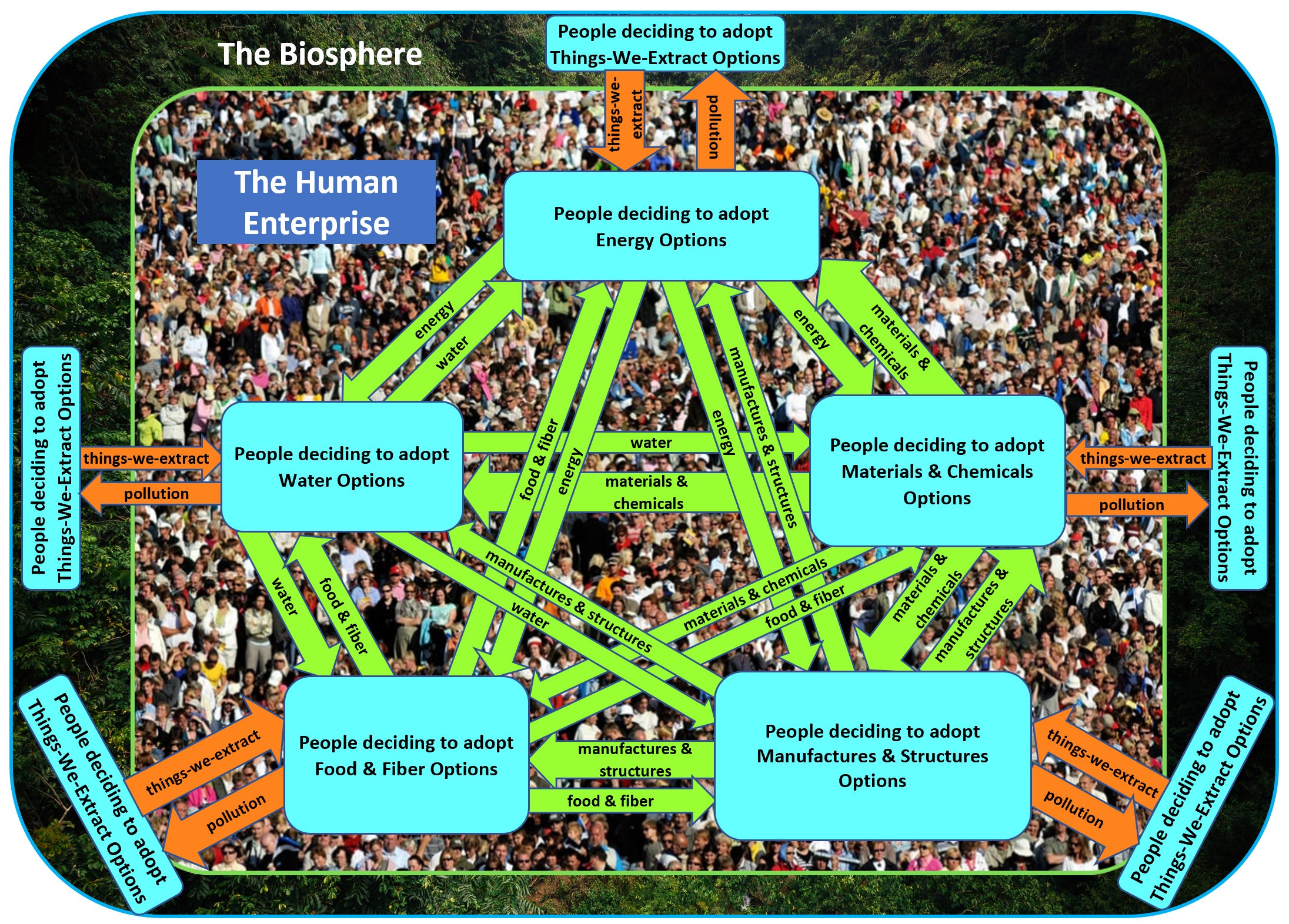
The system -- which may be called “the Human Enterprise” -- that’s creating the planet’s ecological crises (including the climate crisis) may be modeled as …
… the sum of people everywhere deciding to extract physical things (in turquoise) from the biosphere (in deep green) -- things like forests, fresh water, wildlife, soils and minerals -- that may be called the “things-we-extract” for meeting human physical needs …
… plus all the physical flows of all those things-we-extract (in orange) – things like forests, fresh water, wildlife, soils and minerals – out of the biosphere (in deep green) and into the Human Enterprise …
… plus people everywhere deciding to use all those things-we-extract (in turquoise) -- in the forms of energy, water, materials & chemicals, food & fiber and manufactures & structures -- that may be called the “things-we-use” for meeting human physical needs …
… plus all the physical flows of all those things-we-use (in chartreuse) – things like energy, water, materials & chemicals, food & fiber and manufactures & structures -- within the Human Enterprise for meeting human physical needs …
... plus all the physical flows of pollution from all those things-we-use (in orange) out of the Human Enterprise and back into the biosphere (in deep green) …
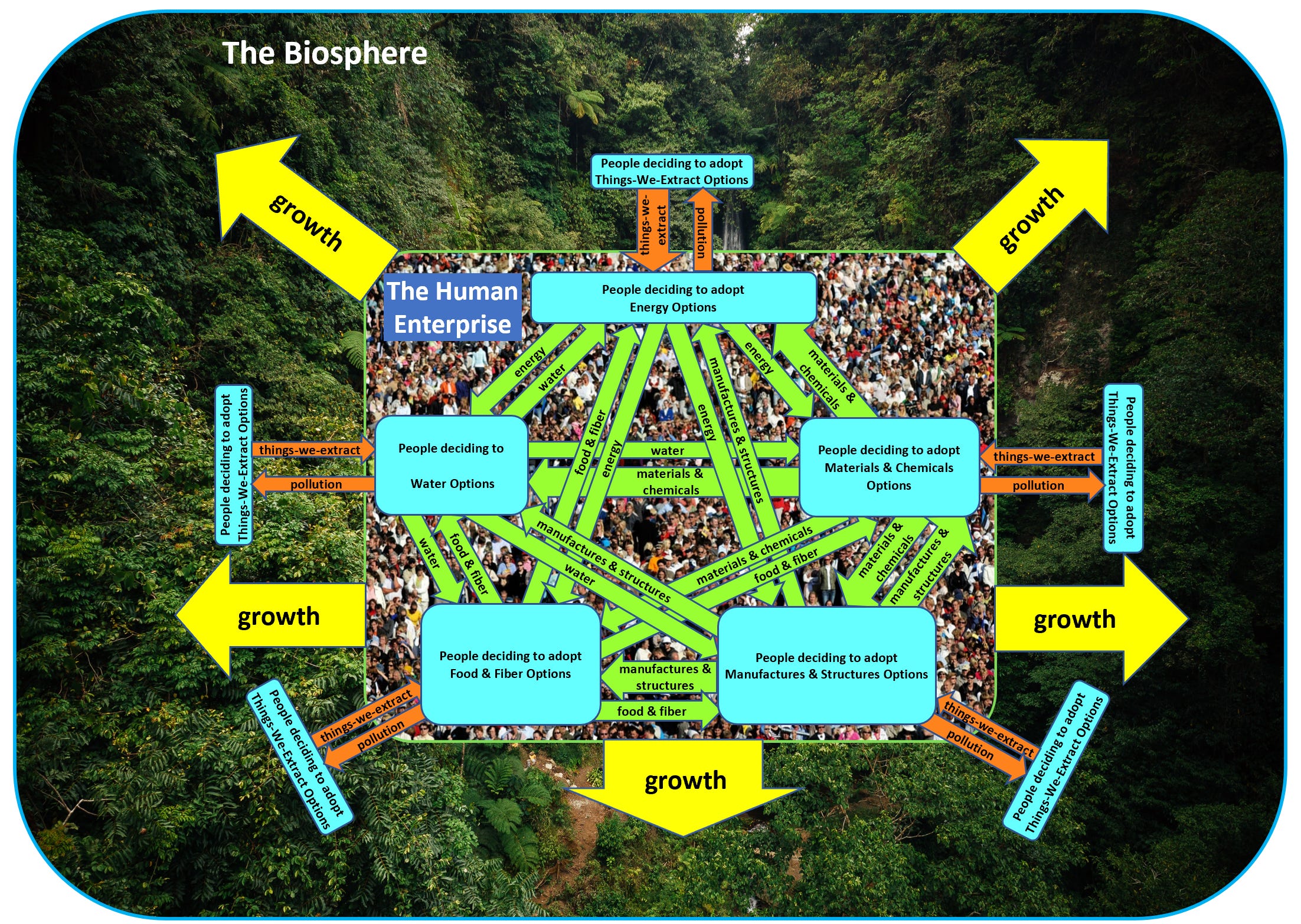
The exponentially growing things-we-extract flows (extraction flows) & pollution flows (in orange) of the Human Enterprise …
… are damaging the biosphere (in deep green) faster than the than the biosphere can regenerate itself …
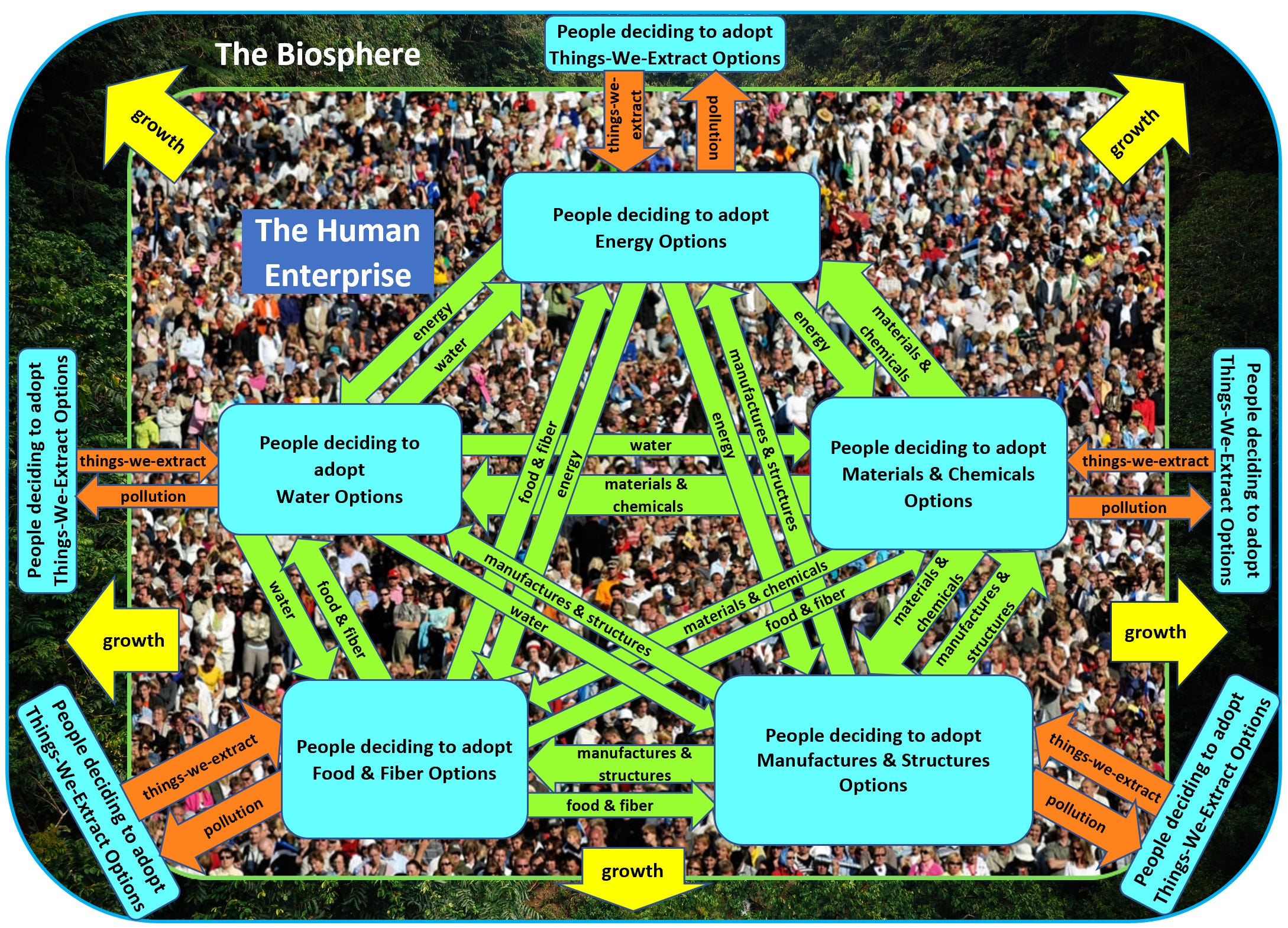
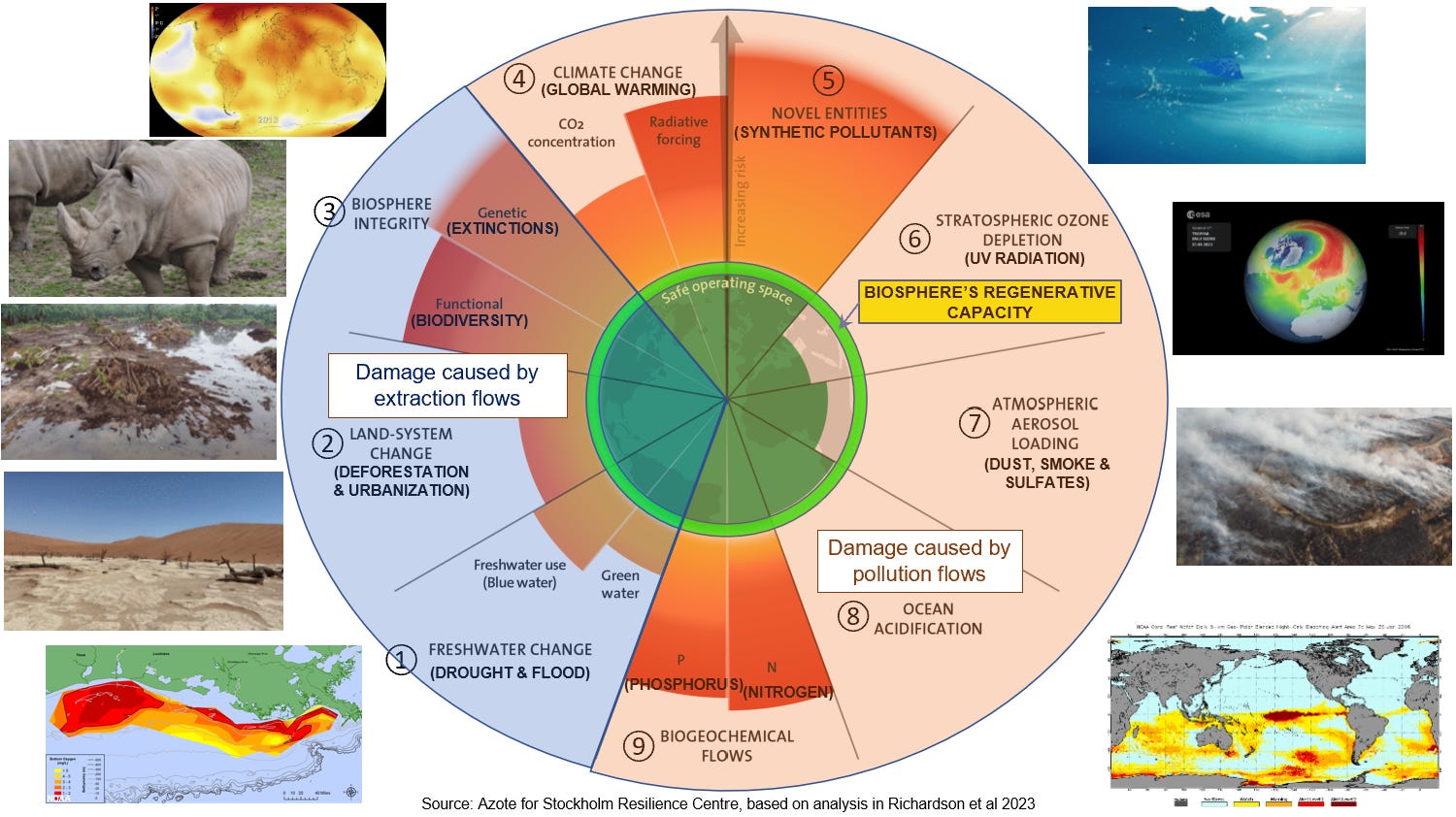
The exponentially-growing damage to the biosphere from the exponentially-growing extraction flows & pollution flows is showing up as at least seven planet-scale ecological crises, including the climate crisis …
What’s the paradigm through which people everywhere are creating the climate crisis?
What is the paradigm through which people everywhere are creating the climate crisis?
In other words, what is the paradigm through which people everywhere are making decisions for meeting human physical needs that are creating the exponentially-growing extraction flows & pollution flows that are creating the climate crisis?
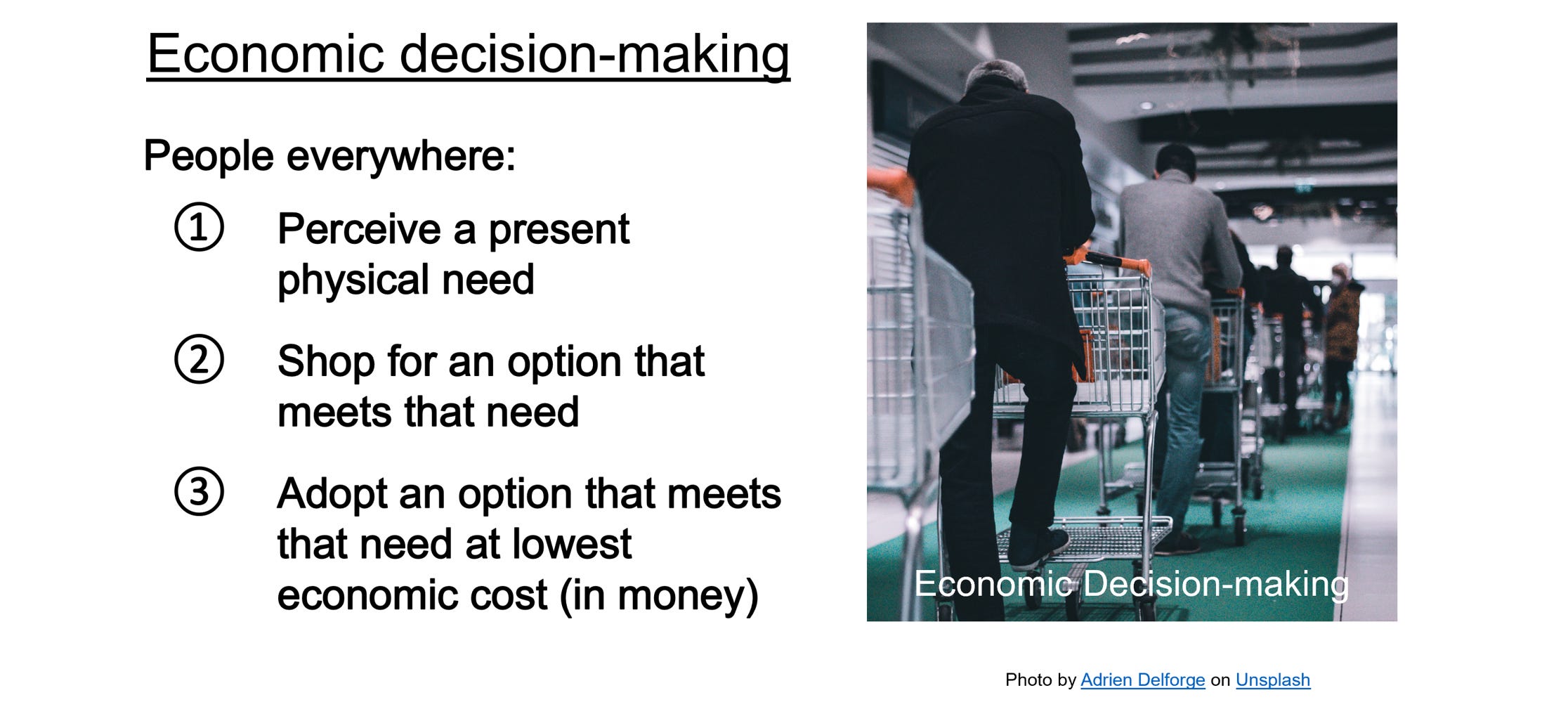
The paradigm through which people everywhere are making those decisions is a simple 3-step process that may be called “economic decision-making”:
First, people everywhere perceive a present physical need …
Second, people everywhere shop for an option that meets that present need, and …
Third, people everywhere adopt an option that meets that present need at lowest economic cost (in money) …
Until now, the climate crisis has been unsolvable because economic decision-making excludes, ignores, and effectively denies – as “externalities” not measurable in units of money –
the damage (or degeneration) of the biosphere from the extraction flows and pollution flows attributable to an option for meeting human physical needs, and
the healing (or regeneration) of the biosphere from the scaling back of extraction flows and pollution flows attributable to an option for meeting human physical needs.
In the words of Al Gore:
Global warming pollution, indeed all pollution, is now described by economists as an “externality.” This absurd label means, in essence: we don’t keep track of this stuff, so let’s pretend it doesn’t exist.
The climate crisis is growing exponentially because people everywhere using economic decision-making for meeting human physical needs:
have no quantitative information for measuring the damage of the biosphere from the extraction flows & pollution flows attributable to their decisions, and
have no quantitative information for measuring the healing of the biosphere from scaling back the extraction flows & pollution flows attributable to their decisions.
The climate crisis is growing exponentially because, without such quantitative information, people everywhere:
have no way of measuring the extraction flows & pollution flows attributable to their decisions, and
have no way of measuring the damage or healing of the biosphere attributable to their decisions.
Economic decision-making – that excludes such damage or healing as “externalities” – turns every decision for meeting a human physical need:
from an opportunity to make a decision that scales back the extraction flows & pollution flows and heals the biosphere,
into a denial of the damage or healing of the biosphere attributable to a decision for meeting human physical needs.
Solving the climate crisis requires solving the problem of externalities
In the words of environmentalist Paul Hawken:
We need to address what is down here, not up there: the massive rates of resource extraction … and the absurd “tragic science” of economics, which excludes the environment.
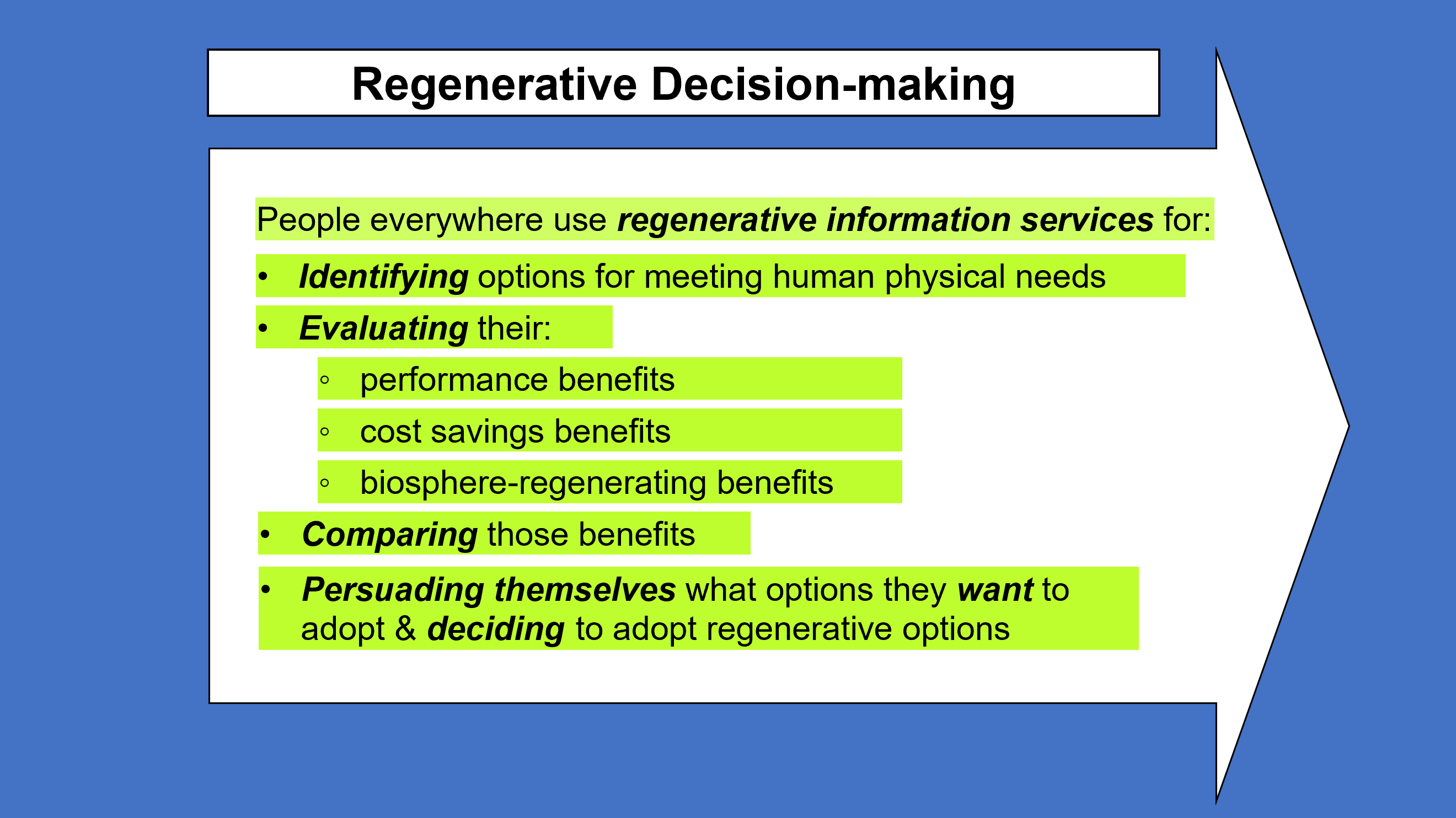
To address the absurd “tragic science” of economics, and solve the climate crisis once and for all, I invented a simple paradigm shift – called “regenerative decision-making” for meeting human physical needs -- through which people everywhere use “regenerative information services” for …
… identifying options for meeting human physical needs …
… evaluating the measurable performance benefits, the measurable cost savings benefits and the measurable biosphere-regenerating benefits of those options …
… comparing those benefits …
… persuading themselves what options they want to adopt …
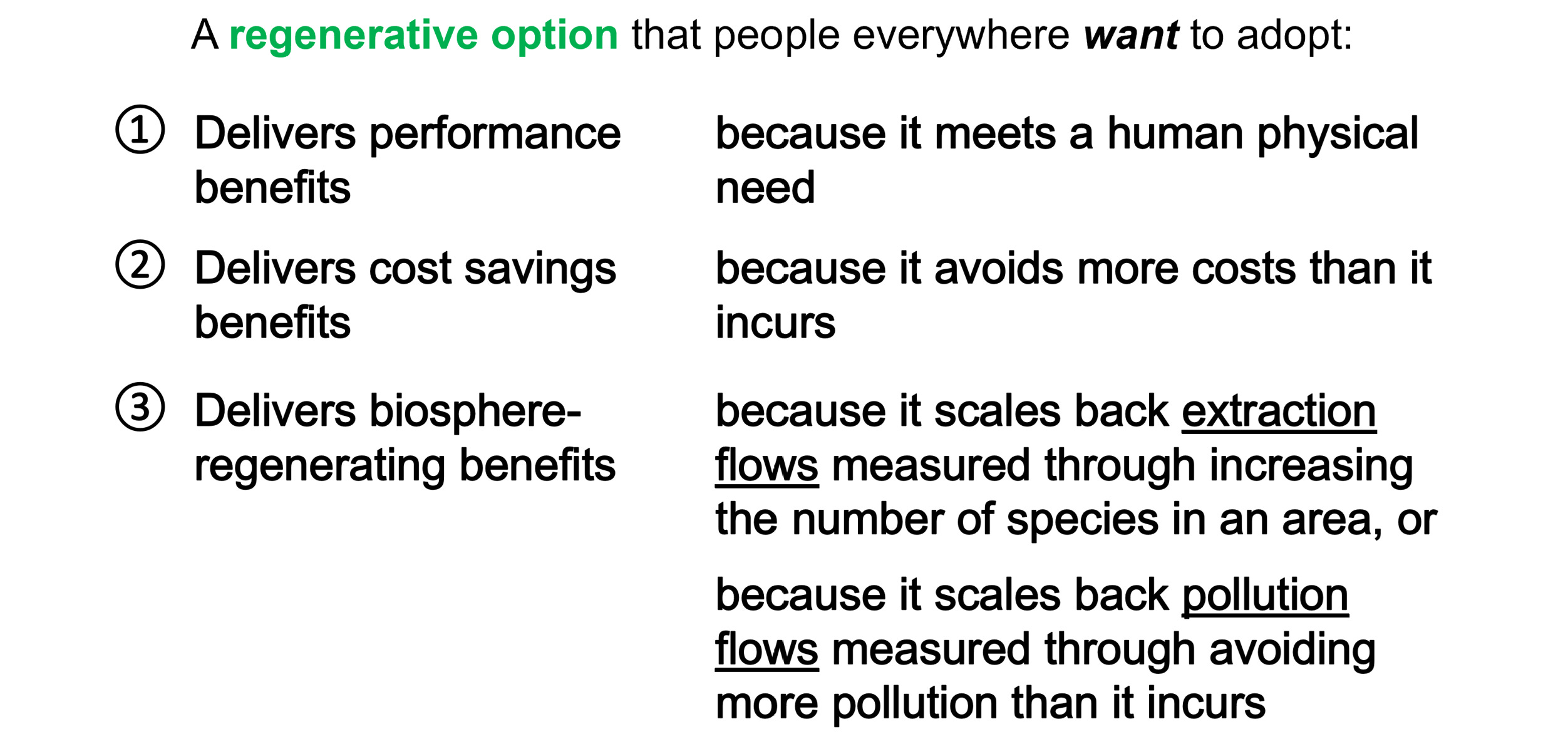
… and deciding to adopt “regenerative options,” including climate solutions, that deliver:
measurable “performance benefits” because they meet human physical needs,
measurable “cost savings benefits” because they avoid more costs than they incur, and
measurable “biosphere-regenerating benefits” (including climate-crisis-healing benefits) because:
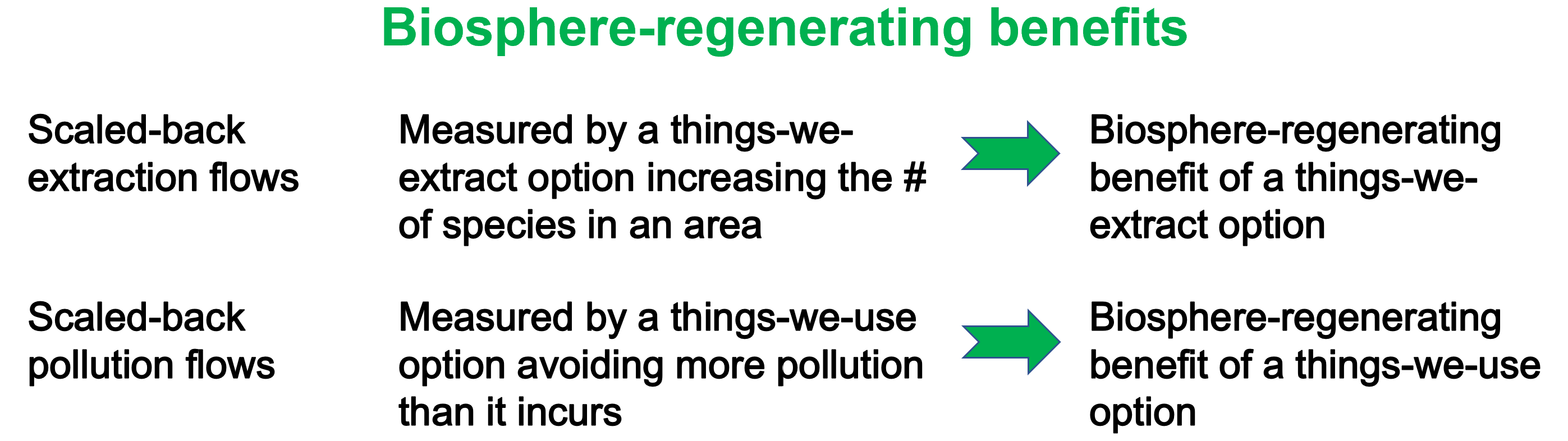
they scale back extraction flows out of the biosphere measured through increasing the number of species in an area, or
they scale back pollution flows into the biosphere measured through avoiding more pollution than they incur …
Biosphere-regenerating benefits solve the problem of “externalities”:
by measuring the increasing number of species in an area to quantify the regeneration (or healing) of the biosphere attributable to the scaled-back extraction flows of a things-we-extract option, and
by measuring avoided pollution flows more than incurred pollution flows to quantify the regeneration (or healing) of the biosphere attributable to the scaled-back pollution flows of a things-we-use option …
Regenerative decision-making turns denial into opportunity
Economic decision-making – that excludes damage or healing of the biosphere as “externalities” – turns every decision for meeting a human physical need into a denial of the damage or healing of the biosphere attributable to every such decision.
Regenerative decision-making solves the externalities problem by turning every decision to meet a human physical need into an opportunity to adopt a regenerative option that delivers:
measurable performance benefits
measurable cost savings benefits, and
measurable biosphere-regenerating benefits for solving the climate crisis.
Which do you want:
A denial of the damage or healing of the biosphere attributable to a decision for meeting a human physical need, or
An opportunity to adopt a regenerative option that delivers performance benefits, cost savings benefits and biosphere-regenerating benefits for solving the climate crisis?
Regenerative decision-making turns demand into invitation
Economic decision-making for meeting human physical needs is a one-way conversation of demand and compliance through which:
people everywhere demand things-we-use for meeting human physical needs at lowest economic cost,
people everywhere who supply things-we-use comply with that demand and demand things-we-extract at lowest economic cost for supplying that demand for things-we-use,
people everywhere who supply things-we-extract comply with that demand for things-we-extract and supply things-we-extract at lowest economic cost.
In other words, economic decision-making is a brutal one-way conversation of demand & compliance for meeting human physical needs, which excludes as “externalities” not measurable in units of economic cost (i.e., money):
the damage of the biosphere from the extraction flows & pollution flows attributable to an option for meeting human physical needs, and
the healing of the biosphere from the scaling back of extraction flows & pollution flows attributable to an option for meeting human physical needs.
Regenerative decision-making:
turns every one-way demand for an option that meets a human physical need at lowest economic cost
into a two-way conversation through which one person invites another person to consider a regenerative option that delivers performance benefits, cost savings benefits and biosphere-regenerating benefits.
Which is more human:
A one-way conversation through which one demands an option for meeting a human physical need at lowest economic cost, or
A two-way conversation through which one invites another person to consider adopting a regenerative option for meeting a human physical need that delivers performance benefits, cost savings benefits and biosphere-regenerating benefits?
People everywhere adopting regenerative options solves the climate crisis
People everywhere wanting, deciding & acting to adopt regenerative options (including climate solutions) -- that deliver biosphere-regenerating benefits – scales back the extraction flows out of the biosphere and the pollution flows into the biosphere (in orange) as a whole, …
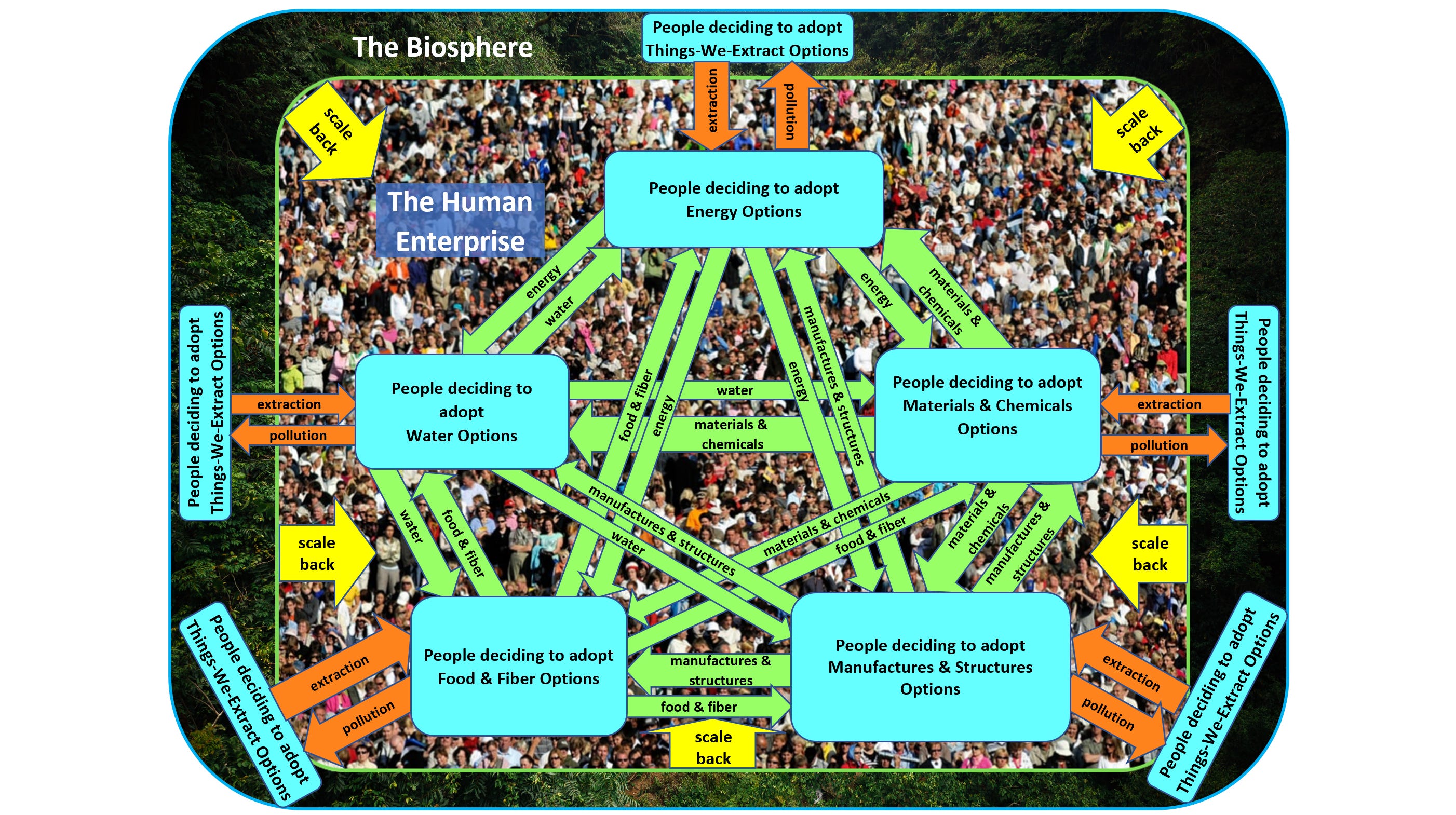
… and, at the same time, keeps intact the flows of things-we-use (in chartreuse) for meeting the physical needs of every human being, …
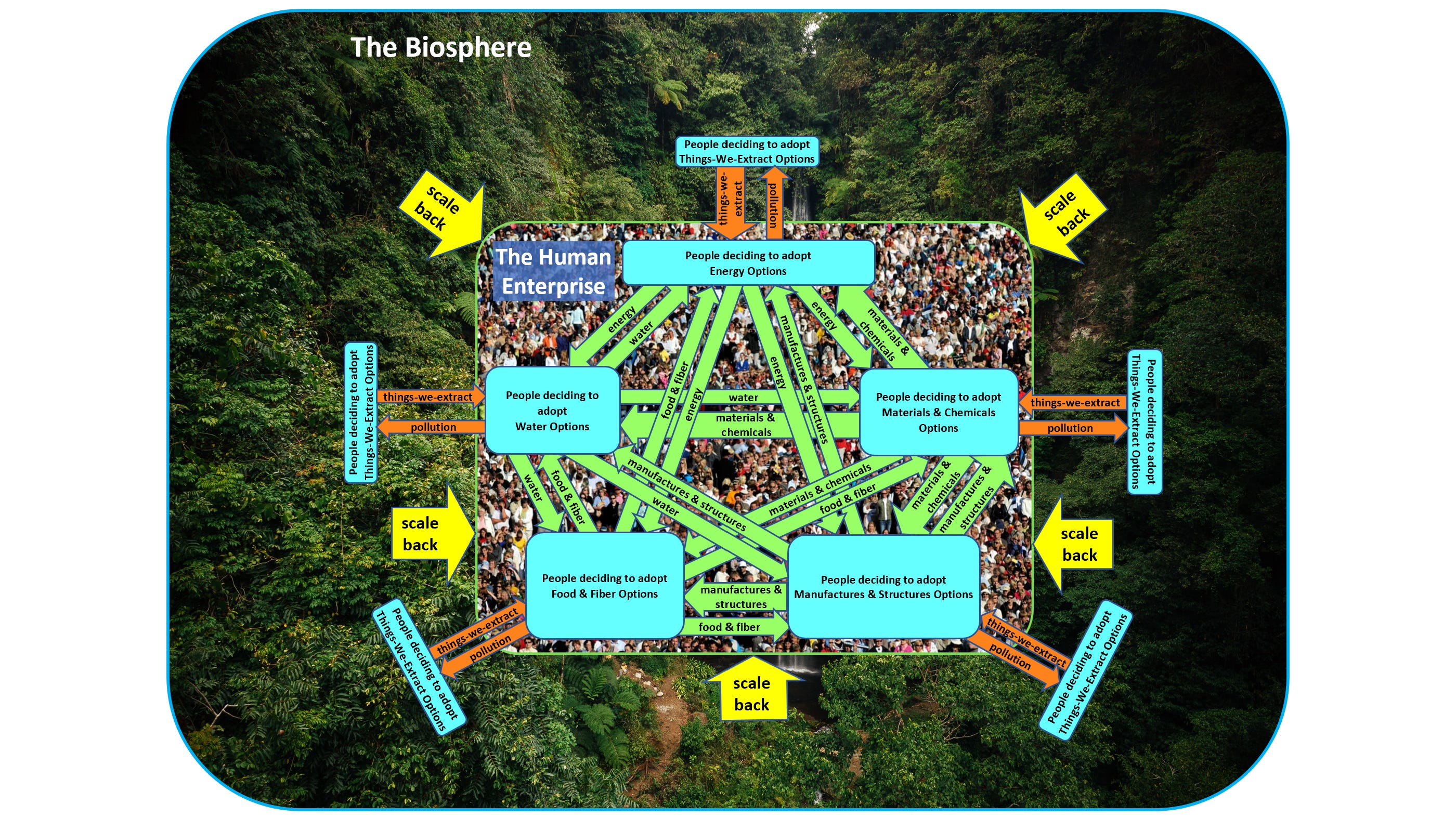
… which allows the biosphere (in deep green) to regenerate itself, …
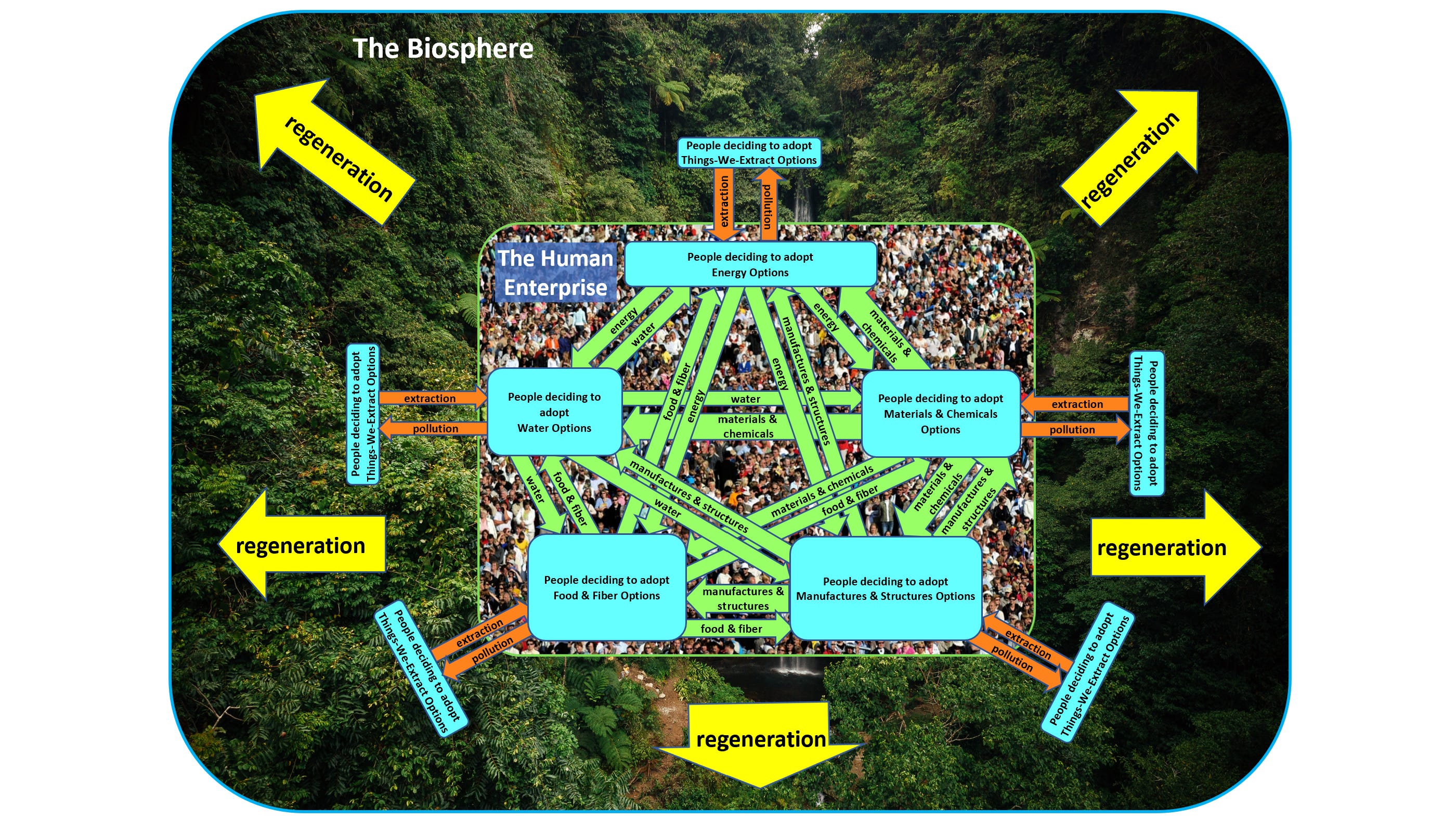
…and allows the creativity, intelligence and regenerative capacity of the biosphere to heal the ecological crises as a whole, including the climate crisis …
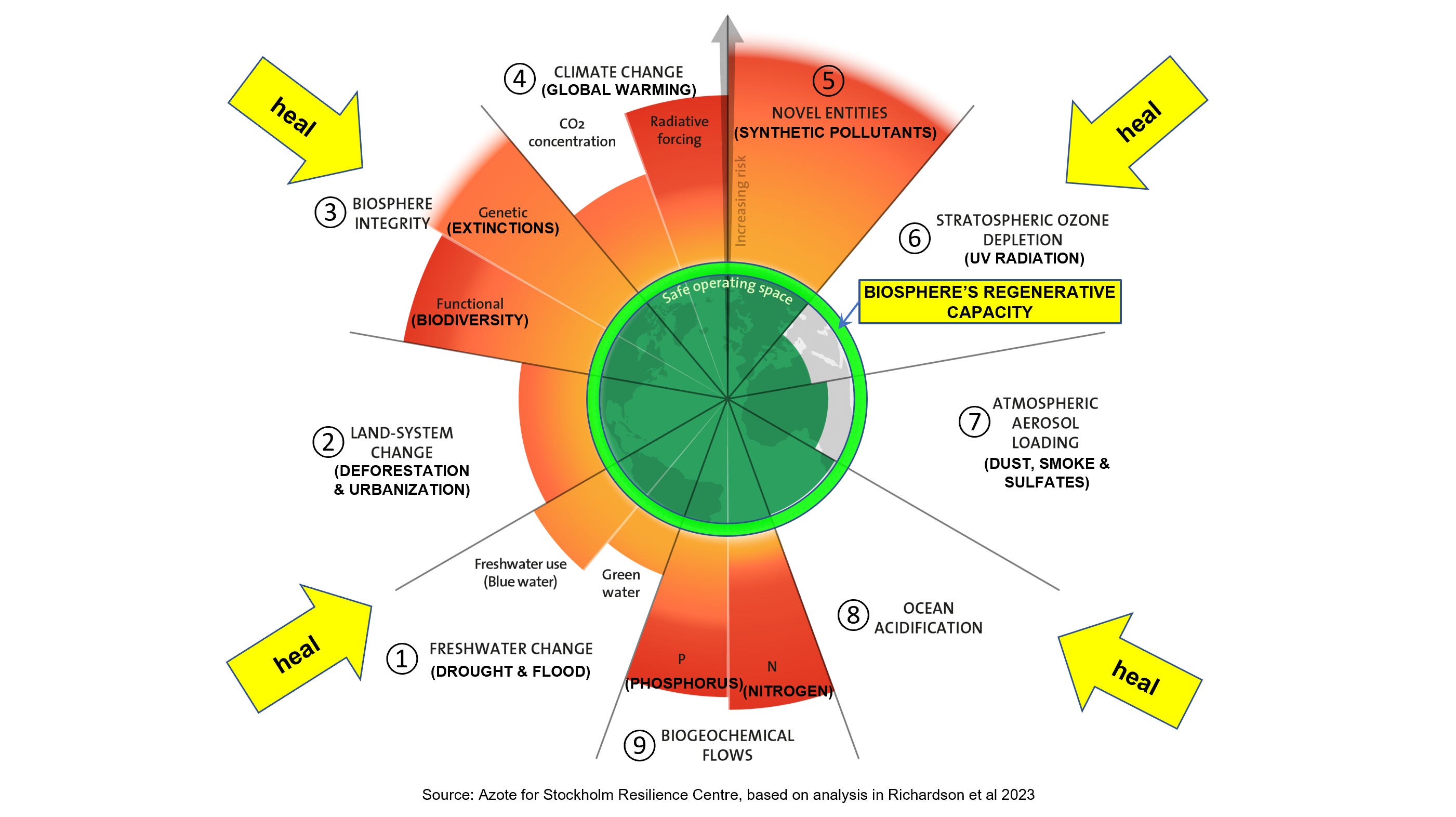
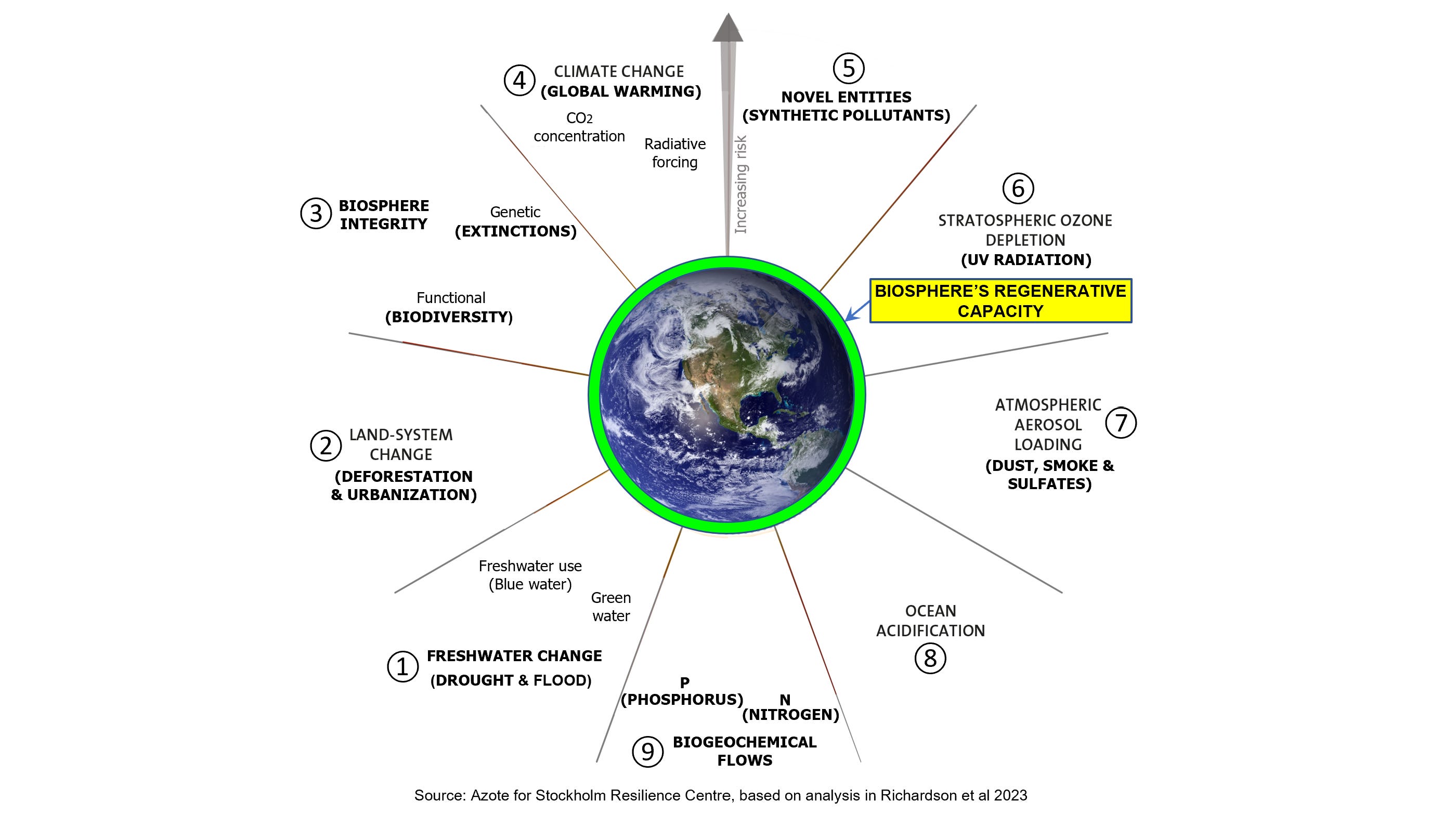
… and allows the biosphere to meet the physical needs of all living beings, including human beings …
Thank you for reading The Regenerative Transition.
Peace and Aloha!
Erik
P.S. I cross-posted this article on Medium for greater reach.
Thank you for sharing this. The discussion of externalities feels particularly important. Too often, environmental and social costs are treated as if they exist outside the systems that create them, making it difficult to account for the full consequences of our decisions.
Living through the Lahaina wildfire and now studying resilience and recovery has reinforced for me how much what we measure influences what we value. I appreciate the invitation to think not only about reducing harm, but about how our choices can actively contribute to regeneration.