
Systems thinking for solving the climate crisis
A simple paradigm shift for healing the climate crisis

Paradigms are the sources of systems. … People who have managed to intervene in systems at the level of paradigm have hit a leverage point that totally transforms systems. – Donella Meadows
P.S. This newsletter will not fit in an email. Please read it in your browser or in the Substack app, and don’t forget to tap the heart icon at the bottom: it helps my writing find more readers.
The planet’s biosphere is in crisis
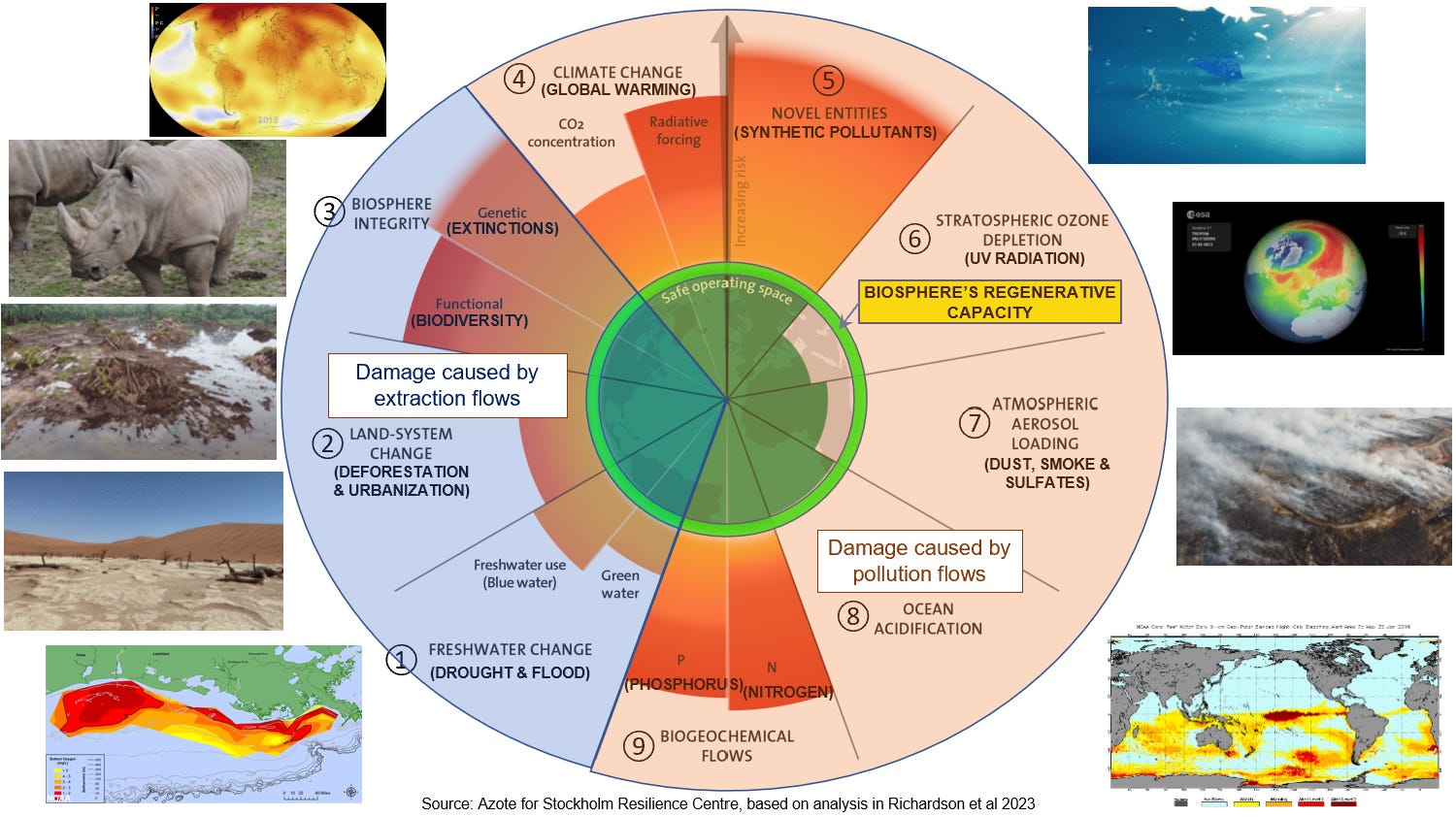
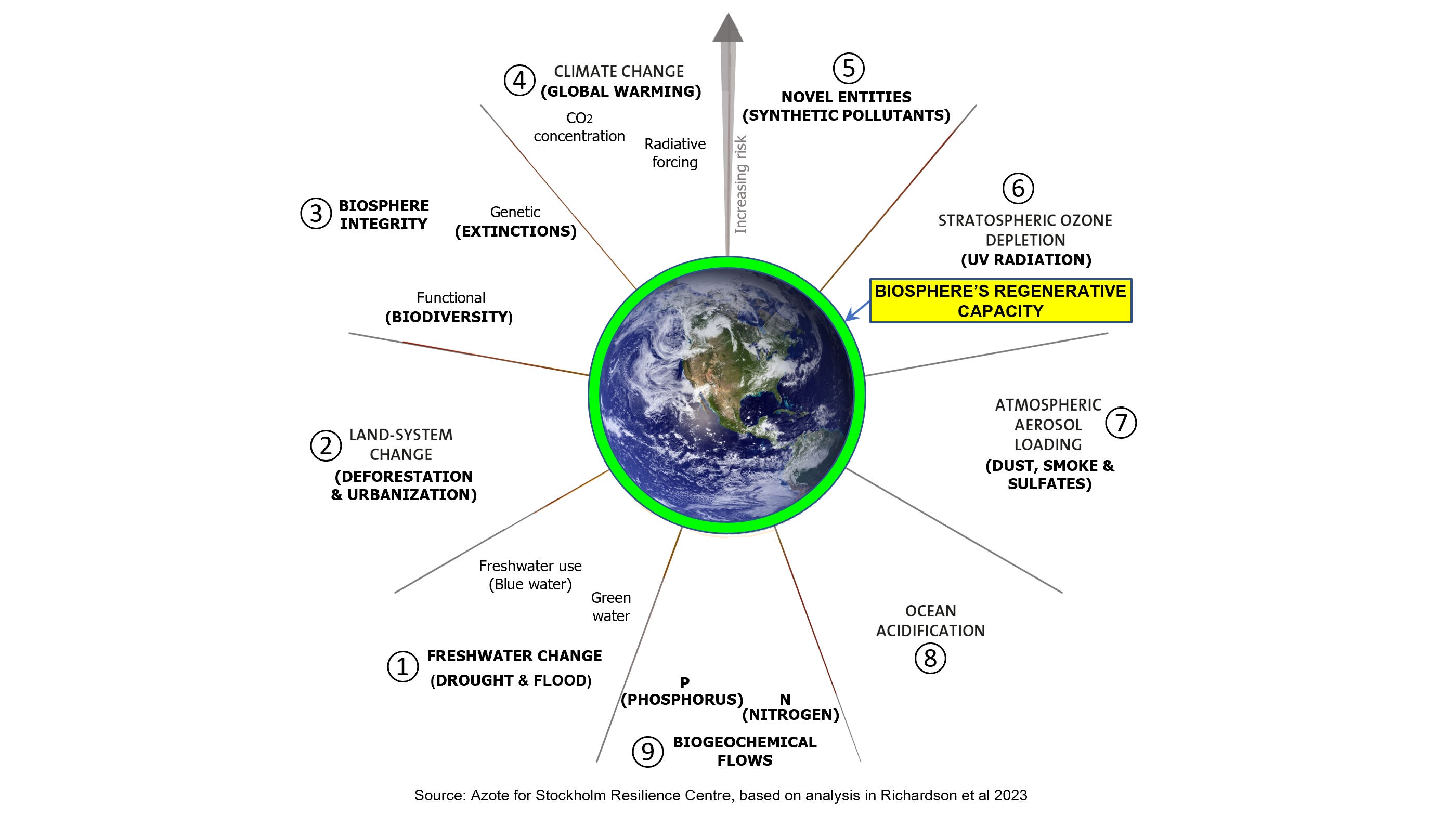
People everywhere are damaging the biosphere faster than the biosphere can regenerate itself.
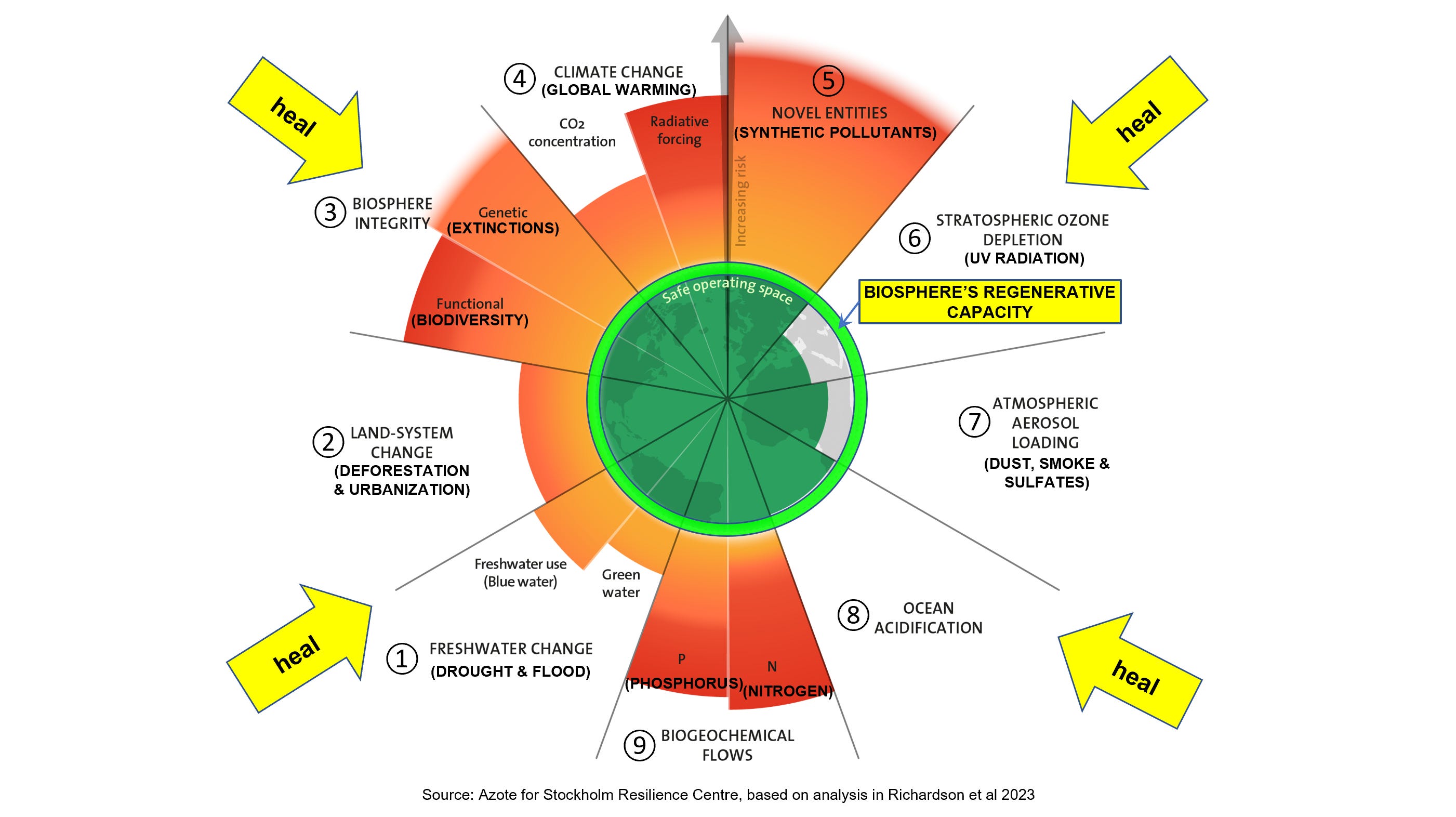
This damage to the biosphere is showing up as at least seven planet-scale ecological crises – including the climate crisis -- created by humanity’s “overshoot” of the biosphere’s regenerative capacity …
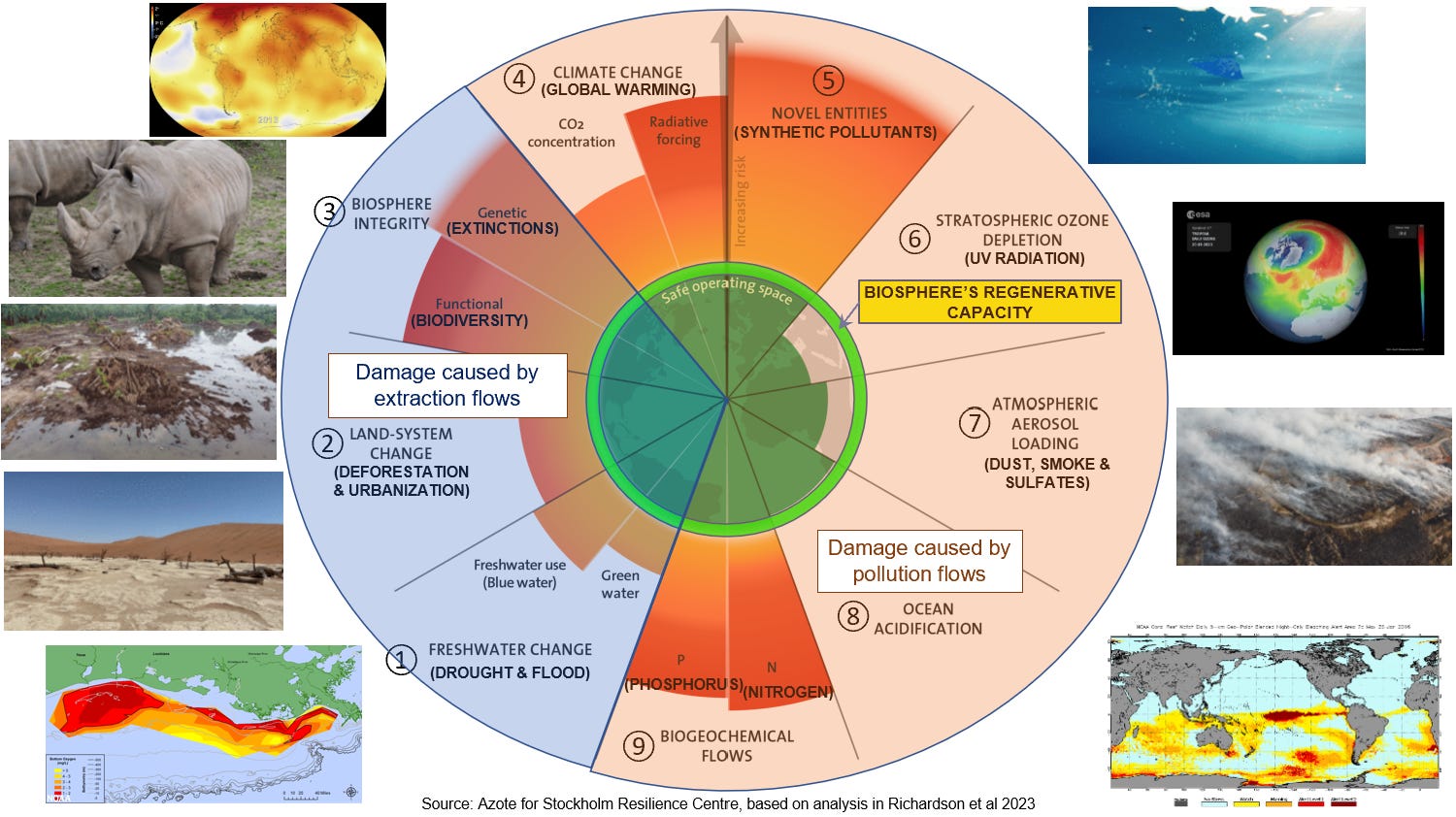
The planet’s climate crisis has defied solution
Until now, the complexity and interconnectedness of the ecological crises have defied solution of the planet’s climate crisis, and have defied solution of the planet’s ecological crises as a whole.
I’m here to fix that.
Systems thinking for simplifying and solving complex & interconnected problems
Systems thinking is a process for simplifying and solving complex & interconnected problems like the ecological crises, including the climate crisis.
In the words of systems thinking pioneer Donella Meadows:
As our world continues to change rapidly and become more complex, systems thinking will help us manage, adapt, and see the wide range of choices we have before us. It is a way of thinking that gives us the freedom to identify root causes of problems and see new opportunities.
Systems thinking is a four-step process for simplifying and solving complex & interconnected problems like the climate crisis:
First, gain a simple understanding of the system that’s creating the problem,
Second, gain a simple understanding of the paradigm through which the system is operating to create the problem,
Third, invent a simple paradigm shift for changing the operation of the system and solving the problem, and
Fourth, implement the paradigm shift to change the operation of the system and effect a simple system change that solves the problem.
In the words of Donella Meadows:
Paradigms are the sources of systems. … People who have managed to intervene in systems at the level of paradigm have hit a leverage point that totally transforms systems.
In other words, when we understand the system and the paradigm through which the system is operating to create a problem, we can intervene in the system at the level of paradigm (a paradigm shift) that totally transforms the operation of the system and effects a system change that solves the problem.
Systems thinking for solving the climate crisis
Applying systems thinking to the problem of the planet’s climate crisis, we can solve the climate crisis through the four-step systems thinking process:
First, gain a simple understanding of the system that’s creating the climate crisis,
Second, gain a simple understanding of the paradigm through which that system is operating to create the climate crisis,
Third, invent a simple paradigm shift for changing the operation of that system and solving the climate crisis, and
Fourth, implement the paradigm shift to change the operation of the system and effect a simple system change that solves the climate crisis.
OK, so let’s do it.
What is the system that’s creating the climate crisis?
People everywhere making decisions for meeting human physical needs are creating the climate crisis.
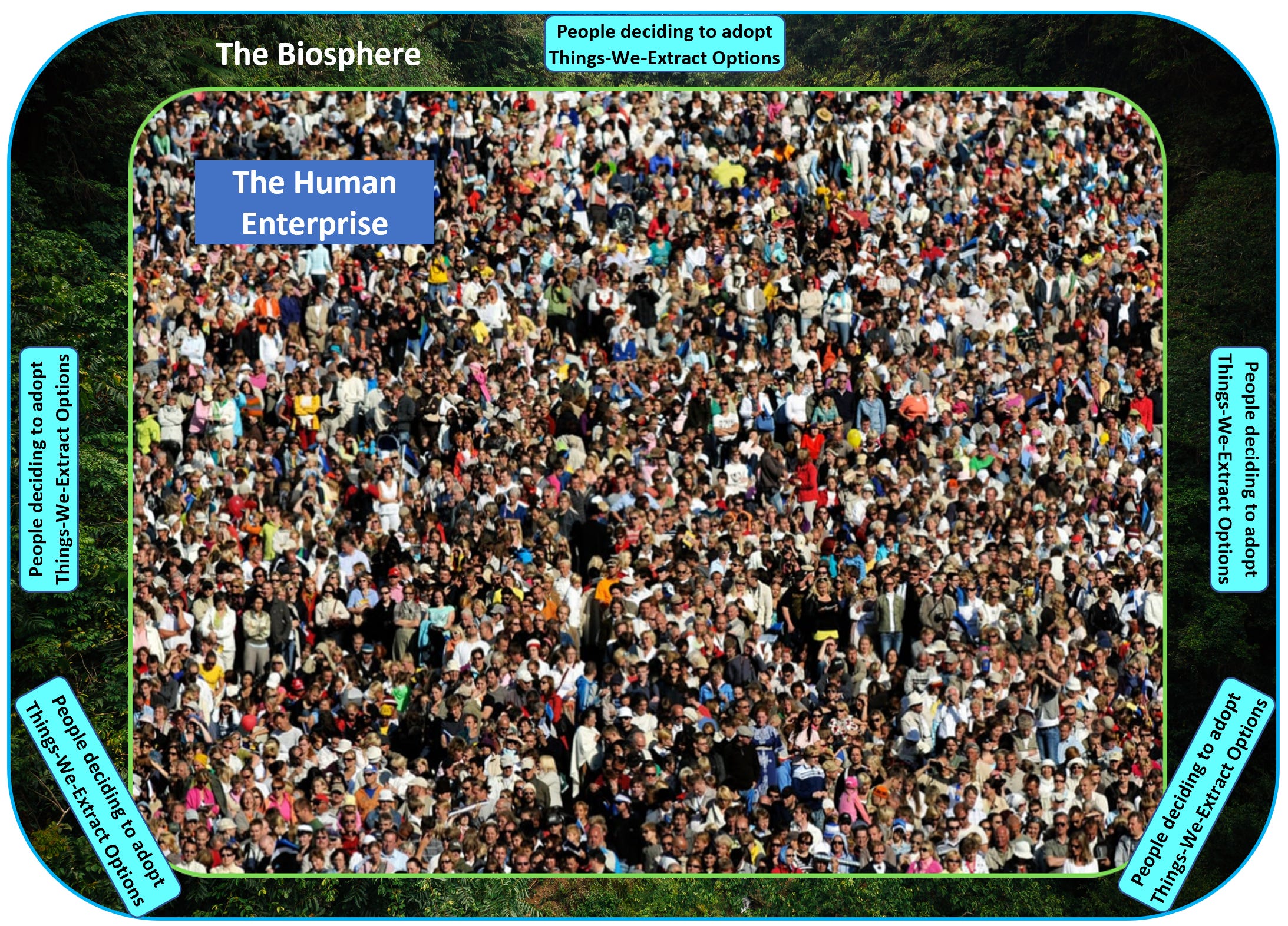
The system of people everywhere making decisions for meeting human physical needs -- which may be called “the Human Enterprise”[1] that’s creating the climate crisis -- may be modeled as …
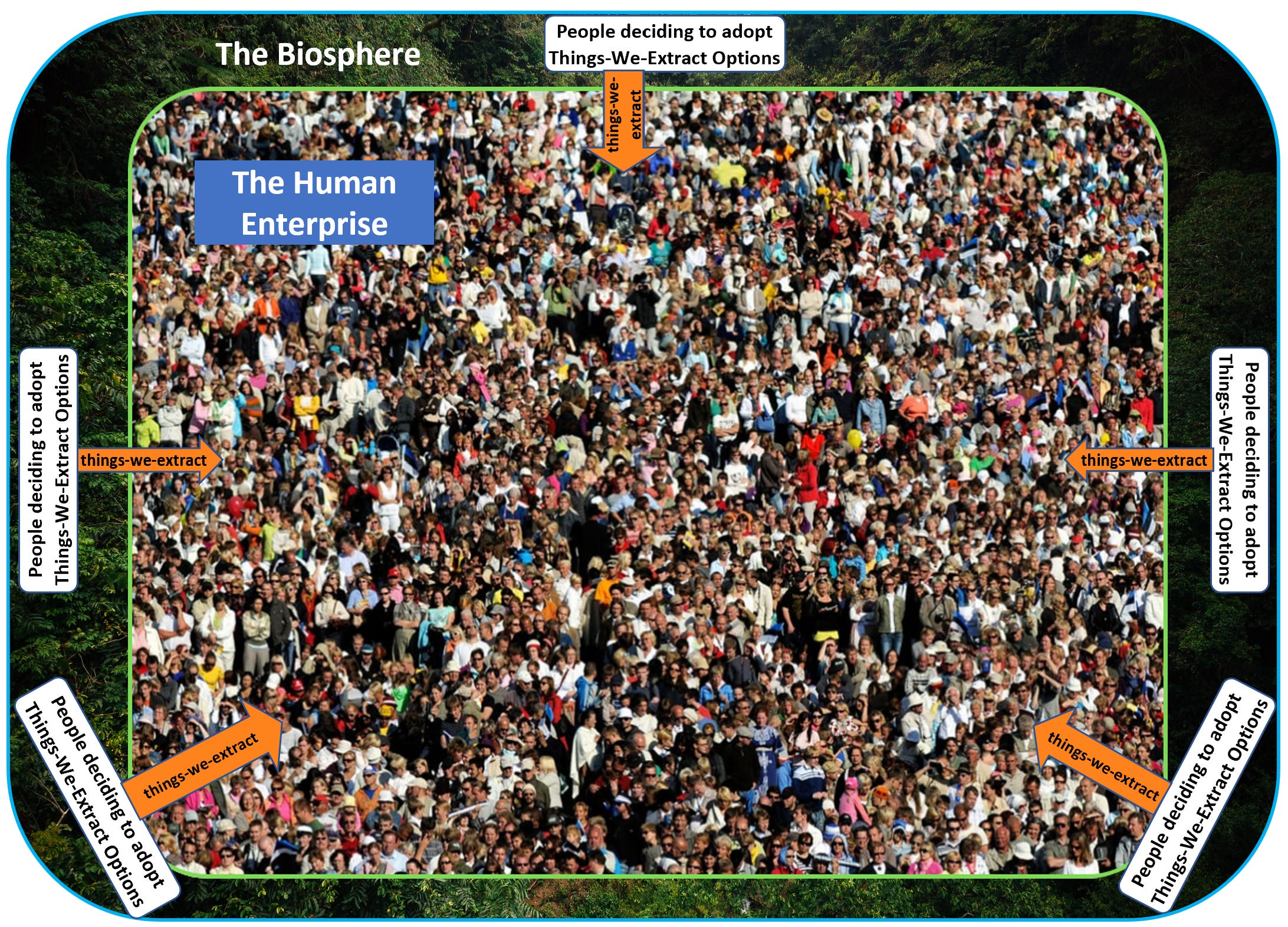
… the sum of people everywhere deciding to extract physical things (in turquoise) from the biosphere (in deep green) …
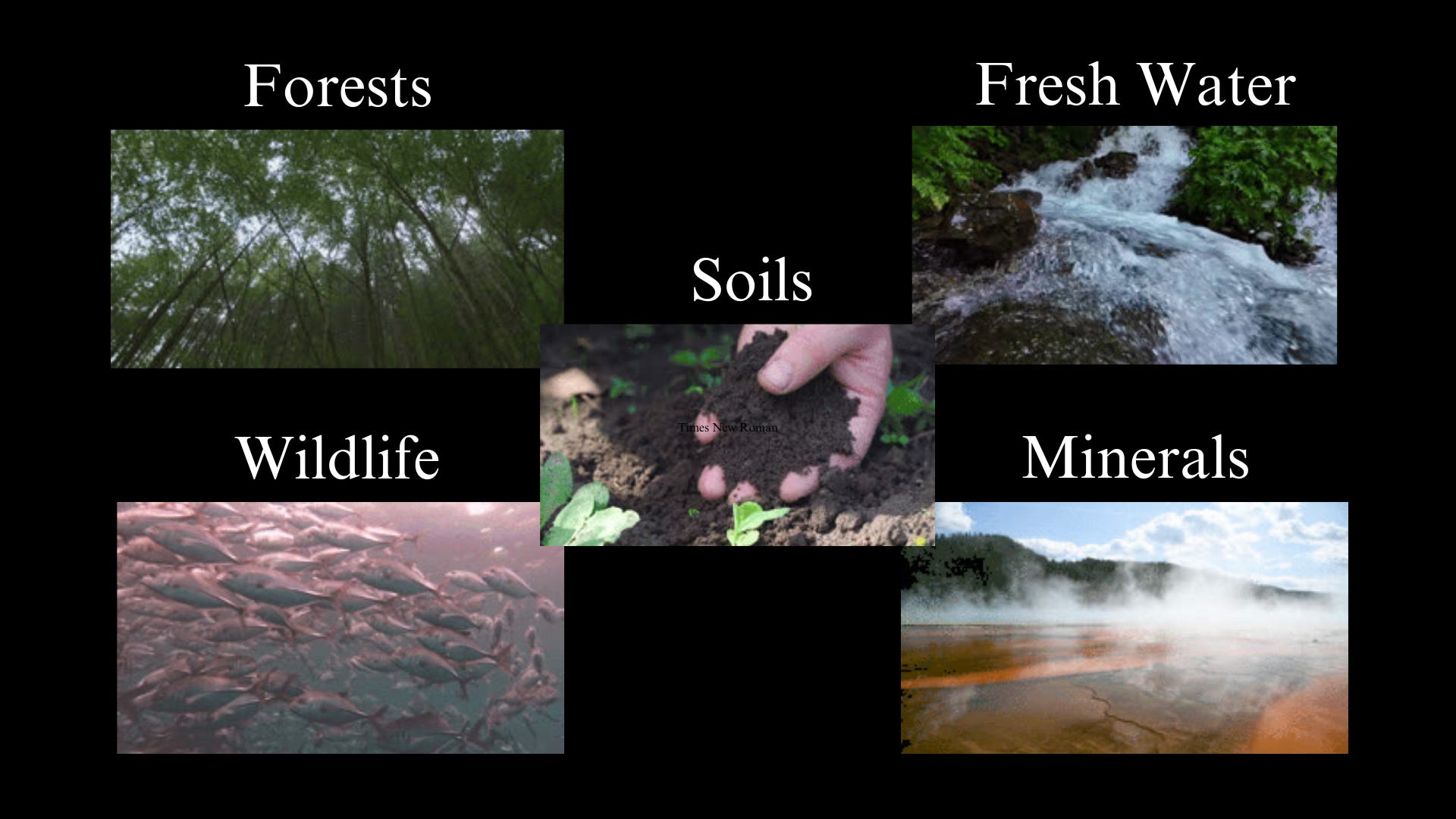
… things like forests, fresh water, wildlife, soils and minerals -- that may be called the “things-we-extract” for meeting human physical needs …
… plus all the physical flows of all those things-we-extract (in orange) – things like forests, fresh water, wildlife, soils and minerals – out of the biosphere (in deep green) and into the Human Enterprise …
… plus people everywhere deciding to use all those things-we-extract (in turquoise) -- in the forms of energy, water, materials & chemicals, food & fiber and manufactures & structures …
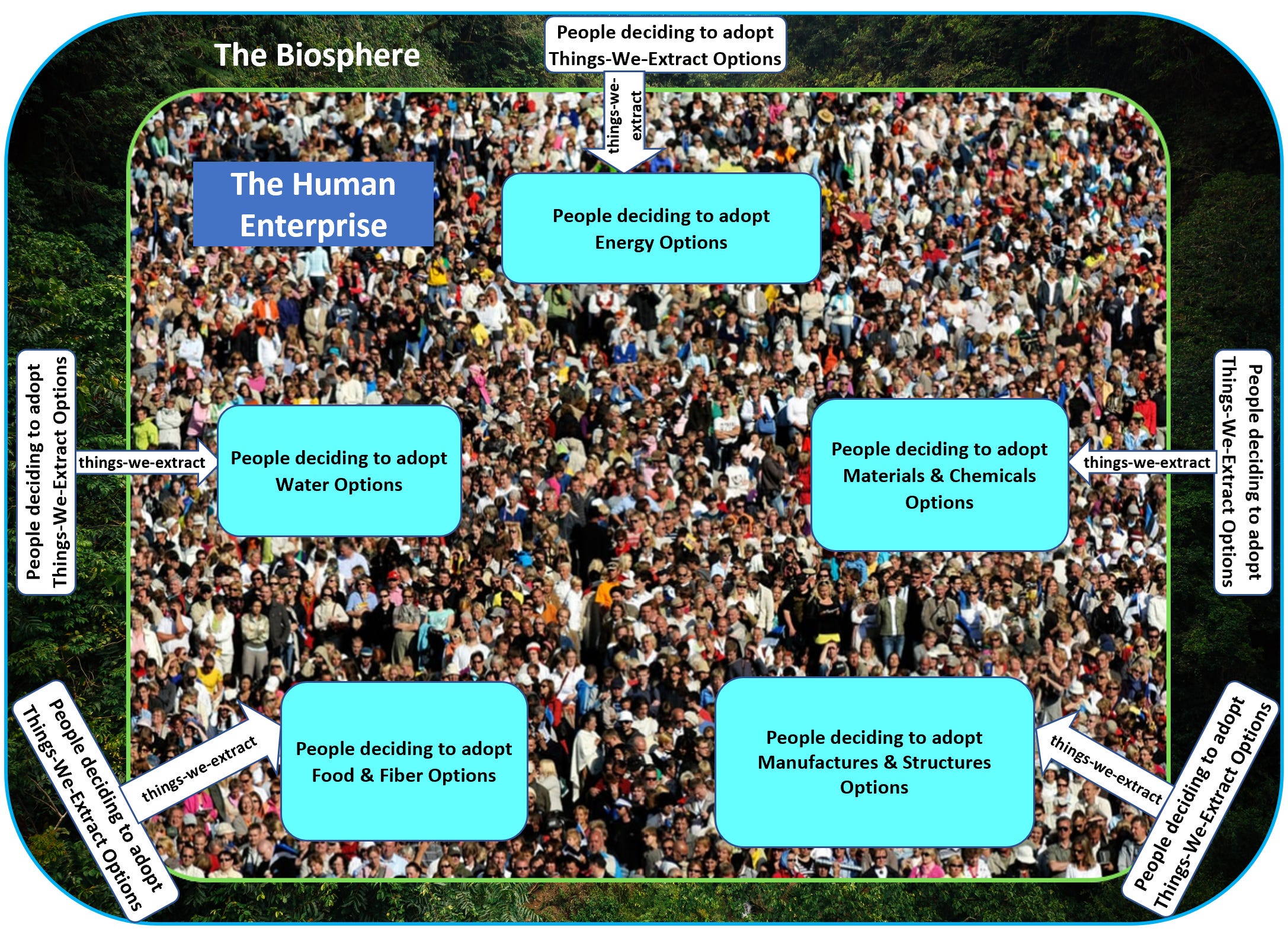
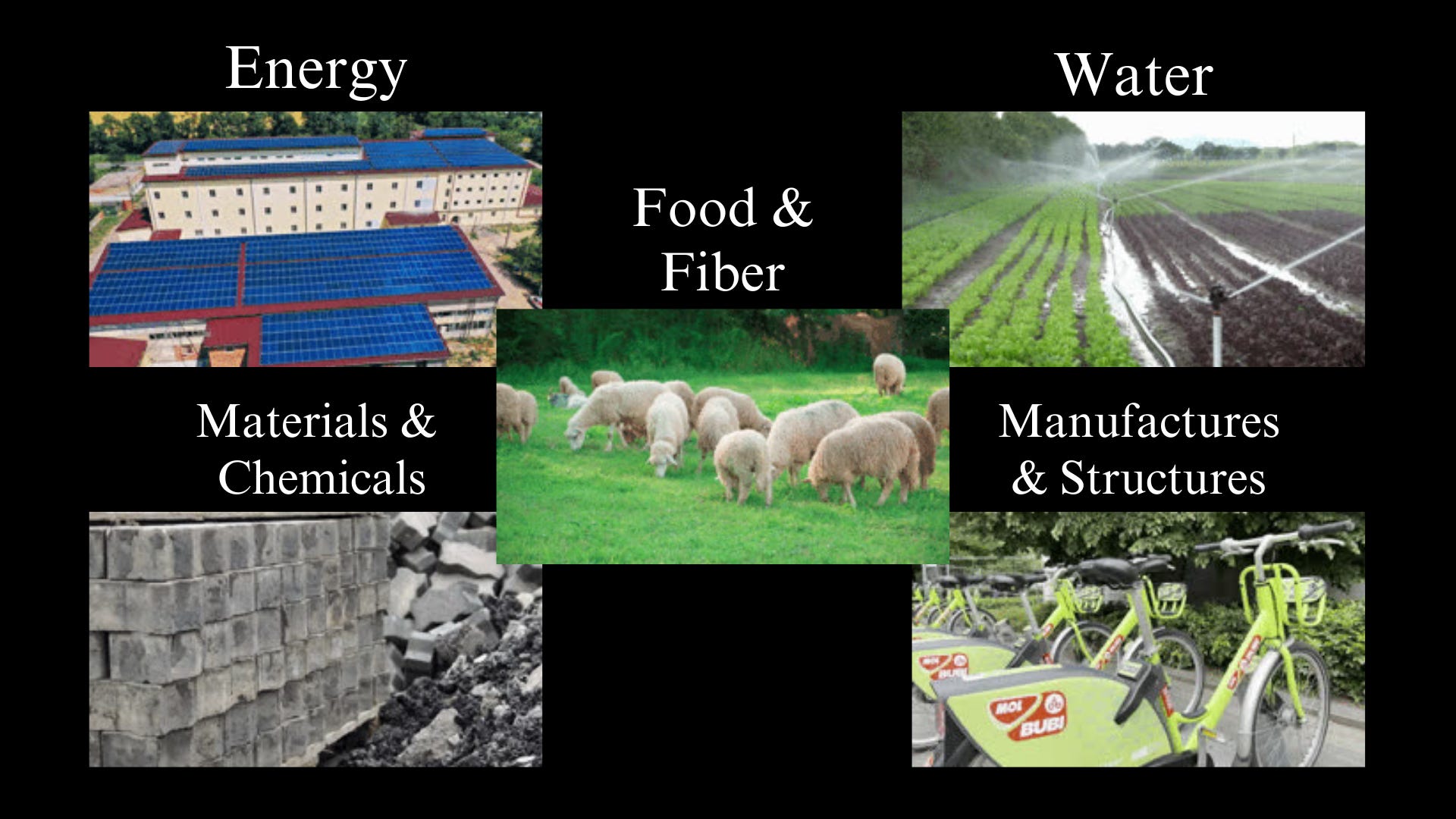
… things like energy, water, materials & chemicals, food & fiber and manufactures & structures that may be called the “things-we-use” …
… plus all the physical flows of all those things-we-use (in chartreuse) – things like energy, water, materials & chemicals, food & fiber and manufactures & structures -- within the Human Enterprise for meeting human physical needs …
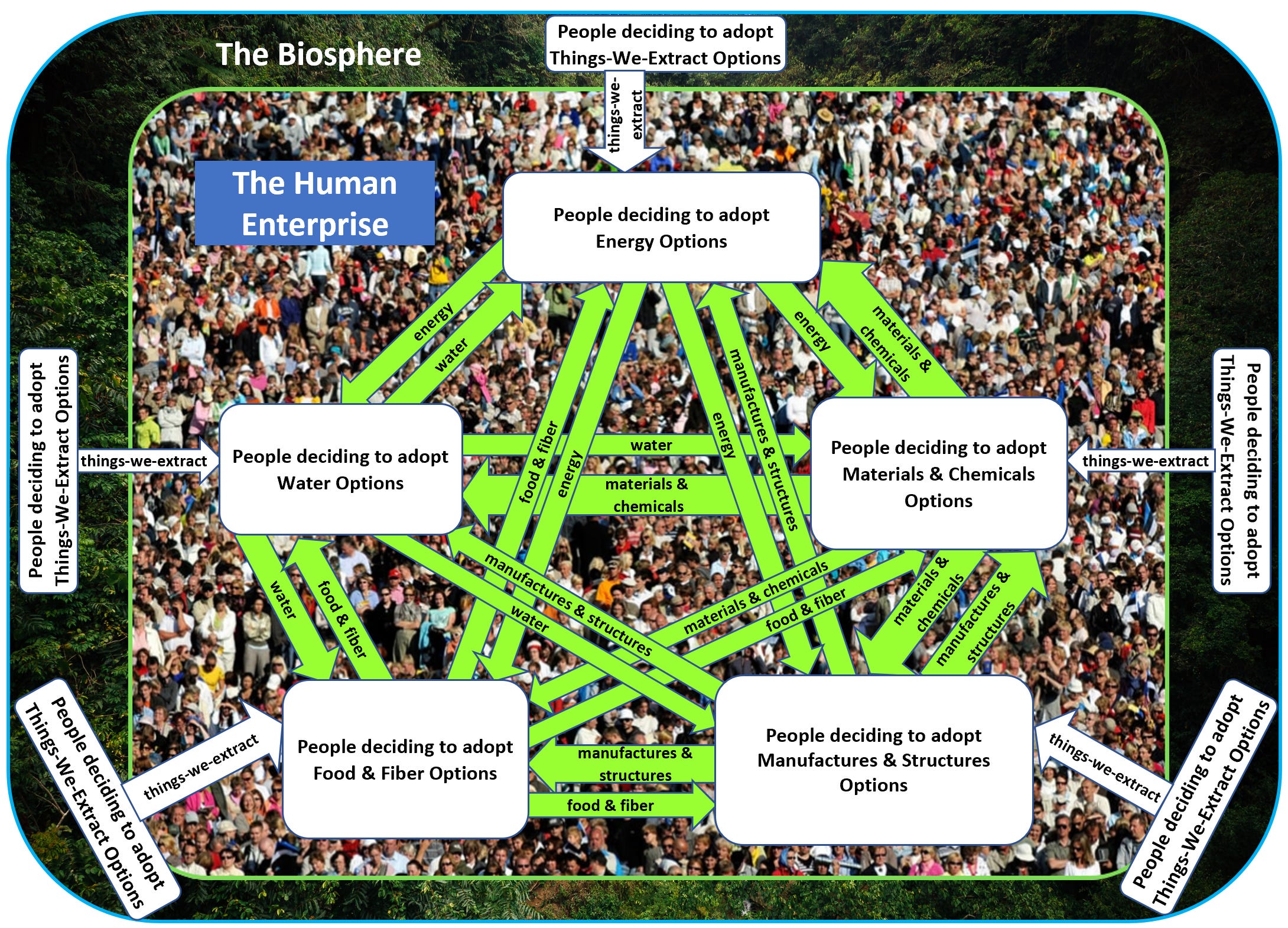
... plus all the physical flows of pollution from all those things-we-use (in orange) out of the Human Enterprise and back into the biosphere (in deep green) …
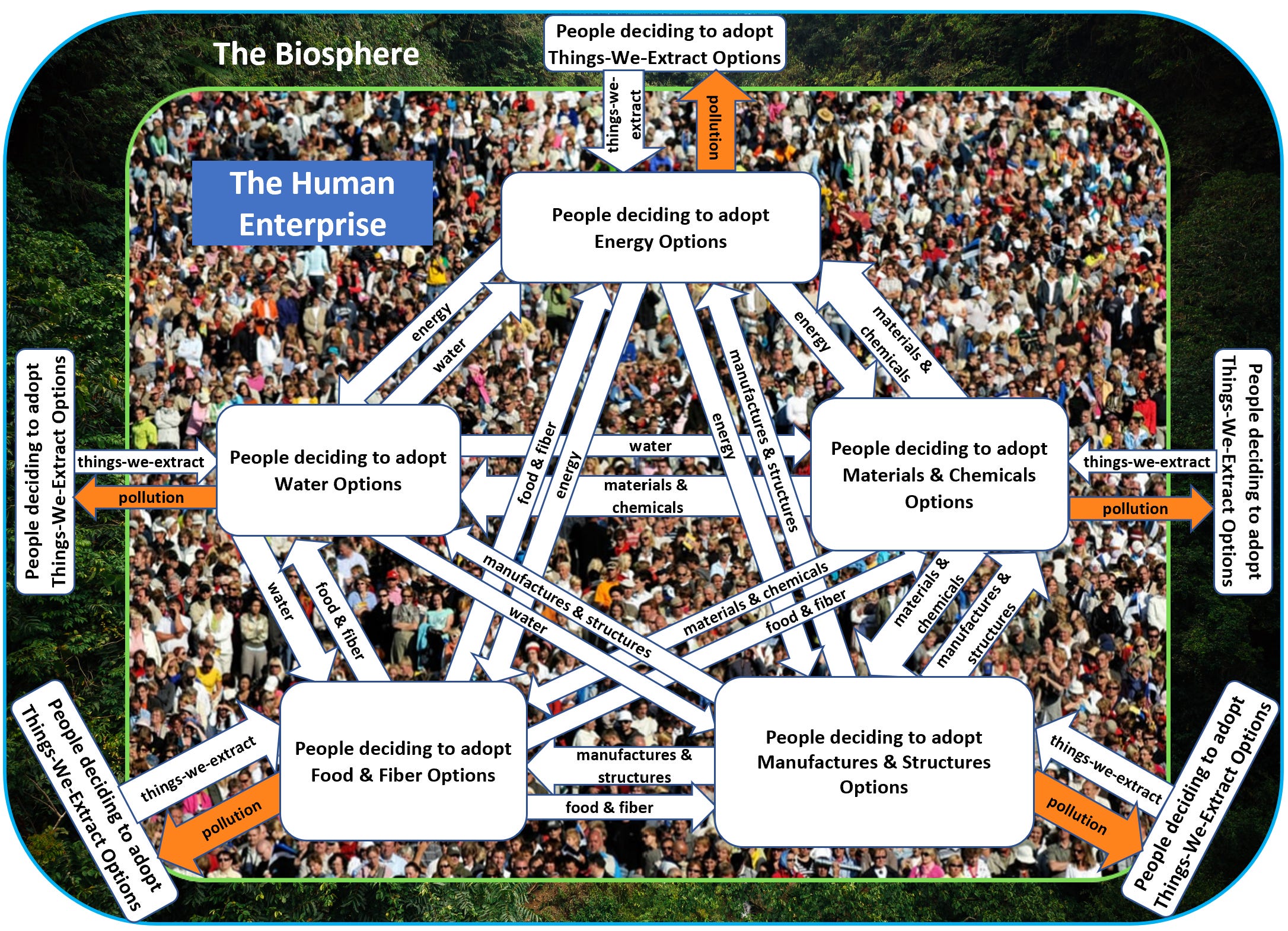
The exponentially growing extraction flows & pollution flows (in orange) of the Human Enterprise …
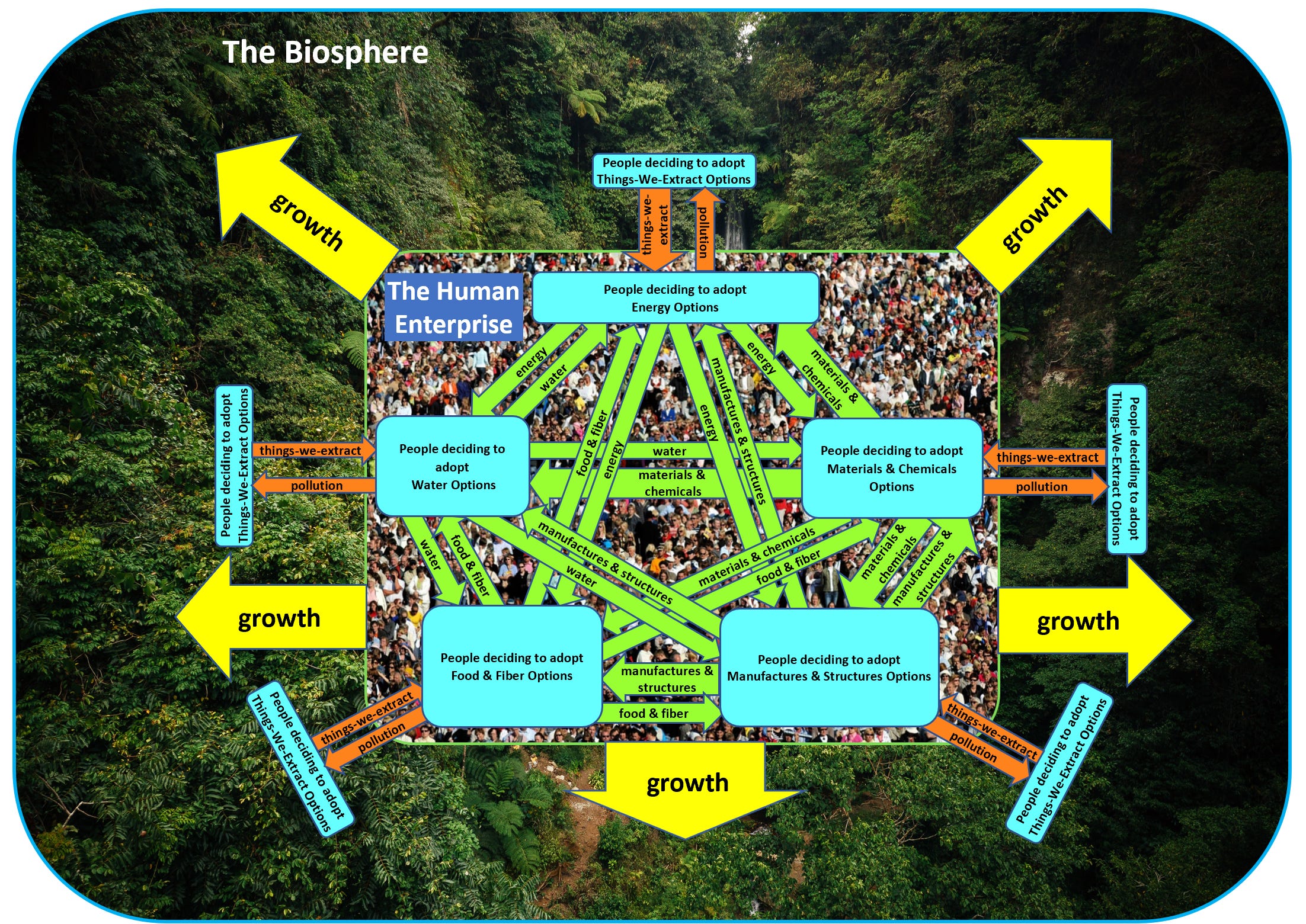
… are exponentially damaging the biosphere (in deep green) faster than the biosphere can regenerate itself …
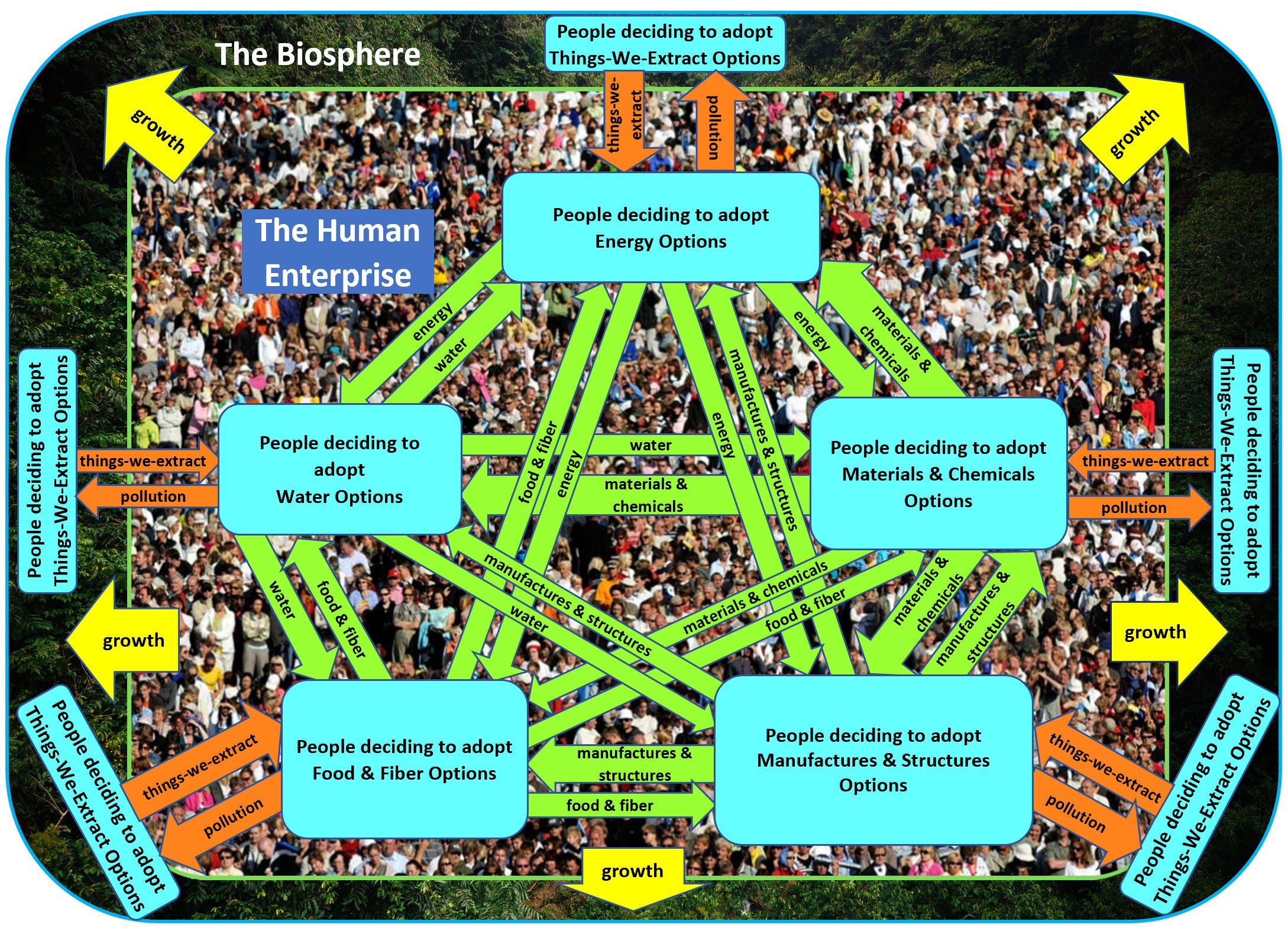
The exponentially growing damage to the biosphere from the extraction flows & pollution flows of the Human Enterprise is showing up as the planet’s ecological crises as a whole, including the climate crisis …
What’s the paradigm through which the Human Enterprise is operating to create the climate crisis?
What is the paradigm through which the Human Enterprise is operating to create the climate crisis?
In other words, what is the paradigm through which people everywhere are making decisions for meeting human physical needs that are creating exponentially-growing extraction flows & pollution flows that are creating the climate crisis?
The paradigm through which people everywhere are making those decisions is a simple 3-step process that may be called “economic decision-making”:
First, people everywhere perceive a present physical need …
Second, people everywhere shop for an option that meets that present need, and …
Third, people everywhere adopt an option that meets that present need at lowest economic cost (in money) …
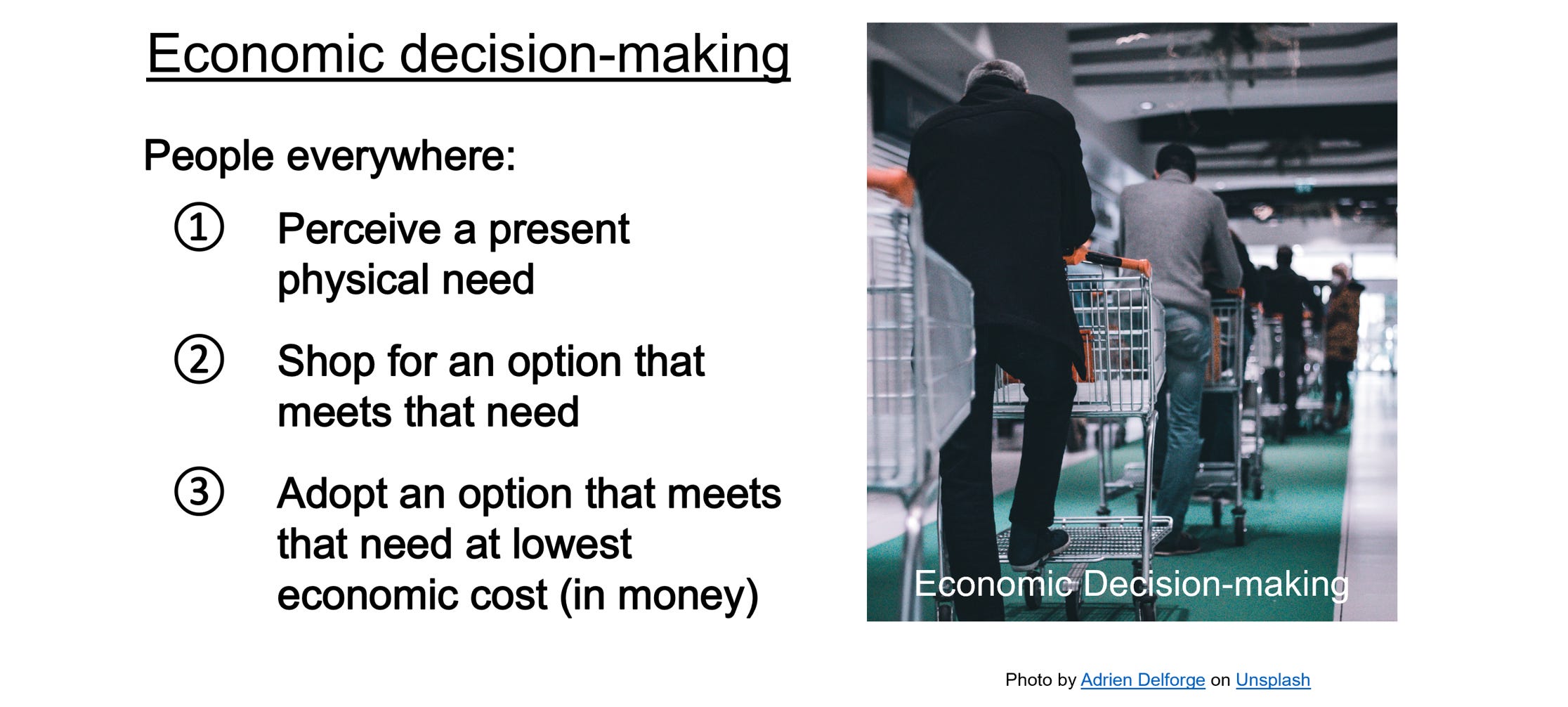
Economic decision-making is creating the planet’s climate crisis because economic decision-making excludes – as “externalities” not measurable in units of money –
the damage (or degeneration) of the biosphere from the extraction flows or pollution flows attributable to any option for meeting human physical needs, or
the healing (or regeneration) of the biosphere from the scaling back of extraction flows or pollution flows attributable to any option for meeting human physical needs.
Right now, people everywhere have no means of determining whether any such option is “regenerative” of the biosphere and healing of the climate crisis, or degenerative of the biosphere and worsening of the climate crisis.
Right now, because people everywhere have no means of determining whether any such option is regenerative or degenerative, people everywhere are deciding to adopt options that are creating the exponentially-growing extraction flows & pollution flows that are creating the climate crisis.
What is a paradigm shift for solving the climate crisis?
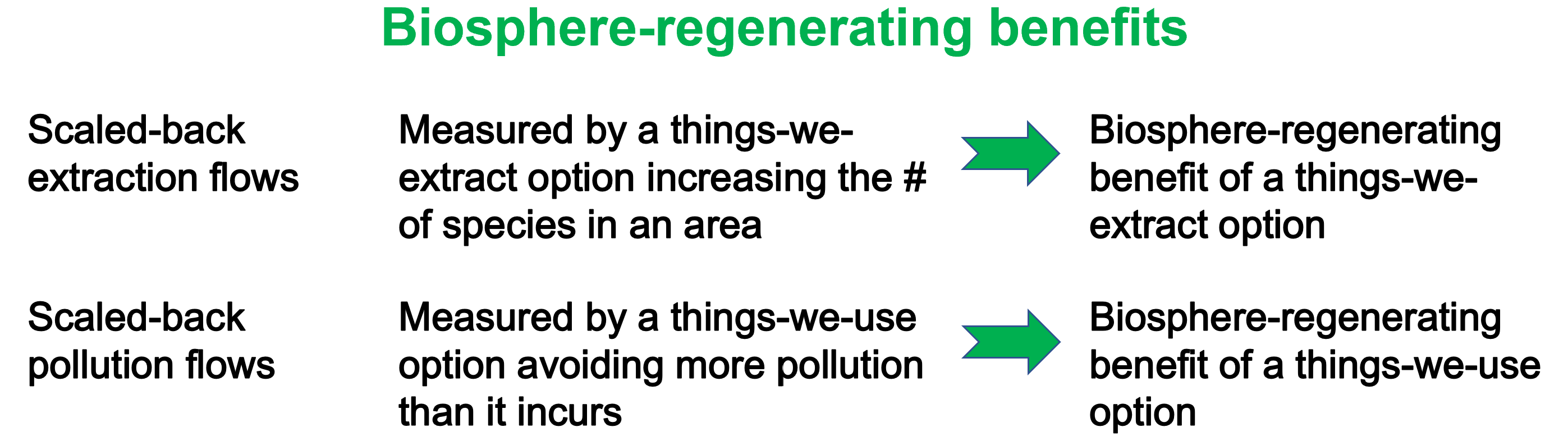
To solve the climate crisis, I invented a simple paradigm shift – called “regenerative decision-making” for meeting human physical needs -- through which people everywhere use “regenerative information services” for …
… identifying options for meeting human physical needs …
… evaluating the measurable performance benefits, the measurable cost savings benefits and the measurable biosphere-regenerating benefits of those options …
… comparing those benefits …
… persuading themselves what options they want to adopt …
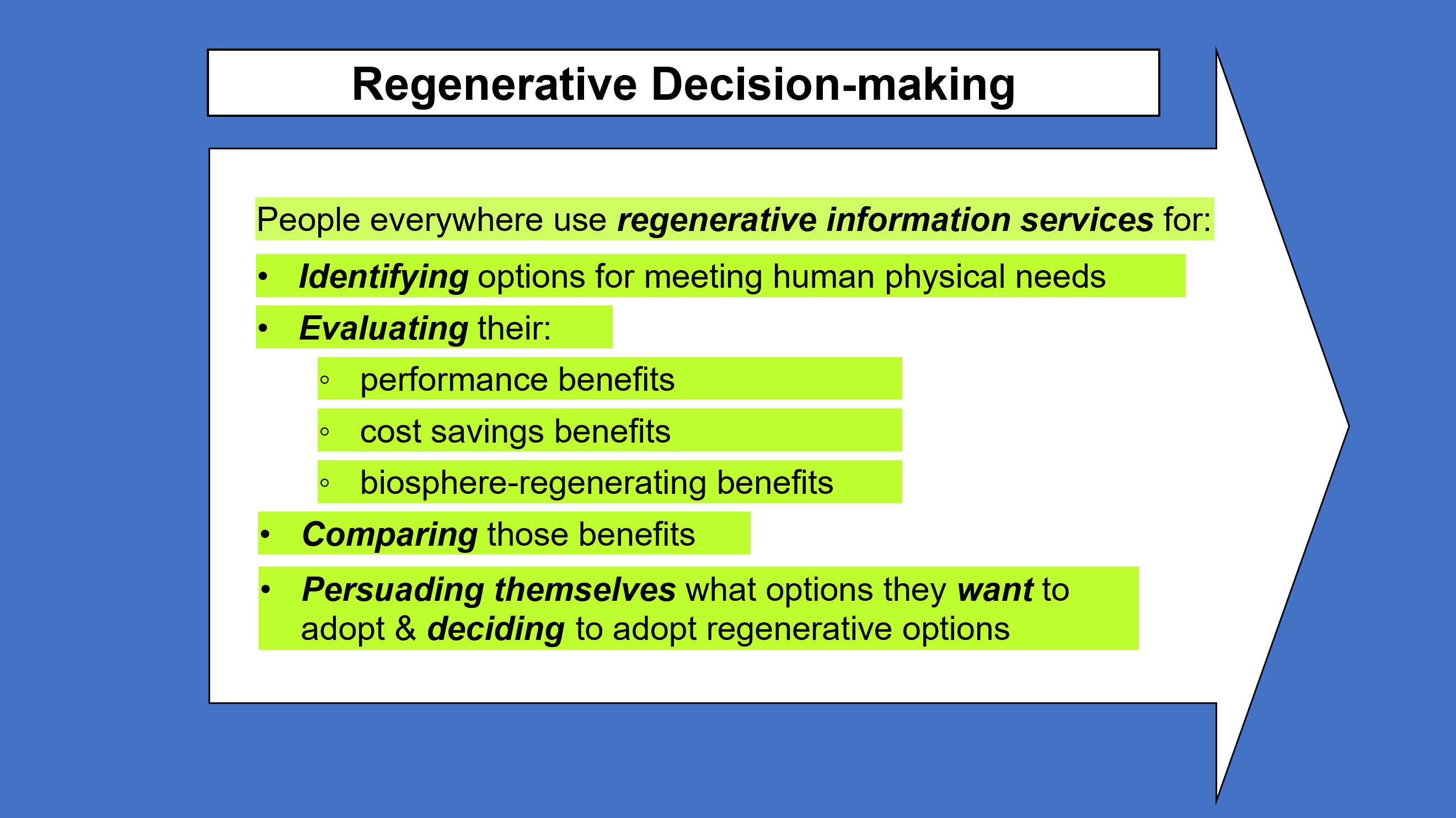
… and deciding to adopt “regenerative options” that deliver:
measurable “performance benefits” because they meet human physical needs,
measurable “cost savings benefits” because they avoid more costs than they incur, and
measurable “biosphere-regenerating benefits” (including climate-crisis-healing benefits) because:
they scale back extraction flows out of the biosphere measured through increasing the number of species in an area, or
they scale back pollution flows into the biosphere measured through avoiding more pollution than they incur …
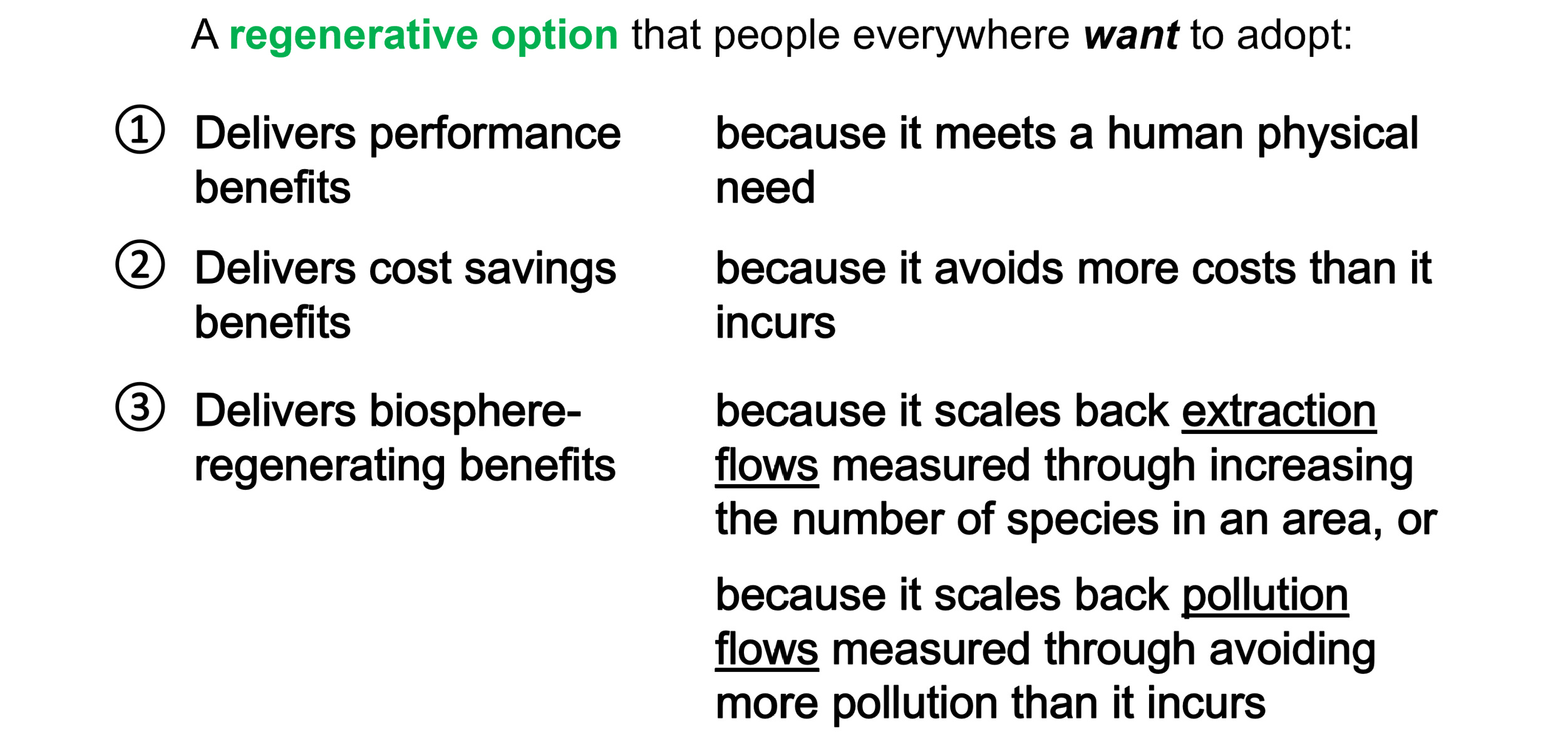
Biosphere-regenerating benefits solve the problem of “externalities”:
by measuring the increasing number of species in an area to determine the regeneration (or healing) of the biosphere attributable to the scaled-back extraction flows of a things-we-extract option, and
by measuring avoided pollution flows more than incurred pollution flows to determine the regeneration (or healing) of the biosphere attributable to the scaled-back pollution flows of a things-we-use option …
What is a system change that solves the climate crisis?
People everywhere wanting, deciding & acting to adopt regenerative options -- that deliver biosphere-regenerating benefits – scales back the extraction flows out of the biosphere and the pollution flows into the biosphere (in orange) to effect a simple system change of the Human Enterprise as a whole, …
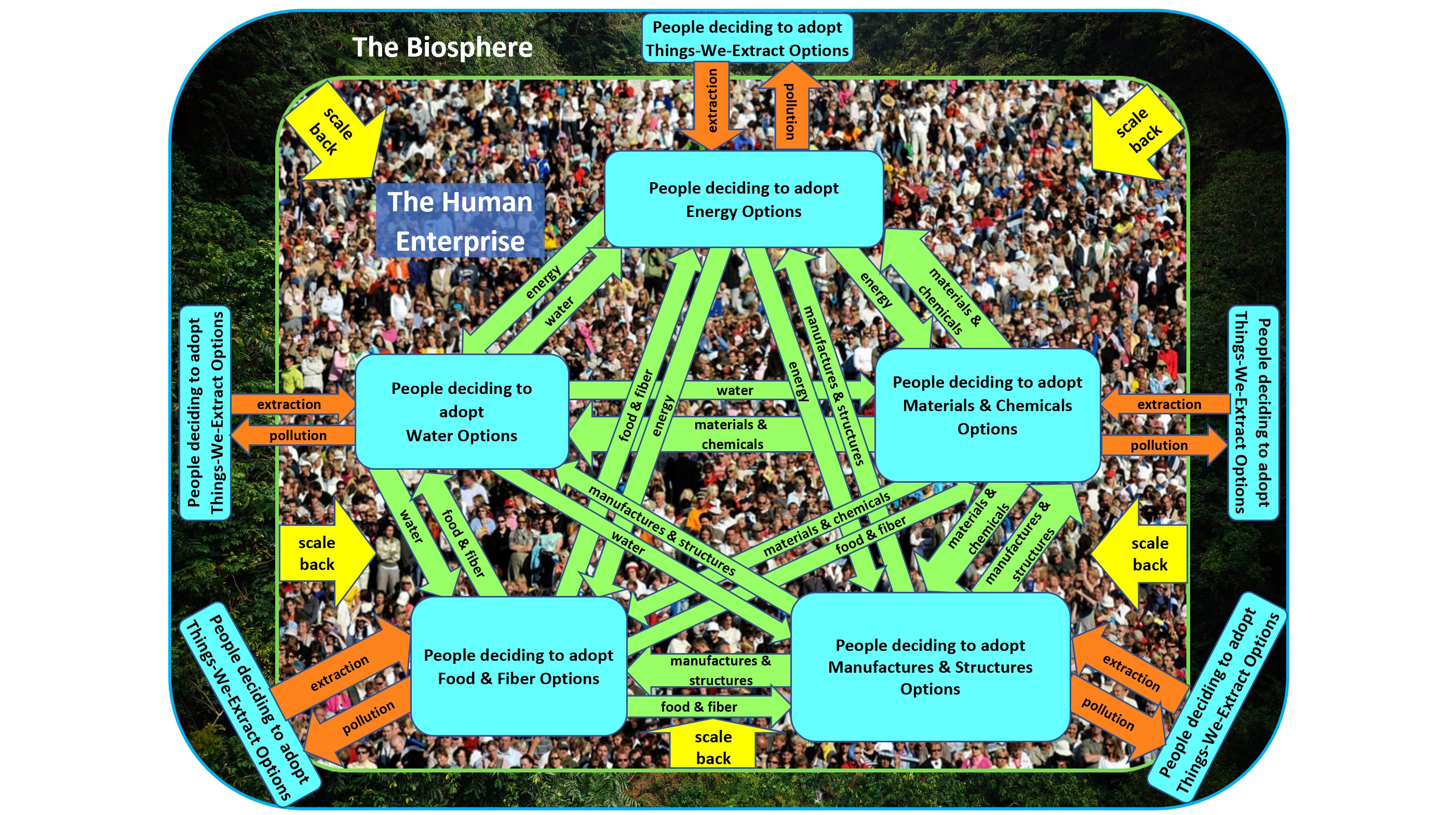
… and, at the same time, keeps intact the flows of things-we-use (in chartreuse) for meeting the physical needs of every human being, …
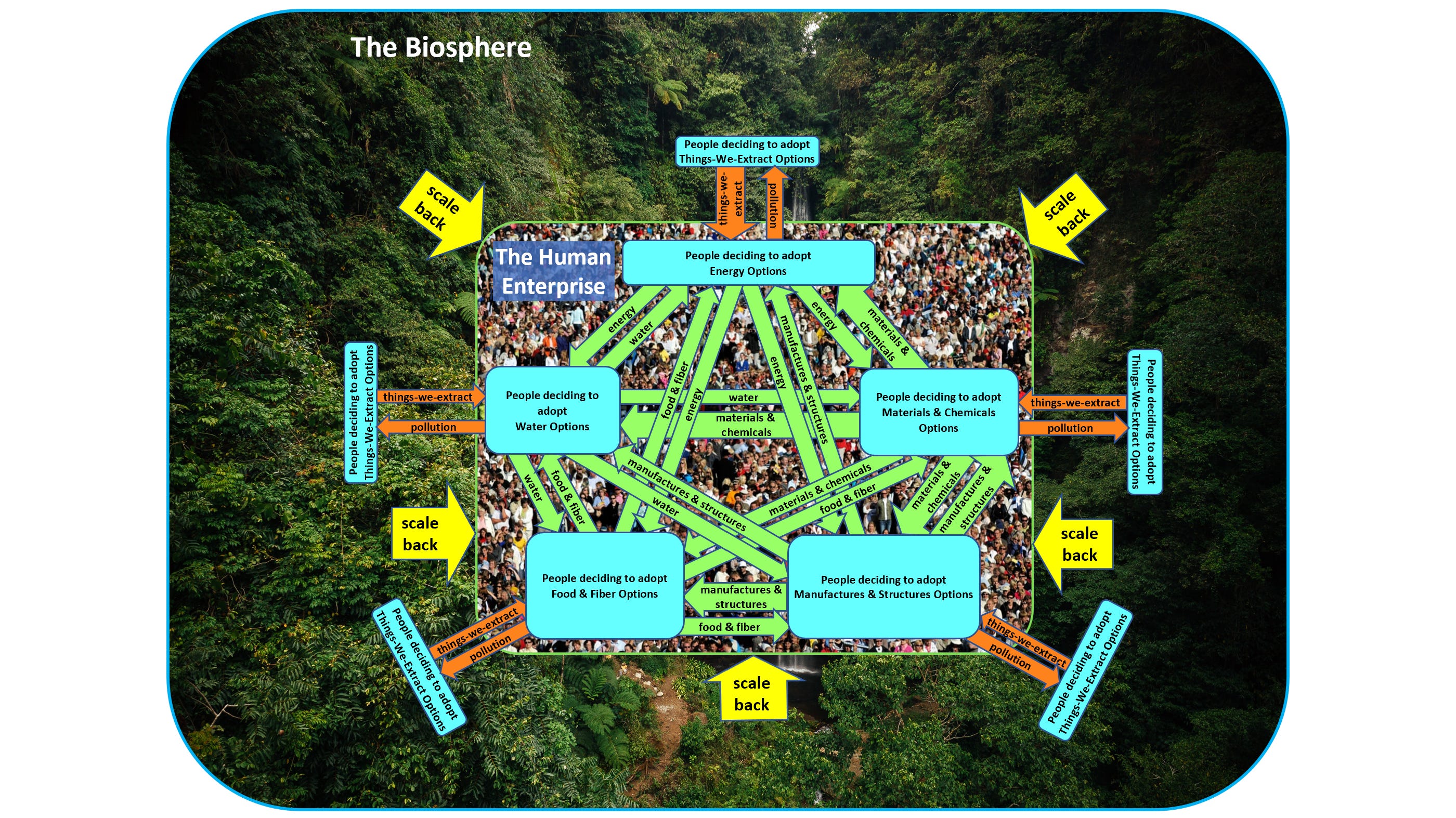
… which allows the biosphere (in deep green) to regenerate itself, …
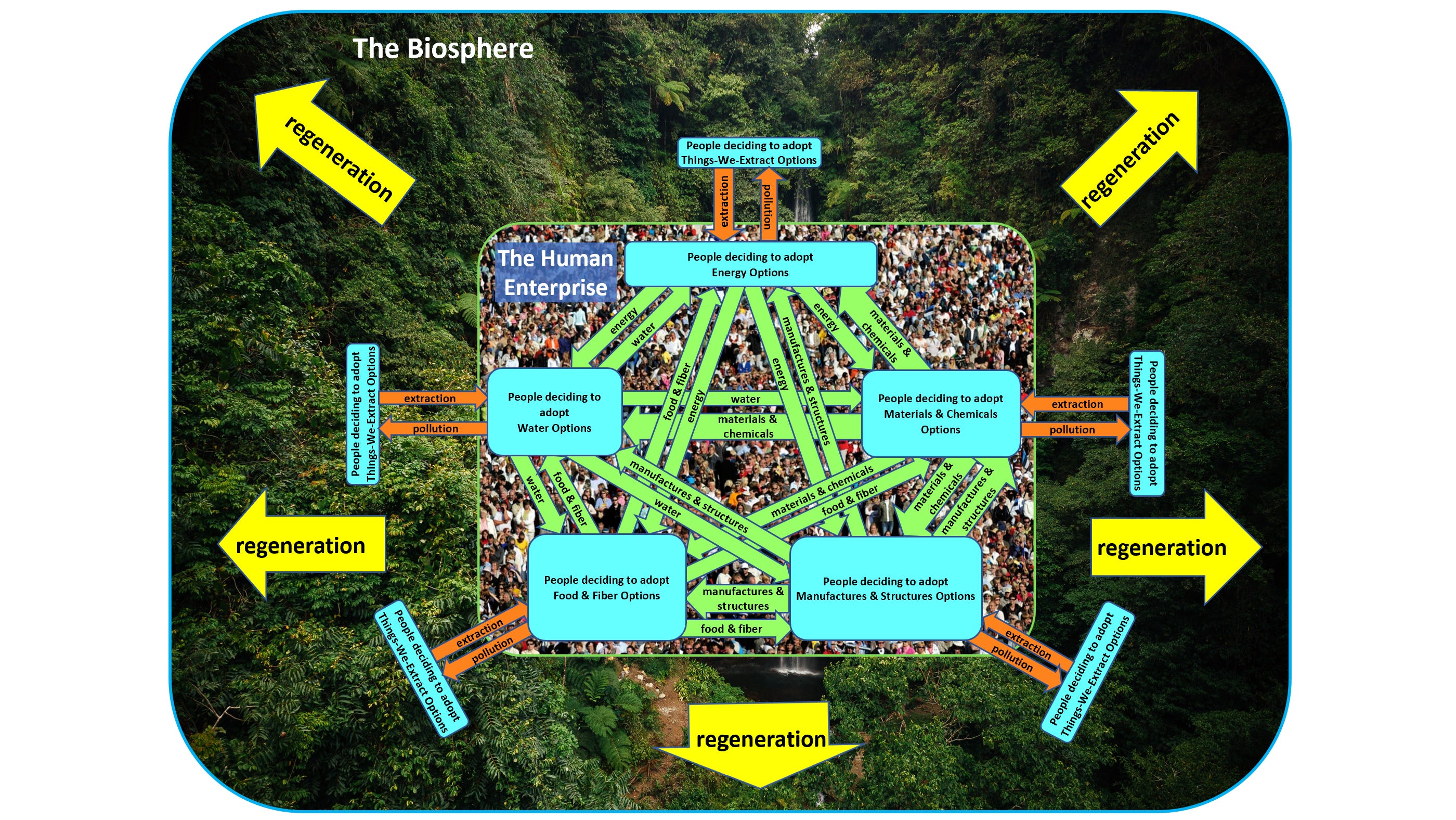
…and allows the creativity, intelligence and regenerative capacity of the biosphere to heal the ecological crises as a whole, including the climate crisis …
… and allows the biosphere to meet the physical needs of all living beings, including human beings …
Through mastery of regenerative decision-making, we can have impacts that last for millennia
In the words of Donella Meadows:
It is in this space of mastery over paradigms that people … have impacts that last for millennia.
Through our mastery over a paradigm shift to regenerative decision-making, we can allow the biosphere to heal the climate crisis and meet the physical needs of all living beings for millennia to come.
Thank you for reading The Regenerative Transition.
Peace and Aloha!
Erik
P.S. I cross-posted this article on Medium for greater reach.
[1] Biologist Paul Ehrlich used the expression -- “the human enterprise” -- to capture the entirety of human decisions & actions in relation to the biosphere: “To rescue the human enterprise in the long run requires strong action in the short run directed toward saving biodiversity and bringing the human enterprise within sustainable limits.”
The operative word here is "simple." After mentioning a "simple" understanding of the system and paradigms, the author goes on to advocate EXTREMELY COMPLICATED applications. This is a fail. I looked at The Limits to Growth when it first came out in 1972 and dismissed it as just another rationale for the System. In other words it goes around and around within the same System that is the problem. A REAL solution was synthesized years before. Reduce, reuse, recycle. No computers needed, no analysis needed. Just shift your paradigms (there are always more than one).
As a social scientist who has been looking at this problem since 1968, my conclusion is that problem is state-level society itself. How do you break free from this system? You break free from the System by shifting your paradigms. The author gets that right. But extremely complex diagrams - and computer programs and the like - are a fail. Just read and listen to stories about how other people have done it. The hard-wiring in your brain will make the connection. Thus Paradigms for Adaptation (2024).